-
 +86 13616113658
-
 [email protected]
 English
 Español
 русский
 عربى
عربى
Home / Media / Industry News / Cleanroom Automatic Sliding Doors: Enhancing Sterile Environment Control
Cleanroom Automatic Sliding Doors: Enhancing Sterile Environment Control
Content
- 1 The Critical Role of Automatic Sliding Doors in Cleanroom Contamination Control
- 2 Mechanisms of Contamination Prevention
- 3 Compliance with International Cleanroom Standards
- 4 Material Selection and Construction Features
- 5 Operational Efficiency and Safety Considerations
- 6 Installation and Maintenance Protocols
- 7 Industry-Specific Applications and Performance Data
- 8 Future Developments in Cleanroom Door Technology
The Critical Role of Automatic Sliding Doors in Cleanroom Contamination Control
Cleanroom automatic sliding doors are essential engineering controls that reduce airborne particle contamination by up to 99.9% compared to manual swing doors, making them indispensable for maintaining sterile environments in pharmaceutical manufacturing, semiconductor fabrication, and healthcare facilities. These specialized door systems eliminate human contact points, minimize air turbulence, and maintain pressure differentials critical to contamination control protocols.
The transition from manual to automated entry systems represents one of the most significant advancements in cleanroom design over the past two decades. Unlike conventional doors that require physical contact and create substantial air displacement when opened, automatic sliding doors operate with minimal air disturbance while ensuring rapid opening and closing cycles that preserve environmental integrity.
Mechanisms of Contamination Prevention
Touchless Operation Eliminates Human Contact Points
Manual door handles rank among the most contaminated surfaces in any facility, with studies indicating they harbor between 1000 and 10,000 colony-forming units per square centimeter. Cleanroom automatic sliding doors utilize motion sensors, pressure-sensitive floor mats, or RFID activation to enable completely hands-free entry, removing this vector of microbial transmission.
Advanced Sealing Technologies Maintain Pressure Barriers
The perimeter sealing systems in modern cleanroom doors employ inflatable gaskets or magnetic seals that compress against stainless steel frames when closed. These seals achieve leakage rates below 0.5 cubic meters per hour per square meter of door area, ensuring that pressure differentials between clean zones are maintained within ±0.5 Pascal of specifications.
Controlled Airflow Dynamics
Swing doors displace approximately 2.5 cubic meters of air per opening cycle, creating turbulent eddies that can transport particles from adjacent areas into sterile zones. Sliding doors reduce this displacement by 80% through their parallel-to-wall movement pattern, preserving laminar airflow patterns essential for ISO Class 5 and cleaner environments.
Compliance with International Cleanroom Standards
Cleanroom automatic sliding doors must satisfy stringent requirements across multiple regulatory frameworks. The following table outlines key compliance parameters across major standards:
| Standard | Particle Limit (≥0.5μm/m³) | Pressure Differential | Recovery Time |
|---|---|---|---|
| ISO 14644-1 Class 5 | 3,520 | ≥12 Pa | < 15 minutes |
| ISO 14644-1 Class 7 | 352,000 | ≥5 Pa | < 30 minutes |
| EU GMP Grade A | 3,520 | ≥10-15 Pa | < 20 minutes |
| FDA 21 CFR Part 211 | Facility-specific | Positive pressure maintained | Immediate recovery required |
Automatic sliding doors designed for pharmaceutical applications must additionally satisfy cGMP requirements for smooth, non-porous surfaces that withstand aggressive cleaning agents including hydrogen peroxide vapor and quaternary ammonium compounds at concentrations up to 10%.
Material Selection and Construction Features
Stainless Steel and Non-Shedding Surfaces
High-grade 304 or 316L stainless steel constitutes the primary construction material for cleanroom door panels and frames, providing corrosion resistance to sodium hypochlorite and isopropyl alcohol while preventing particle generation through surface degradation. Glass vision panels utilize tempered safety glass sealed with silicone-free gaskets to prevent outgassing.
Interlocking Systems Prevent Cross-Contamination
Airlock configurations employ electronic interlocks that prevent both doors from opening simultaneously, maintaining pressure cascades between areas of differing cleanliness classifications. These systems typically incorporate adjustable time delays of 3 to 30 seconds between door cycles to allow pressure stabilization.
Operational Efficiency and Safety Considerations
Modern cleanroom automatic sliding doors balance contamination control with operational throughput through adjustable opening speeds and safety mechanisms:
- Opening speeds ranging from 0.3 to 1.0 meters per second accommodate personnel traffic while minimizing open-door exposure time
- Infrared safety sensors detect obstructions within 50 millimeters of the door plane, preventing collisions with personnel or equipment
- Battery backup systems ensure minimum 50 opening cycles during power failures to maintain emergency egress capabilities
- Emergency breakaway features allow manual door separation from drive mechanisms during evacuation scenarios
Energy consumption represents another critical factor, with brushless DC motor systems operating at power draws below 150 watts during continuous operation, contributing to facility sustainability goals while maintaining 24/7 operational readiness.
Installation and Maintenance Protocols
Precision Alignment Requirements
Installation tolerances for cleanroom automatic sliding doors demand vertical alignment within 1 millimeter per meter of door height and horizontal levelness within 0.5 millimeters across the full track length. These specifications ensure consistent seal compression and prevent binding that could generate particles through mechanical friction.
Preventive Maintenance Schedules
Maintenance protocols typically follow manufacturer recommendations aligned with facility validation schedules:
- Daily visual inspection of door panels and seals for visible damage or contamination accumulation
- Weekly verification of sensor function and emergency stop activation
- Monthly lubrication of track systems with cleanroom-approved perfluoropolyether (PFPE) lubricants
- Quarterly seal integrity testing using smoke pencil or ultrasonic leak detection methods
- Annual drive system calibration and safety system certification
Industry-Specific Applications and Performance Data
Pharmaceutical Manufacturing
Aseptic processing facilities report reductions in viable particle counts of 45% following automatic door installation compared to previous manual door configurations. The elimination of door handle contact points directly correlates with decreased bioburden in critical filling operations where product sterility assurance levels must reach 10⁻⁶.
Semiconductor Fabrication
Cleanrooms maintaining ISO Class 3 or Class 4 environments for photolithography processes require doors with particle generation rates below 0.1 particles per cubic foot per minute greater than 0.3 micrometers. Specialized low-outgassing door materials prevent molecular contamination that could compromise wafer yield rates.
Hospital Operating Theaters
Surgical suites utilizing automatic sliding doors demonstrate 32% lower surgical site infection rates in orthopedic procedures compared to facilities with conventional swing doors, according to retrospective studies spanning 15,000 procedures across multiple medical centers.
Future Developments in Cleanroom Door Technology
Emerging technologies continue to enhance contamination control capabilities. Smart door systems now integrate with building management systems to adjust opening speeds based on real-time particle counting data, slowing operation when sensors detect elevated particulate levels. Antimicrobial surface coatings utilizing copper-nickel alloys or photocatalytic titanium dioxide provide continuous surface sanitization between cleaning cycles.
The integration of ultraviolet-C LED arrays within door frames offers supplementary surface disinfection during closed periods, achieving 3-log reductions in surface bioburden within 60 seconds of exposure without compromising material integrity through thermal stress.
Previous Post
Airtight Doors in Healthcare and Laboratories: Hygiene & Contamination Standards
Next Post
Airtight Cleanroom Doors: Sealing Tech for Efficiency
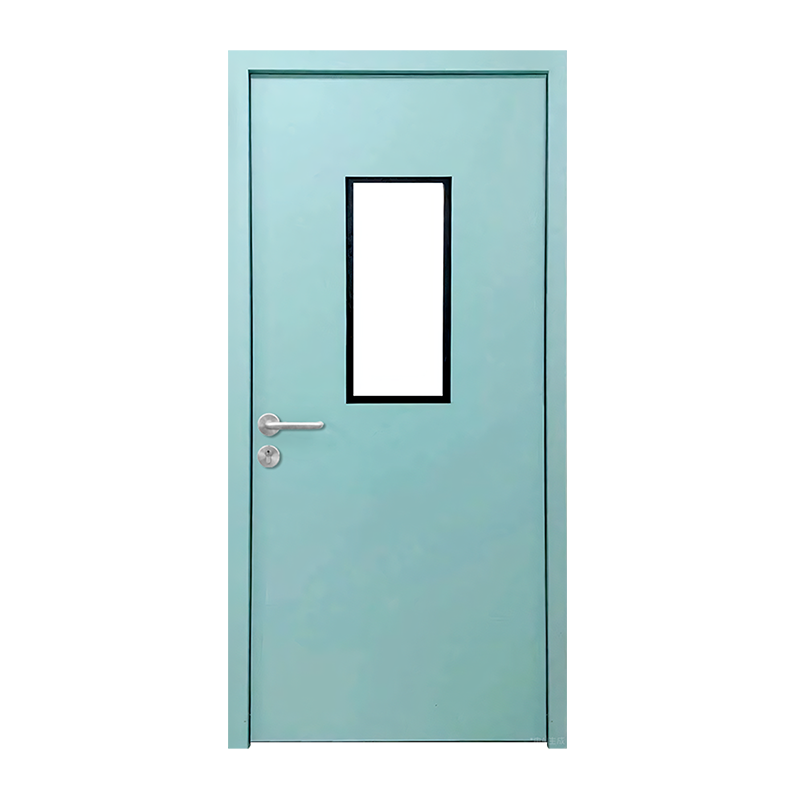
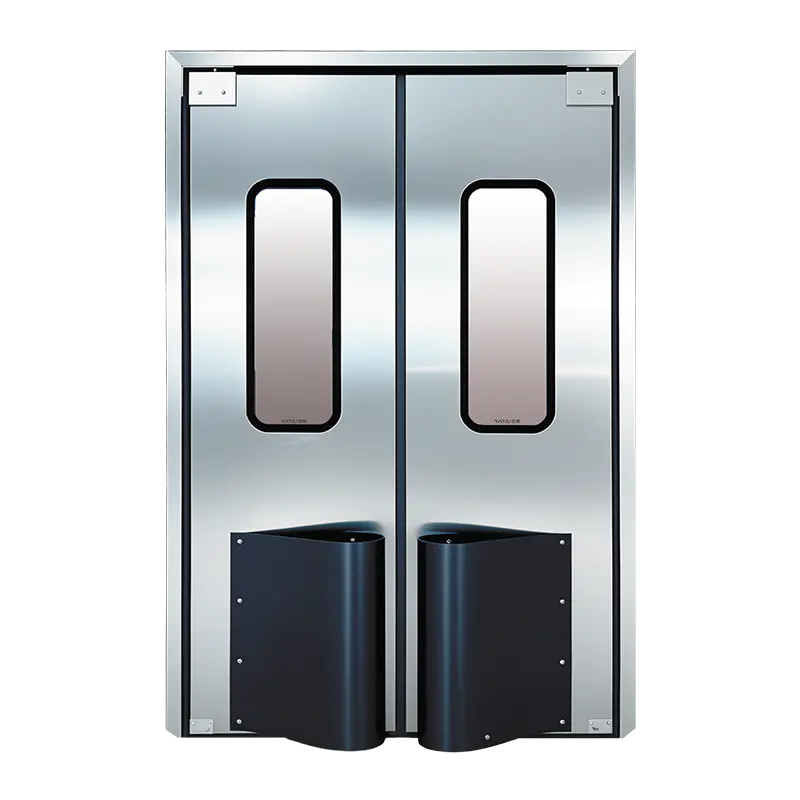
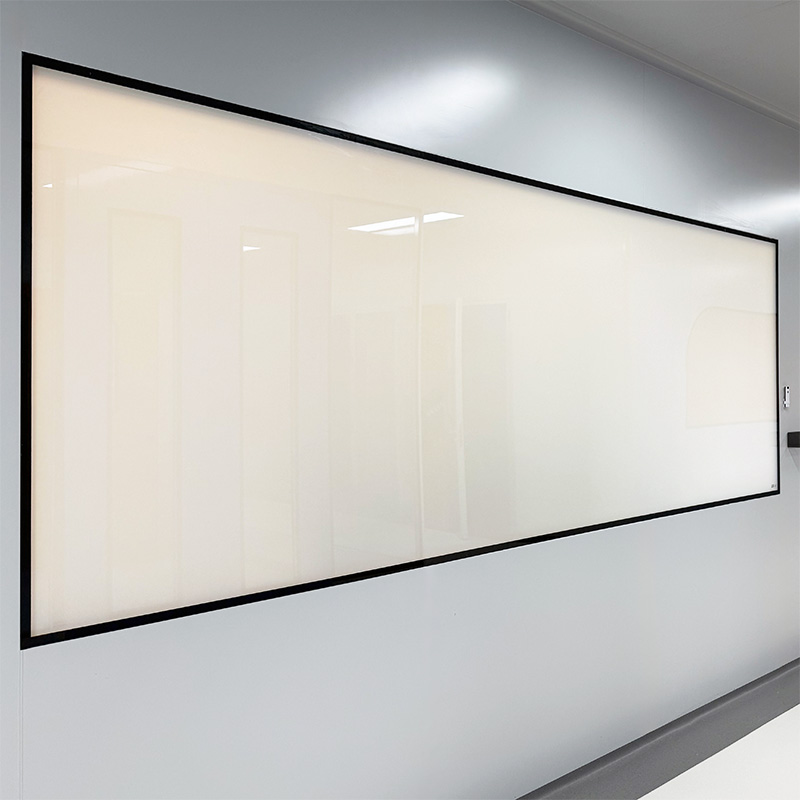

Jiangyin Yatai Purification Equipment Technology Co., Ltd. is a modern and specialized manufacturer of clean doors and windows. Cleanroom Project Factory, offer Custom Clean Doors and Windows.
QUICK LINKS
PRODUCTS
GET IN TOUCHs
-
 +86 13616113658
-
 +86(0)510-86661588 / 86668687
-
 [email protected]
-
 +86(0)510-86661588
-
 No.2, Huagang West Road, Shizhuang, Jiangyin, Jiangsu province
© Jiangyin Yatai Purification Equipment Technology Co., Ltd.
All Rights Reserved.
 Cleanroom Door Manufacturers