-
 +86 13616113658
-
 [email protected]
 English
 Español
 русский
 عربى
عربى
Home / Media / Industry News / Airtight Doors in Healthcare and Laboratories: Hygiene & Contamination Standards
Airtight Doors in Healthcare and Laboratories: Hygiene & Contamination Standards
Content
- 1 What Are Airtight Doors and Why Do They Matter?
- 2 Key Hygiene and Contamination Challenges in Healthcare and Laboratories
- 3 How Airtight Doors Meet Regulatory Standards
- 4 Types of Airtight Doors for Different Applications
- 5 Material and Design Features That Ensure Hygiene
- 6 Choosing the Right Airtight Door for Your Facility
What Are Airtight Doors and Why Do They Matter?
In controlled environments, the integrity of every boundary matters. Airtight doors — also known as hermetic doors — are specially engineered door systems designed to create a complete seal between two spaces, preventing the passage of air, airborne particles, microorganisms, and gaseous contaminants. Unlike conventional doors, which leave measurable gaps around the frame and threshold, airtight doors incorporate precision gasket systems, automatic drop seals, and rigid frame construction to eliminate leakage pathways.
The core function of an airtight door is to maintain a defined pressure differential between adjacent zones. In healthcare and laboratory settings, this pressure relationship is not incidental — it is a deliberate design parameter that determines whether clean air stays clean or becomes compromised. When a sterile room operates at positive pressure relative to surrounding corridors, any door opening without proper sealing immediately risks drawing unfiltered air inward. Airtight doors manage this transition safely, opening and closing without creating sustained contamination events.
For facility managers, procurement teams, and compliance officers, understanding what makes an airtight door technically distinct from a standard cleanroom door is the first step toward making the right specification choice.
Key Hygiene and Contamination Challenges in Healthcare and Laboratories
Healthcare facilities and laboratories share a common challenge: both must control the movement of invisible threats. Bacteria, viruses, fungal spores, and fine particulate matter can all compromise patient safety, invalidate experimental results, or contaminate pharmaceutical products. The stakes in each setting are high, though the specific risks differ by application.
In hospital operating rooms and isolation wards, airborne pathogens represent a direct patient safety threat. Cross-contamination between wards — particularly in infectious disease units, ICUs, and oncology departments — can result in hospital-acquired infections (HAIs) with serious clinical consequences. Doors are statistically one of the most vulnerable points of contamination entry: even a door held open for seconds can allow significant air exchange between zones of different classification.
In pharmaceutical manufacturing laboratories and research environments, the contamination concern is equally critical but differently framed. A single microbial intrusion event in a sterile drug production area can result in product recalls, regulatory action, and significant financial loss. Research facilities handling biohazardous materials, live cell cultures, or sensitive assays require that environmental conditions remain stable and uncontaminated between individual experiments.
Medical doors in standard ward settings address general hygiene, but where true airtight performance is needed — operating theaters, biosafety laboratories, radiopharmacy rooms, and sterile preparation areas — only purpose-engineered hermetic solutions provide adequate protection.
How Airtight Doors Meet Regulatory Standards
Regulatory frameworks governing controlled environments in healthcare and laboratory settings are detailed and demanding. Airtight doors play a measurable role in achieving and maintaining compliance with the most important of these standards.
ISO 14644 is the primary international standard governing cleanroom classification. It defines cleanliness levels from ISO Class 1 (the most stringent) through ISO Class 9, based on allowable airborne particle concentrations. Maintaining any given ISO classification requires that the physical envelope of the room — including its doors — performs to a defined level of air permeability. Airtight doors with certified sealing ratings directly support ISO classification and make the ongoing audit process more straightforward.
EN 12207 and EN 12426/12427 are the European standards that classify door air permeability. Class 4 certification under EN 1026/EN 12207 and Class 5 under EN 12427/EN 12426 represent the highest achievable levels of airtightness for door products. Facilities operating under EU pharmaceutical regulations or hospital accreditation frameworks should specify doors that carry these certifications as documented evidence of performance.
GMP (Good Manufacturing Practice) guidelines — including EU GMP Annex 1 for sterile medicinal products — place explicit requirements on the design of cleanroom boundaries. Doors must support differential pressure maintenance, facilitate cleaning without particle accumulation, and be constructed from materials that resist chemical disinfectants. Airtight door specifications that address all three of these requirements simultaneously simplify GMP compliance documentation.
In the United States, the FDA's current Good Manufacturing Practice (cGMP) requirements and CDC guidelines for healthcare facilities similarly emphasize the role of physical barriers — including doors — in infection prevention protocols.
Types of Airtight Doors for Different Applications
Not all airtight doors are interchangeable. The appropriate door type depends on the specific application, traffic volume, space constraints, and the required level of hermetic performance.
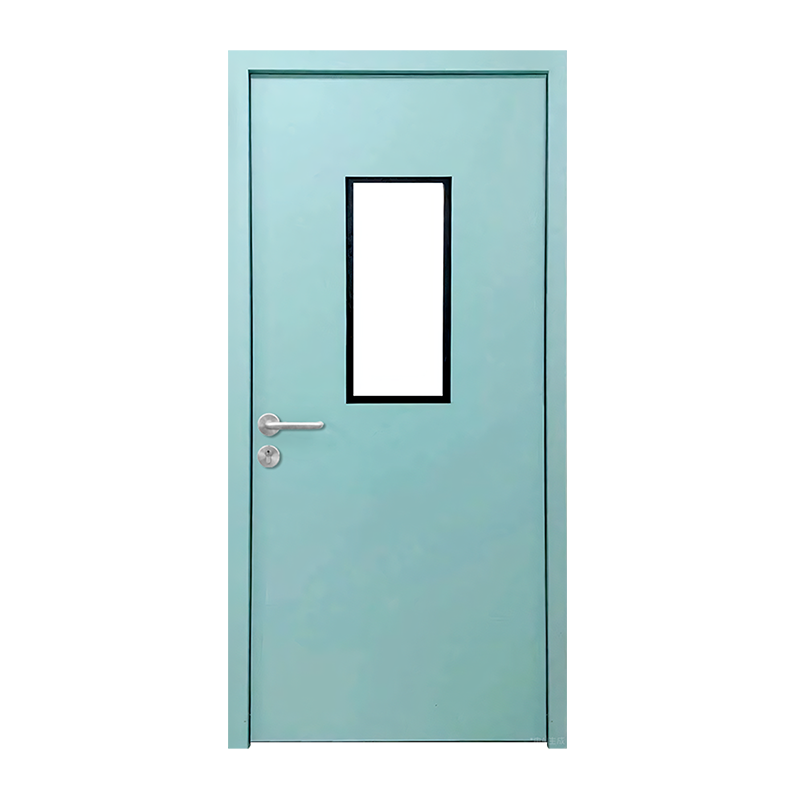
Airtight Swing Doors (Hinged): The most common configuration in pharmaceutical cleanrooms and hospital operating theaters. These provide strong structural sealing performance and are typically fitted with automatic drop seals at the threshold that engage when the door closes. They are well-suited for lower-traffic environments where a controlled, deliberate opening cycle is standard practice.
Airtight Automatic Sliding Doors: Preferred where hands-free operation is essential — particularly in hospital areas where staff may be gowned, gloved, or transporting equipment. Sensor-activated sliding doors eliminate contact with door surfaces entirely, reducing the risk of cross-contamination via touch. They also minimize the air disturbance created when a swinging door opens rapidly into a pressurized space.
Inflatable Seal Airtight Doors: The highest-performance option for biosafety laboratories, radiopharmacy rooms, and high-risk containment environments. These doors use a pneumatically activated inflatable gasket that expands to create a complete perimeter seal when the door is closed, and deflates to allow smooth opening. They are suitable for ISO Class 1 through 5 environments and are frequently specified for BSL-3 and BSL-4 facilities.
Double-Door Airlock Systems: Used where maximum contamination control is required at transition points between zones of significantly different classification. The interlock mechanism prevents both doors from being open simultaneously, ensuring that a buffer airlock space always separates the two environments.
| Door Type | Typical Application | Key Advantage |
|---|---|---|
| Airtight Swing Door | Operating theaters, pharma cleanrooms | Strong seal, structural durability |
| Automatic Airtight Sliding Door | Hospital corridors, ICU, sterile prep areas | Hands-free, minimizes air disturbance |
| Inflatable Seal Door | BSL-3/4 labs, radiopharmacy, high-risk containment | Maximum hermetic performance |
| Double-Door Airlock | Grade A/B transitions, sterile manufacturing | Prevents simultaneous opening between zones |
Material and Design Features That Ensure Hygiene
The hygiene performance of an airtight door is not determined solely by its sealing mechanism. The materials, surface finish, hardware specification, and door leaf construction all contribute to the overall cleanliness profile of the installation.
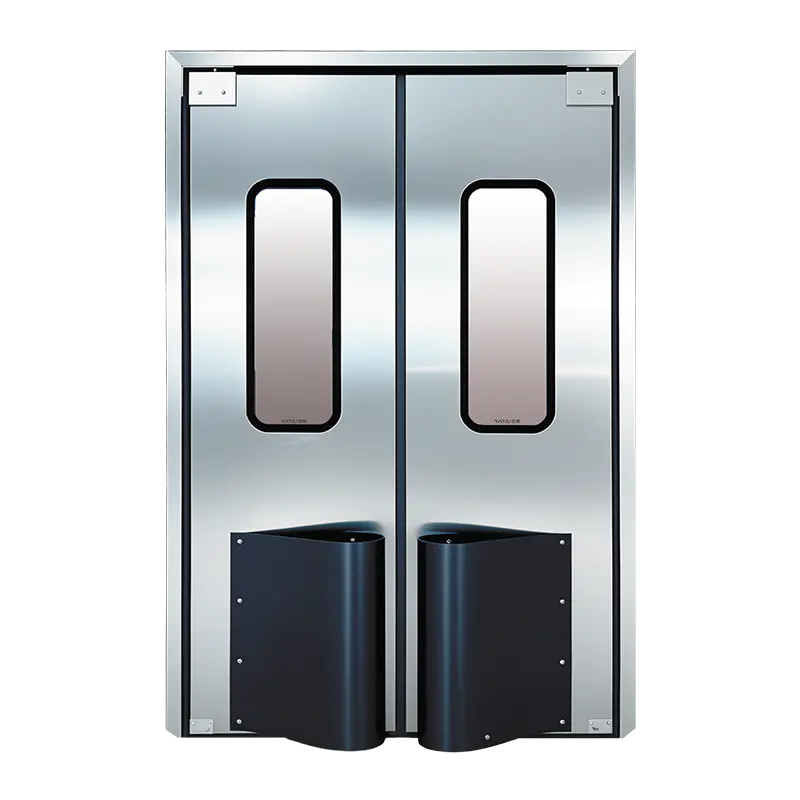
Stainless Steel Construction: The preferred material for the highest-hygiene applications. Stainless steel is non-porous, resistant to corrosion from aggressive disinfectants including chlorine-based cleaners and alcohol solutions, and has no surface texture that could harbor microbial growth. It is the standard material in operating theaters, sterile manufacturing areas, and BSL-level laboratories.
High Pressure Laminate (HPL) and Color Steel: Cost-effective alternatives for areas where full stainless construction is not required. HPL surfaces offer smooth, easy-clean finishes and good chemical resistance. They are widely used in hospital wards, pharmaceutical support areas, and general laboratory corridors.
Flush, Crevice-Free Design: Any joint, groove, or recess in a door surface is a potential location for contamination accumulation. Well-engineered airtight doors eliminate projecting hardware where possible, use flush-mounted handles or sensor-activated opening, and specify door leaf profiles with no exposed crevices. This design philosophy directly supports routine cleaning and disinfection protocols.
Gasket and Seal Systems: The sealing system is the technical core of any airtight door. Silicone gaskets offer excellent durability and chemical resistance. For higher performance levels, dual-seal or inflatable seal systems provide measurably lower air permeability. All sealing components should be replaceable without removing the door from the frame, since gasket condition is a maintenance-critical parameter in any cleanroom environment.
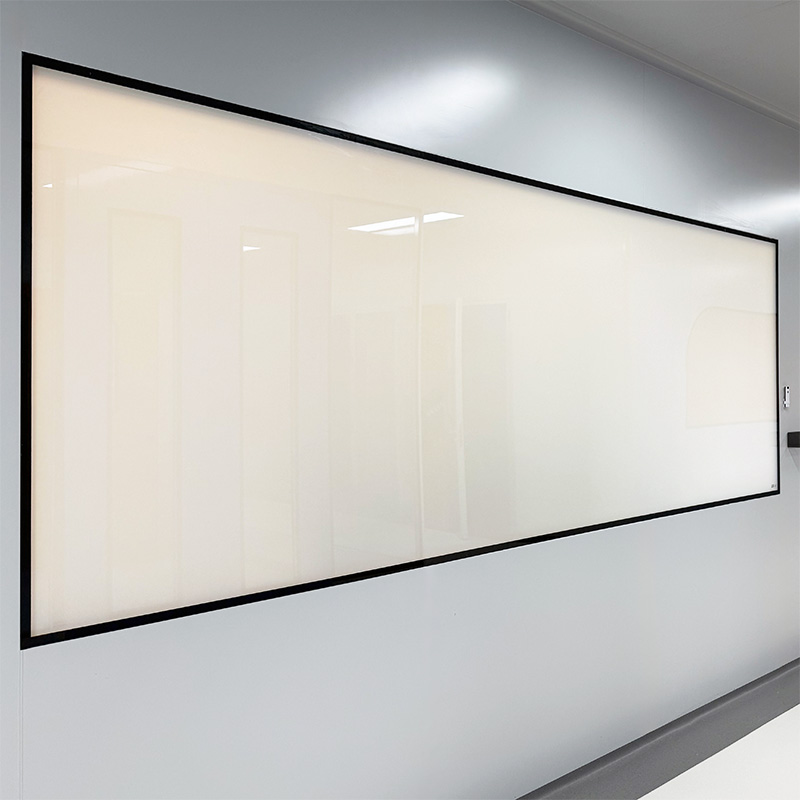
Vision Panels: Observation windows in airtight doors allow visual monitoring of adjacent spaces without requiring door opening. In laboratory settings, this is particularly valuable for process oversight and safety monitoring. Vision panels should be double-glazed and sealed to the same standard as the door leaf itself to avoid creating a weak point in the overall assembly.
Choosing the Right Airtight Door for Your Facility
Specifying an airtight door correctly requires aligning the door's technical performance with the precise requirements of the application. Several key questions should guide the selection process.
First, identify the target ISO classification or GMP grade for the space. This determines the required air permeability performance and will point toward the appropriate sealing system — static gasket, drop seal, or inflatable seal. Second, evaluate the traffic pattern and operational workflow. High-frequency personnel movement favors automatic sliding configurations; lower-traffic, high-security environments may prioritize the superior seal of a swing-type inflatable door.
Third, consider the chemical environment. Areas routinely disinfected with aggressive agents should specify stainless steel or verified chemically resistant surface materials. Fourth, assess integration requirements: does the door need to interface with an access control system, interlock with adjacent doors, or incorporate a pass-through hatch for small item transfer?
Finally, ensure the selected door product carries documented certification to the relevant EN or ISO performance standards, and that the supplier can provide technical data sheets supporting compliance documentation. For facilities undergoing regulatory inspection, traceable certification is as important as physical performance.
Beyond the door itself, the complete cleanroom boundary includes complementary elements such as cleanroom windows, wall panels, and air handling components — all of which should be specified as a coherent system to ensure that no single element becomes the limiting factor in overall contamination control performance.
Previous Post
Smart Buildings & Emergency Exit Doors: How Technology Is Changing Fire Safety
Next Post
Cleanroom Automatic Sliding Doors: Enhancing Sterile Environment Control

Jiangyin Yatai Purification Equipment Technology Co., Ltd. is a modern and specialized manufacturer of clean doors and windows. Cleanroom Project Factory, offer Custom Clean Doors and Windows.
QUICK LINKS
PRODUCTS
GET IN TOUCHs
-
 +86 13616113658
-
 +86(0)510-86661588 / 86668687
-
 [email protected]
-
 +86(0)510-86661588
-
 No.2, Huagang West Road, Shizhuang, Jiangyin, Jiangsu province
© Jiangyin Yatai Purification Equipment Technology Co., Ltd.
All Rights Reserved.
 Cleanroom Door Manufacturers