-
 +86 13616113658
-
 [email protected]
 English
 Español
 русский
 عربى
عربى
Home / Media / Industry News / Cleanroom Doors: Design, Materials, and Performance Standards for Controlled Environments
Cleanroom Doors: Design, Materials, and Performance Standards for Controlled Environments
Content
- 1 Functional Role of Cleanroom Doors in Contamination Control
- 2 Common Types of Cleanroom Doors and Their Applications
- 3 Cleanroom Door Materials and Surface Performance
- 4 Airtight Sealing and Pressure Control Performance
- 5 Compliance with Cleanroom Standards and Regulations
- 6 Integration with Cleanroom Wall and Panel Systems
- 7 Operational Considerations: Traffic Flow and Safety
- 8 Maintenance, Cleaning, and Long-Term Durability
- 9 Key Factors for Selecting the Right Cleanroom Door
Functional Role of Cleanroom Doors in Contamination Control
Cleanroom doors are not simple access components; they are integral elements of contamination control systems. Their primary role is to maintain pressure differentials, prevent particle migration, and support controlled airflow between classified areas. Improper door design or installation can compromise cleanroom integrity, leading to particulate ingress, microbial contamination, and compliance failures in regulated industries such as pharmaceuticals, biotechnology, and semiconductor manufacturing.
Unlike conventional industrial doors, cleanroom door systems must align with ISO cleanroom classifications and GMP requirements. This includes tight sealing, smooth surfaces, and compatibility with frequent cleaning and disinfection protocols. Door performance directly impacts air change rates, recovery time after entry, and overall cleanroom efficiency.
Common Types of Cleanroom Doors and Their Applications
Selecting the correct cleanroom door type depends on traffic flow, room classification, and operational needs. Different industries favor different configurations to balance accessibility and contamination control.
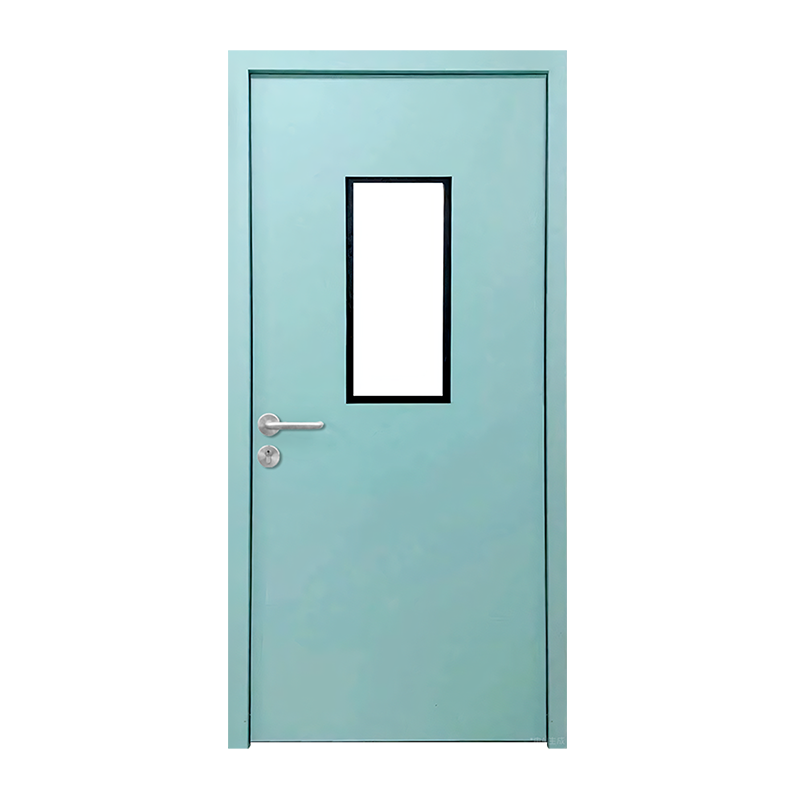
- Hinged cleanroom doors are widely used in pharmaceutical and medical cleanrooms due to their reliable sealing and straightforward installation.
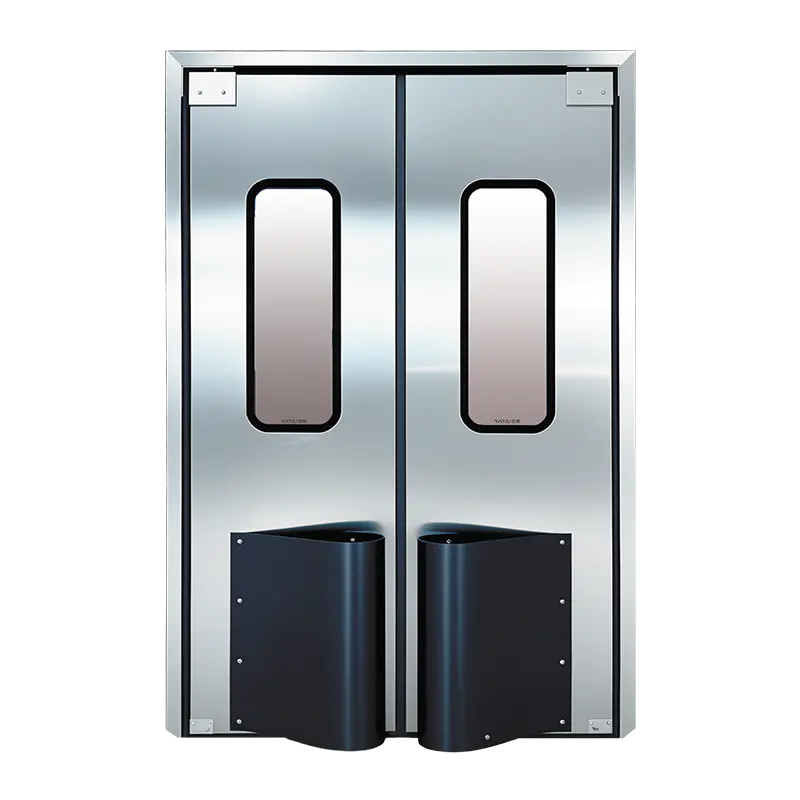
- Sliding cleanroom doors are ideal for high-traffic areas and equipment transfer zones, minimizing airflow disturbance during operation.
- Automatic cleanroom doors enhance contamination control by reducing manual contact and supporting hands-free operation in sterile environments.
Each door type must be evaluated for its sealing efficiency, durability, and compatibility with cleanroom wall systems. The wrong choice can increase maintenance costs and operational risks over time.
Cleanroom Door Materials and Surface Performance
Material selection is critical for cleanroom doors, as surfaces must resist particle shedding, corrosion, and chemical degradation. Common materials include powder-coated steel, stainless steel, aluminum honeycomb panels, and HPL laminated panels.
Stainless steel cleanroom doors are preferred in pharmaceutical cleanrooms and laboratories due to their chemical resistance and ease of sterilization. Powder-coated steel doors offer cost efficiency while maintaining acceptable smoothness and durability when properly finished.
| Material | Key Advantages | Typical Applications |
| Stainless Steel | Corrosion resistance, hygienic | Pharma, biotech, hospitals |
| Powder-Coated Steel | Cost-effective, durable | ISO cleanrooms, electronics |
| HPL Panel | Smooth surface, design flexibility | Medical and research facilities |
Airtight Sealing and Pressure Control Performance
Airtight performance is one of the most critical aspects of cleanroom doors. High-quality sealing systems, including EPDM or silicone gaskets, are used to prevent air leakage and maintain positive or negative pressure differentials.
Poor sealing can cause pressure fluctuations, increase energy consumption, and reduce the effectiveness of HVAC systems. Cleanroom doors must be tested for air leakage rates and pressure resistance to ensure consistent performance under operational conditions.
Compliance with Cleanroom Standards and Regulations
Cleanroom doors must comply with relevant international standards, including ISO 14644, GMP guidelines, and FDA requirements for pharmaceutical facilities. These standards define acceptable particle levels, airflow behavior, and surface cleanliness.
Door assemblies should be designed to avoid gaps, exposed fasteners, and horizontal ledges where contaminants may accumulate. Documentation such as material certificates, surface finish specifications, and installation validation is often required during audits.
Integration with Cleanroom Wall and Panel Systems
Cleanroom doors must integrate seamlessly with modular wall panels to maintain a flush, continuous surface. Poor alignment between door frames and wall systems can create particle traps and compromise cleanability.
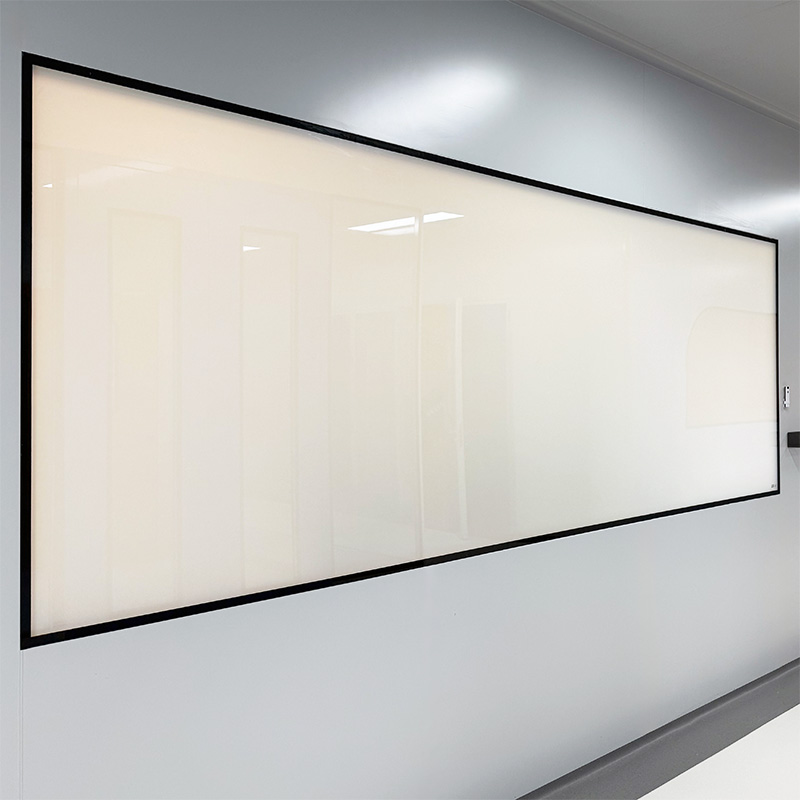
Modern cleanroom door systems are designed for compatibility with sandwich panels, aluminum profile walls, and steel panel systems. Flush-mounted vision panels and concealed frames further enhance hygienic performance.
Operational Considerations: Traffic Flow and Safety
Traffic frequency and personnel behavior significantly influence cleanroom door selection. High-traffic areas benefit from automatic doors with controlled opening speeds to minimize airflow disturbance.
Safety features such as interlocking systems, emergency release mechanisms, and vision panels are essential in pharmaceutical cleanrooms and hospital environments. These features improve workflow efficiency while maintaining contamination control.
Maintenance, Cleaning, and Long-Term Durability
Cleanroom doors are subject to frequent cleaning with disinfectants, alcohols, and sterilizing agents. Materials and finishes must withstand repeated exposure without degradation or particle release.
Regular inspection of seals, hinges, and locking mechanisms helps maintain airtight performance. Preventive maintenance reduces downtime and extends the service life of cleanroom door systems.
Key Factors for Selecting the Right Cleanroom Door
Choosing the right cleanroom door requires balancing regulatory compliance, operational efficiency, and long-term cost. Decision-makers should assess room classification, pressure requirements, cleaning protocols, and user behavior.
A well-designed cleanroom door contributes to stable environmental control, smoother workflows, and reliable compliance with cleanroom standards. Investing in the appropriate door system reduces contamination risk and supports sustainable cleanroom operation.
Previous Post
Steel Cleanroom Doors: Design, Performance Standards, and Installation Best Practices for Controlled Environments
Next Post
Essential Guide to Radiation Shielding Doors: Selection, Installation, and Maintenance

Jiangyin Yatai Purification Equipment Technology Co., Ltd. is a modern and specialized manufacturer of clean doors and windows. Cleanroom Project Factory, offer Custom Clean Doors and Windows.
QUICK LINKS
PRODUCTS
GET IN TOUCHs
-
 +86 13616113658
-
 +86(0)510-86661588 / 86668687
-
 [email protected]
-
 +86(0)510-86661588
-
 No.2, Huagang West Road, Shizhuang, Jiangyin, Jiangsu province
© Jiangyin Yatai Purification Equipment Technology Co., Ltd.
All Rights Reserved.
 Cleanroom Door Manufacturers