-
 +86 13616113658
-
 [email protected]
 English
 Español
 русский
 عربى
عربى
Cleanroom Fire-Resistant Doors: Ratings, Specs & Selection Guide
Content
A pharmaceutical cleanroom that passes ISO 14644 classification can still fail a fire inspection the same week — because fire compliance and contamination control are governed by entirely different engineering standards. Cleanroom fire-resistant doors sit at the intersection of both. Getting the specification wrong means either a regulatory citation or a door that compromises your pressure differential the moment a fire event occurs.
What Makes a Cleanroom Fire Door Different from a Standard Fire Door
A conventional fire door is designed to block flame and smoke propagation for a defined period. A cleanroom fire-resistant door must do that — while simultaneously producing zero particulate contamination, tolerating repeated disinfection cycles, and maintaining air pressure differentials between zones.
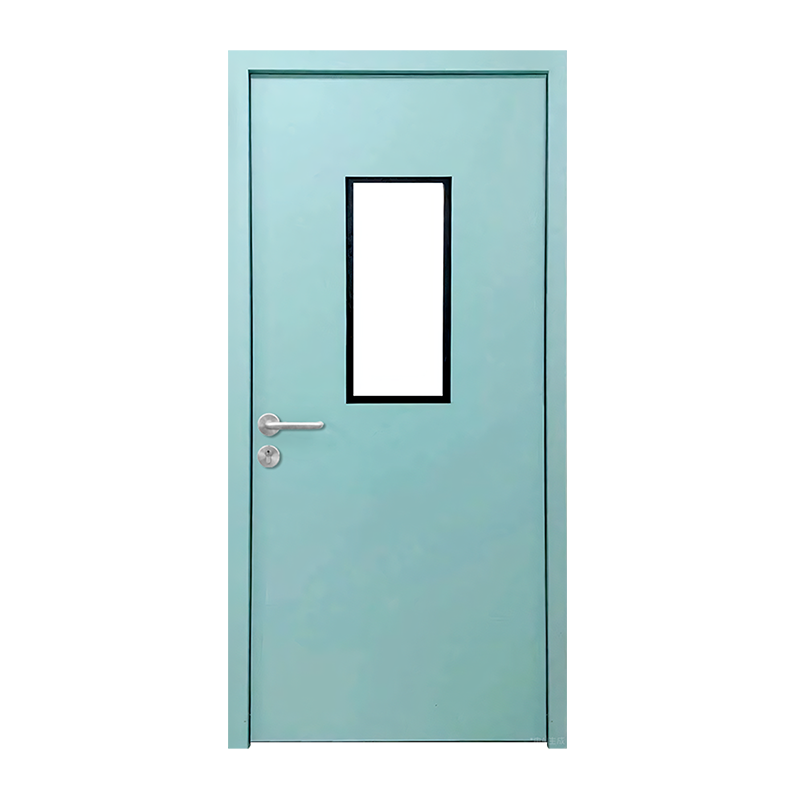
Standard fire doors use intumescent strips that expand when exposed to heat. Cleanroom versions require those same strips to be concealed within a flush, seamless door face — because any exposed ledge or groove is a particle trap that will fail a contamination audit. The door surface must also withstand repeated wiping with IPA, hydrogen peroxide vapor, and other aggressive biocides without delaminating or off-gassing.
This is not a niche product. Pharmaceutical manufacturing, semiconductor fabrication, BSL-3 biosafety laboratories, hospital operating suites, and food processing facilities all require this dual capability. Any controlled environment where fire compartmentation intersects with contamination control needs a cleanroom fire-rated door — not a standard fire door adapted for the purpose.
Fire Resistance Ratings: What the Classes Actually Mean
Fire resistance classification is measured by how long a door assembly maintains its integrity under standardized fire exposure. Three classes are commonly used in cleanroom applications:
| Class | Fire Resistance Limit | Typical Application |
|---|---|---|
| Class A | ≥ 90 minutes | High-risk zones: solvent storage corridors, high-occupancy pharmaceutical suites |
| Class B | ≥ 60 minutes | Partition walls between cleanroom and non-clean ancillary areas |
| Class C | ≥ 36 minutes | Low-risk internal partitions where compartmentation requirements are minimal |
In the United States, the governing standard is NFPA 80, Standard for Fire Doors and Other Opening Protectives, which covers installation, inspection, and maintenance requirements across door assembly components. In Europe, EN 13501-2 applies. Both require every component — door leaf, frame, hardware, and glazing — to be tested and labeled as a complete assembly. A door leaf with a 90-minute rating installed in an uncertified frame does not produce a compliant 90-minute assembly.
Key Construction Features to Verify Before Specifying
Several technical details determine whether a cleanroom fire door will perform under both regulatory frameworks simultaneously.
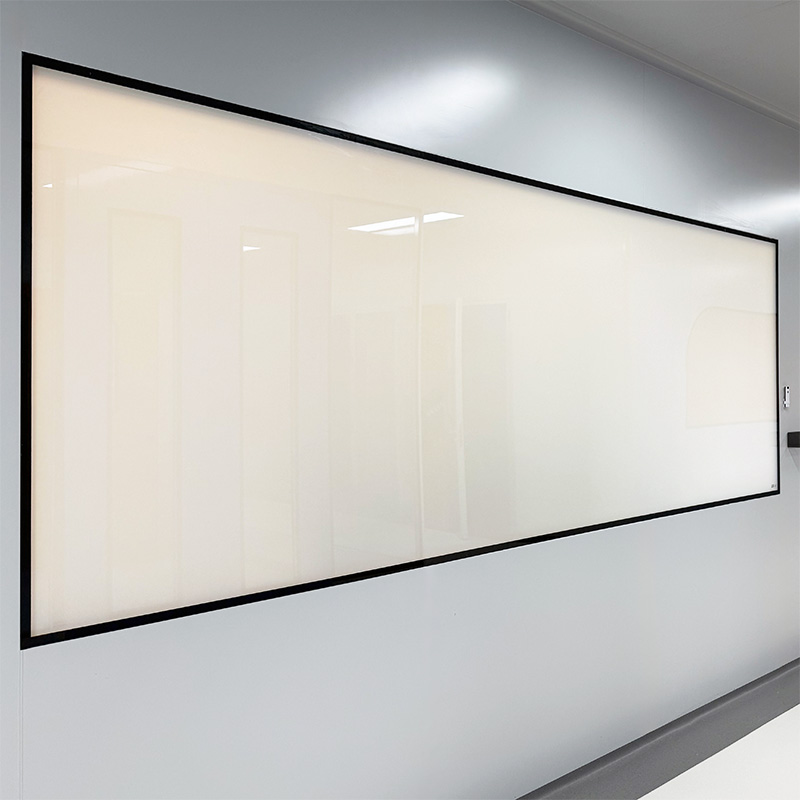
Glass specification: The glazed panel in the door must be fire-rated glass, not standard tempered safety glass. Crystal silicon fireproof glass maintains structural integrity and thermal insulation under fire conditions. Standard tempered glass will shatter within minutes of fire exposure, creating an opening for flame and smoke propagation.
Intumescent sealing: The perimeter seal must be a fireproof expansion strip with sufficient expansion capacity — typically rated to expand to 20 times its original volume — to fully close the gap between door and frame before flame can penetrate. This seal is what buys time for evacuation and fire suppression response.
Hardware temperature rating: Hinges, latches, and closers must retain function at elevated temperatures. Hardware with a minimum melting point of 950°C ensures the door remains operable and stays closed throughout the rated fire resistance period.
Surface treatment: Galvanized steel substrates with powder-coated finishes are the standard for cleanroom fire doors. The coating must be applied without joints or dead corners — any discontinuity in the surface finish creates a contamination harbor and will be flagged during GMP audits.
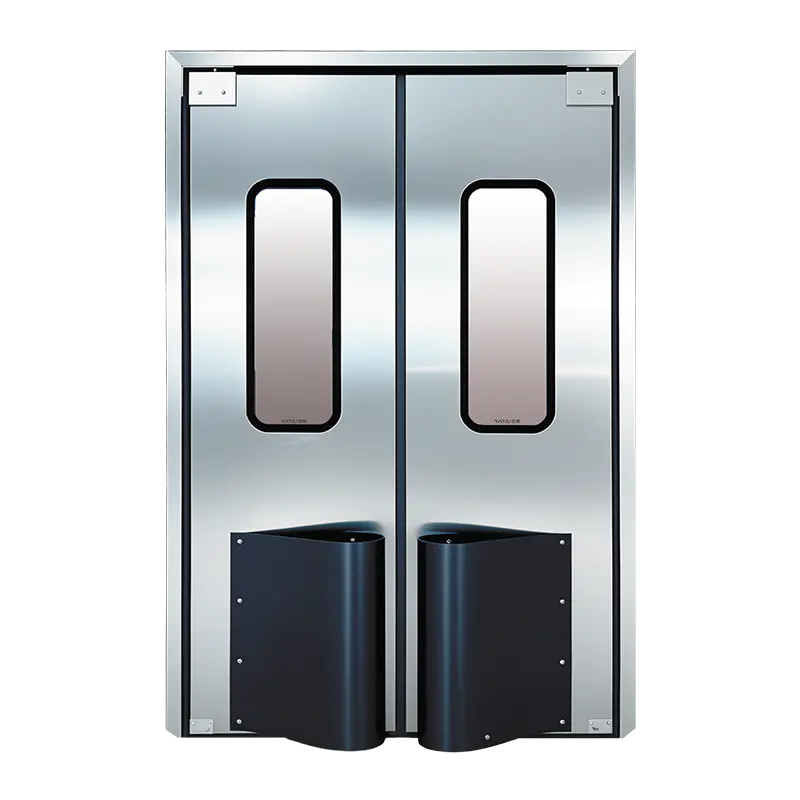
For pharmaceutical and semiconductor facilities, the full range of cleanroom door configurations — including single-leaf, double-leaf, and unequal double-leaf — should all be available in fire-rated versions to match the traffic and airflow patterns of each zone.
Matching the Door to Your Facility's Pressure Differential Requirements
Cleanrooms operate at positive or negative pressure relative to adjacent spaces. A fire door that seals adequately during normal operation can disrupt those differentials if it warps under heat or if its automatic closing mechanism fails to engage reliably. Specifying a door that has been tested as a complete assembly — including the closing device — under the fire standard relevant to your jurisdiction removes that uncertainty.
For facilities combining fire compartmentation with airlock or interlock requirements, airtight door assemblies designed for controlled-environment pressure management can be paired with fire-rated frames to meet both requirements within a single opening. This approach avoids the installation of two sequential doors where space is constrained.
Installation and Ongoing Compliance
A fire door assembly loses its rating the moment an uncertified modification is made — whether that means cutting a cable penetration through the door leaf, replacing a listed hinge with an unlisted substitute, or adding an access control reader in a way that compromises the door face. NFPA 80 requires annual inspection of all fire door assemblies, with documentation of findings retained on site.
For cleanroom environments, that inspection cycle should be aligned with scheduled GMP audits so that fire compliance and contamination control records are maintained under a single quality management workflow. Any door showing deformation, surface damage, or seal degradation should be taken out of service immediately — a compromised fire door provides neither fire protection nor contamination control.
The practical takeaway: select a fire-rated cleanroom door that ships as a tested, labeled assembly — not a door leaf and frame sourced separately. Verify the fire class against your facility's compartmentation strategy, confirm the glass and hardware specifications, and schedule installation inspection before first use. That sequence eliminates the most common compliance failures before they become audit findings.
Previous Post
High Speed Roll Up Doors for Cleanroom: Types, Specs & Selection Guide
Next Post
Pharmaceutical Cleanroom HPL Purification Doors: Material, Standards & Selection

Jiangyin Yatai Purification Equipment Technology Co., Ltd. is a modern and specialized manufacturer of clean doors and windows. Cleanroom Project Factory, offer Custom Clean Doors and Windows.
QUICK LINKS
PRODUCTS
GET IN TOUCHs
-
 +86 13616113658
-
 +86(0)510-86661588 / 86668687
-
 [email protected]
-
 +86(0)510-86661588
-
 No.2, Huagang West Road, Shizhuang, Jiangyin, Jiangsu province
© Jiangyin Yatai Purification Equipment Technology Co., Ltd.
All Rights Reserved.
 Cleanroom Door Manufacturers