-
 +86 13616113658
-
 [email protected]
 English
 Español
 русский
 عربى

Home / Media / Industry News / Fill and Finish Biologics: A Guide to Cleanrooms, Containers, and Scale-Up
Fill and Finish Biologics: A Guide to Cleanrooms, Containers, and Scale-Up
Content
A 2,000 L bioreactor can hold a batch worth more than the equipment around it, yet that batch becomes a medicine only after it survives fill and finish. The final stage is where bulk drug substance meets filters, tubing, stoppers, glass, and human intervention under aseptic conditions. For biologics, this is not a packaging afterthought. It is the last practical control point for sterility, potency, and yield.
Grade A Critical filling zone target under EU GMP and ISO cleanroom logic
0.2 micrometer Sterile filtration boundary before filling
100 percent Inspection target for visible particles and container defects
What Fill and Finish Means for Biologics
Fill and finish is the final manufacturing stage where formulated bulk biologic is filtered, filled into vials, syringes, or cartridges, stoppered, sealed, inspected, labeled, and prepared for release. It sits downstream of cell culture, recovery, and purification, but it carries upstream value: a single deviation can hold or reject a batch that took weeks to produce.
Fill and finish for biologics is the aseptic conversion of bulk drug substance into a sealed, labeled, and inspected patient dose, with each step controlled for sterility, particulate load, container closure integrity, and product stability.
Monoclonal antibodies, fusion proteins, vaccines, and other biologic modalities bring different viscosity, foaming, and adsorption behavior into the same filling suite. A line that runs well for one formulation may expose weakness in another, especially when fill volumes are small, line stops are frequent, or the product has limited hold time.
Core Operations in a Fill-Finish Line
- Formulation, mixing, and final sterile filtration
- Filling into glass or polymer primary containers
- Stoppering, capping, and container closure formation
- Visible particle inspection and container closure integrity testing
- Labeling, secondary packaging, and cold-chain handoff
Where Biologic Risk Concentrates
Risk concentrates at the air-liquid interface, at the container surface, and at each planned or unplanned intervention. Biologics are sensitive to shear, foaming, adsorption, and aggregation, so the filling system must control product exposure, not just environmental particles.
Product-side risk
Aggregation, foaming, visible particles, protein adsorption to tubing, and loss of activity during hold times. Small fill volumes make wall effects and dead volume more important.
Process-side risk
Open vial exposure, line stoppages, glove interventions, stopper defects, environmental excursions, and transfer paths that bypass the pressure cascade.
The highest-risk fill-finish lines are not always the fastest. They are the lines where interventions are planned, aseptic technique is qualified, and every open container has a documented recovery path.
| Format | Typical role | Main risk focus |
| Vial | Multi-dose or high-volume biologic fill | Stopper seating, closure integrity, visible particles |
| Prefilled syringe | Fixed-dose biologic and self-injection | Silicone oil interaction, plunger movement, break-loose force |
| Cartridge | Pen and wearable device formats | Bubble control, septum integrity, dose accuracy |
The Facility Envelope Is Part of the Process
The facility envelope is part of fill and finish because doors, windows, panels, and seals define the pressure cascade that keeps airborne particles away from open product. If an airlock door closes slowly, drags its gasket, or cannot hold the intended differential, the cleanroom classification may remain acceptable on paper while the process floor tells a different story.
On pharmaceutical cleanroom layouts, the envelope should be specified with the container path in mind: material entry, personnel entry, waste exit, and emergency egress all affect how often doors open and how much air movement reaches the filler.
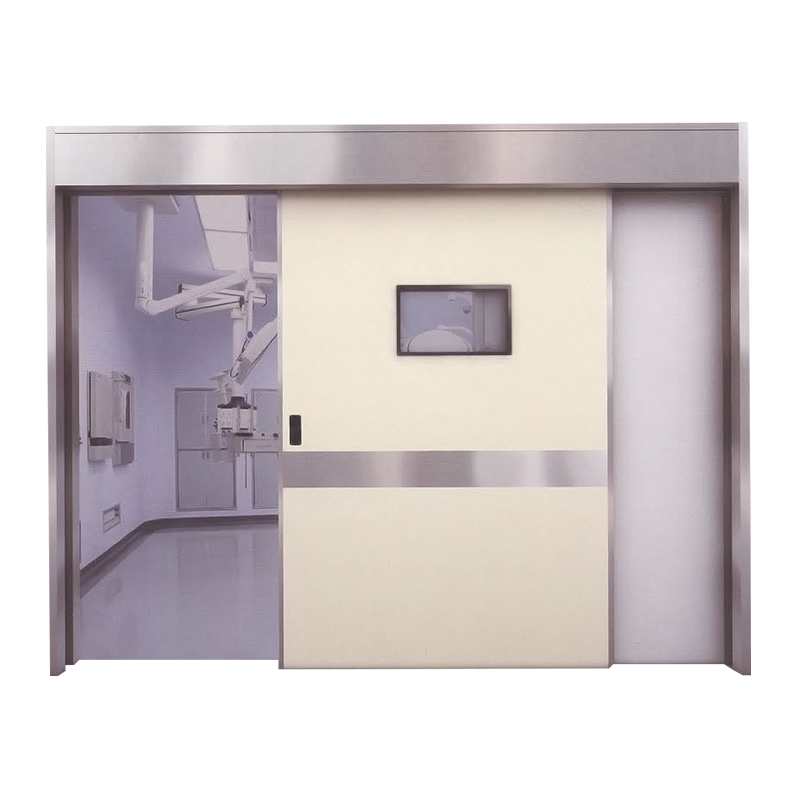 Airtight Automatic Sliding Doors for Cleanroom EnvelopesCleanroom sliding door in light and heavy types with airtight sealing, flush mounting, and adjustable speeds to support controlled airflow and container paths.View Product →
A 10 to 15 Pa pressure differential is useful only when the door closes and seals consistently. The envelope detail is not cosmetic. It is the physical barrier behind the environmental monitoring result.
- Flush, cleanable surfaces at door frames and window reveals
- Gaskets that seal against positive pressure without shedding particles
- Door interlocks and closing speed matched to airlock volume
- Panel joints that support disinfection and avoid particle traps
Container Closure and Inspection
Container closure and inspection decide whether a sterile fill stays sterile after the vial leaves the filling zone. A good environmental result cannot compensate for a stopper that is seated high, a cap that is not fully formed, or a syringe flange that cracks during handling.
A fill-finish line can meet its environmental monitoring limits and still fail at the last millimeter, where the stopper meets the vial.
Three Inspection Layers
In-process checks Fill weight, stopper height, cap torque, and container position at the filling station.
100 percent inspection Visible particles, cracks, fill level, closure presence, and cosmetic defects.
Integrity and stability Vacuum decay, dye ingress, container closure integrity, and shelf-life support.
Scale-Up, Qualification, and Commercial Readiness
Commercial readiness is proven when the line performs under intervention, shift changes, and hold-time pressure, not only at ideal speed. Small sealing choices become visible during scale-up, especially when door sealing performance is tested against airlock pressure, cleaning cycles, and high traffic from operators and material transfer.
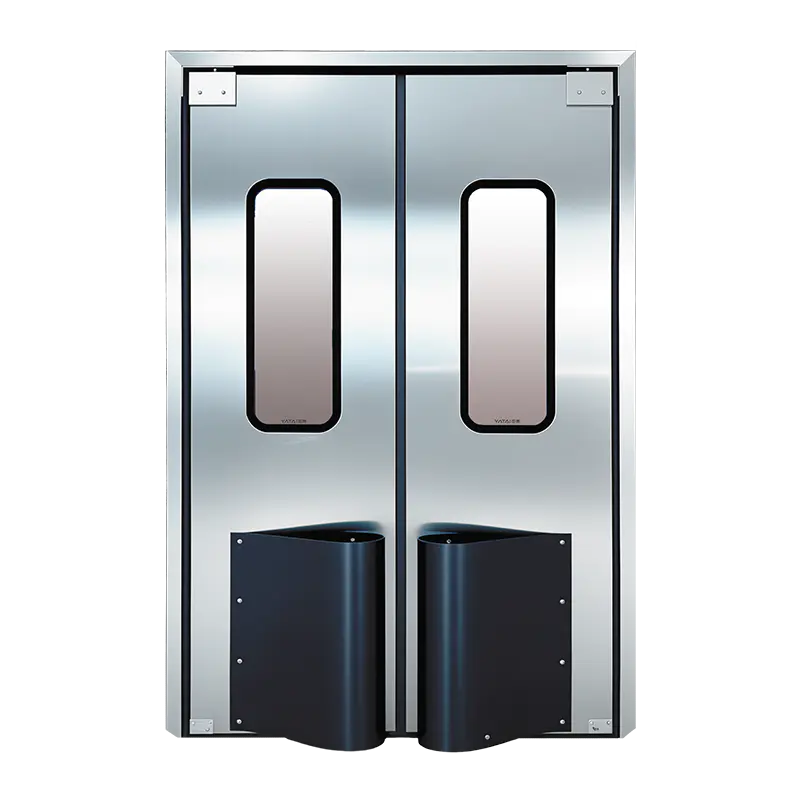
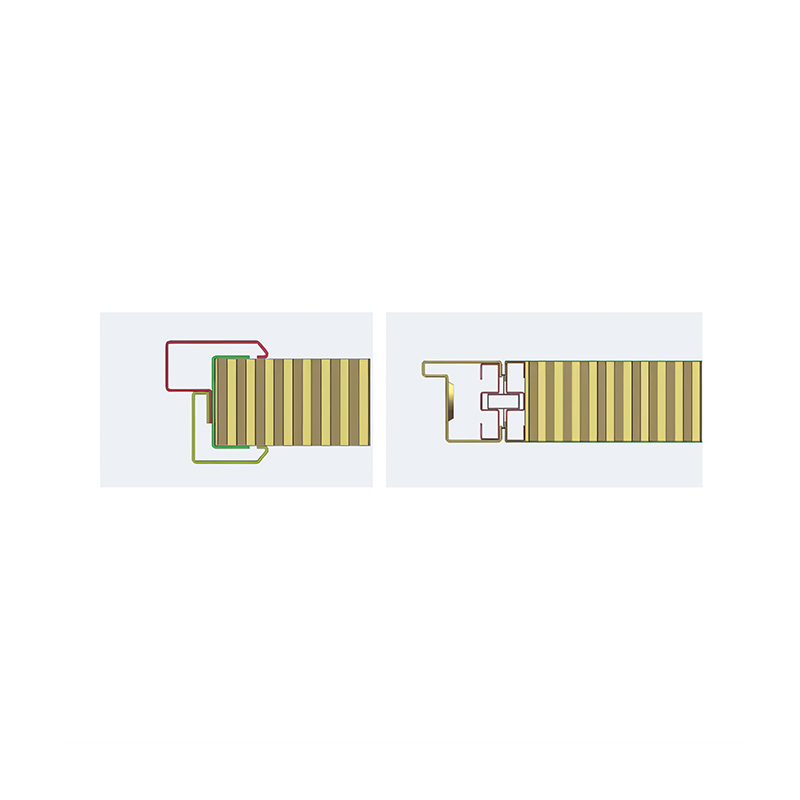 Stainless Steel Cleanroom Doors for Demanding EnclosuresSUS304 cleanroom doors with flat or encircled frames, multiple leaf styles, and insulation options, suited to sealing and high-traffic cleanroom envelope needs.View Product →
- Engineering and media fill runs confirm aseptic technique, line speed, intervention recovery, and operator flow.
- Process performance qualification links fill volume, stopper placement, container closure integrity, and inspection data.
- Cleaning and disinfection validation proves that envelope materials tolerate the agents used on the floor.
- Commercial release locks change control, supplier traceability, spare parts, and deviation management.
The most common scale-up error is not a machine capability gap. It is a facility detail that was never tested with the line running at production speed.
Procurement Checklist for Fill-Finish Cleanroom Builds
Procurement for a fill-finish cleanroom should start with the envelope and end with the acceptance test, not the other way around. Doors, windows, and panels are often bought late, yet they determine whether the pressure cascade, cleaning regime, and material path work as designed.
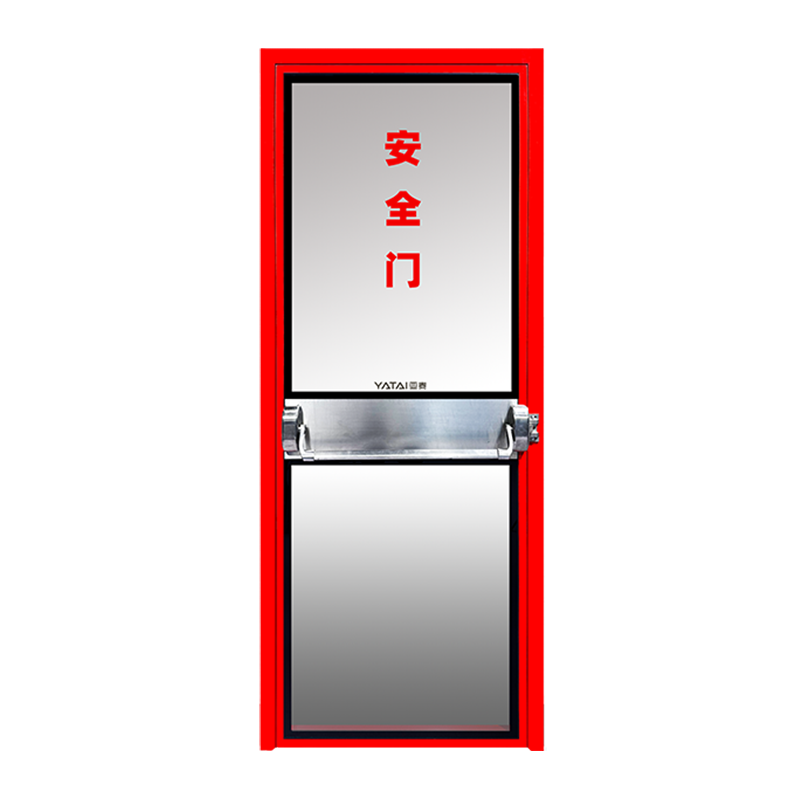 Handmade PU Sandwich Panel for Cleanroom EnclosureHandmade PU sandwich panel listed among cleanroom enclosure products; request quote or download to confirm specifications before fill-finish envelope procurement.View Product →
Pressure cascade Door interlocks, closing speed, gasket compression, and differential recovery after entry.
Cleanability Flush details, corner treatments, window reveals, and compatibility with disinfection agents.
Container path Route from airlock to filler, pass-through sizing, and protection from particle ingress.
Lifecycle support Spare gaskets, hardware traceability, change control, and site acceptance test method.
Ask suppliers for installed tolerance, gasket replacement interval, cleaning agent compatibility, and site acceptance test method before comparing price. A low-cost door that cannot hold its seal becomes an operating cost in every shift.
FAQ
What is fill and finish for biologics?
Fill and finish is the final manufacturing stage where bulk biologic is filtered, filled into primary containers, sealed, inspected, labeled, and prepared for release. It must protect sterility, potency, and container closure integrity.
Why is fill-finish a high-risk stage?
It combines open product exposure, human intervention, complex containers, and high product value. A small particle, a stopper defect, or a pressure loss can affect an entire batch.
What cleanroom class is used for aseptic filling?
Critical filling zones commonly target ISO 5 or Grade A conditions, with surrounding background areas at ISO 7 or Grade B. The exact classification and monitoring plan must match the product, process, and regulator expectations.
How do cleanroom doors and panels affect product safety?
They control air pressure, particle ingress, cleaning access, and material flow. Poorly sealed doors or particle-trapping panel joints can undermine the environmental control that the filling line depends on.
A well-designed fill-finish facility makes the product path boring: one direction of flow, seals that work, and no surprise interventions during a filled batch.
Previous Post
No previous article
Next Post
Decontamination Is Needed in Order To Remove Contaminants: Cleanroom Envelope Guide
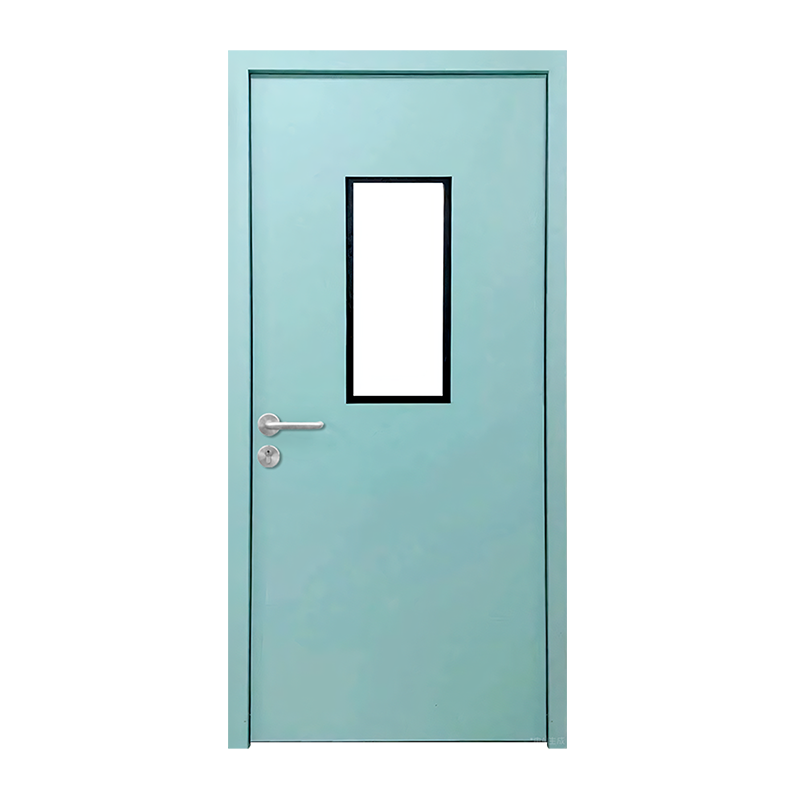


Jiangyin Yatai Purification Equipment Technology Co., Ltd. is a modern and specialized manufacturer of clean doors and windows. Cleanroom Project Factory, offer Custom Clean Doors and Windows.
QUICK LINKS
PRODUCTS
GET IN TOUCHs
-
 +86 13616113658
-
 +86(0)510-86661588 / 86668687
-
 [email protected]
-
 +86(0)510-86661588
-
 No.2, Huagang West Road, Shizhuang, Jiangyin, Jiangsu province
© Jiangyin Yatai Purification Equipment Technology Co., Ltd.
All Rights Reserved.
 Cleanroom Door Manufacturers