-
 +86 13616113658
-
 [email protected]
 English
 Español
 русский
 عربى

Home / Media / Industry News / Decontamination Is Needed in Order To Remove Contaminants: Cleanroom Envelope Guide
Decontamination Is Needed in Order To Remove Contaminants: Cleanroom Envelope Guide
Content
- 1 Decontamination Is Needed in Order To: The Direct Answer
- 2 Contaminants Travel on Carriers, Not on Their Own
- 3 Where Decontamination Happens Inside a Cleanroom Building
- 4 Specifying doors, windows and panels that can be decontaminated
- 5 A Workable Sequence for People and Equipment
- 6 Failure Points That Show Up in Audits
- 7 Frequently Asked Questions
One positive swab at the bottom gasket of a transfer airlock is enough to hold a batch. The investigation that follows rarely ends at the air handling unit; it usually ends at a surface nobody could clean properly, a door that closed but never sealed, or a gowning step that was written down for the auditor and skipped on the night shift.
Decontamination is needed in order to remove contaminants from people and equipment before they leave a controlled area, which is both the exam answer and, read closely, a description of almost every interface in a cleanroom envelope.
Decontamination Is Needed in Order To: The Direct Answer
Decontamination is needed in order to remove contaminants from people and equipment before those contaminants can be carried into clean areas, inhaled, ingested, or transferred to the next product, sample or surface. Removal is the purpose; every other clause in a decontamination plan exists to make that removal reliable, repeatable and provable.
Multiple-choice versions of this question usually attach three distractors that describe other emergency functions. Keeping the functions apart is most of the work:
- Identifying the chemical involved is hazard identification, done with monitoring and placards, not by washing a suit.
- Estimating how much material was released is an assessment task that belongs to the incident commander.
- Treating injuries from chemical exposure is medical care, and it happens after decontamination so the treatment area stays clean.
Regulatory text follows the same logic. The OSHA hazardous waste standard requires a written decontamination procedure before employees enter areas where exposure may occur, and it expects methods, equipment, siting and waste disposal to be planned rather than improvised on the day.
Decontamination: the controlled removal or neutralisation of hazardous or unwanted material from people, equipment and surfaces so they can be reused, released or handled without carrying contamination downstream.
10-15 Pa
Typical pressure step between adjacent cleanroom zones, so air and contamination move outward, not back.
0.8 micron
Commonly specified surface roughness for stainless steel that has to be wiped down every shift.
70%
Typical isopropyl alcohol concentration for manual disinfection of door leaves, frames and glass.
Contaminants Travel on Carriers, Not on Their Own
Contaminants almost never arrive alone. They ride on skin flakes, fabric, tooling, cart wheels, gaskets and door handles, which is why a decontamination step has to address the carrier as well as the substance.
| Contaminant class | Typical carriers | Primary approach | How effectiveness is checked |
| Particulate | garments, packaging, panel joints | HEPA vacuum, wet wipe, staged airlocks | particle counts, inspection under grazing light |
| Chemical | gloves, boots, tools, spill trays | detergent wash, neutralisation, final rinse | rinseate pH and conductivity, wipe sampling |
| Biological | hands, gowns, handles, drains | validated disinfectant with full contact time | contact plates, swabs, trend data |
| Radiological | PPE, equipment, containers | removal plus shielding, controlled waste route | survey readings, dose rate |
The table is deliberately unsentimental about chemistry. Physical removal does most of the work: rinsing, wiping and vacuuming take away more hazardous material than any single chemical step, and a neutraliser that is not followed by a rinse simply leaves a different residue on the same door.
A neutralised surface is not a clean surface. If the reaction product stays on the leaf, the next person through the airlock carries it into the next room.
Verification is where most programmes are weakest. A procedure that cannot be checked, with a named sampling point and a named person, is a procedure that will drift within two quarters.
Where Decontamination Happens Inside a Cleanroom Building
In a cleanroom building, decontamination is a sequence of rooms, pressure steps and door actions rather than one piece of equipment. People pass through a gowning room, a step-over bench and an airlock; materials pass through a transfer hatch or a material airlock with interlocked doors; waste leaves by a route that never crosses a clean corridor.
Each of those interfaces depends on hardware that either seals or does not. A material airlock works because the two leaves cannot open at the same time and because each leaf compresses a continuous gasket against a smooth frame. On a sliding leaf, airtightness comes from the seal geometry and the closing force, not from the speed of the motor.
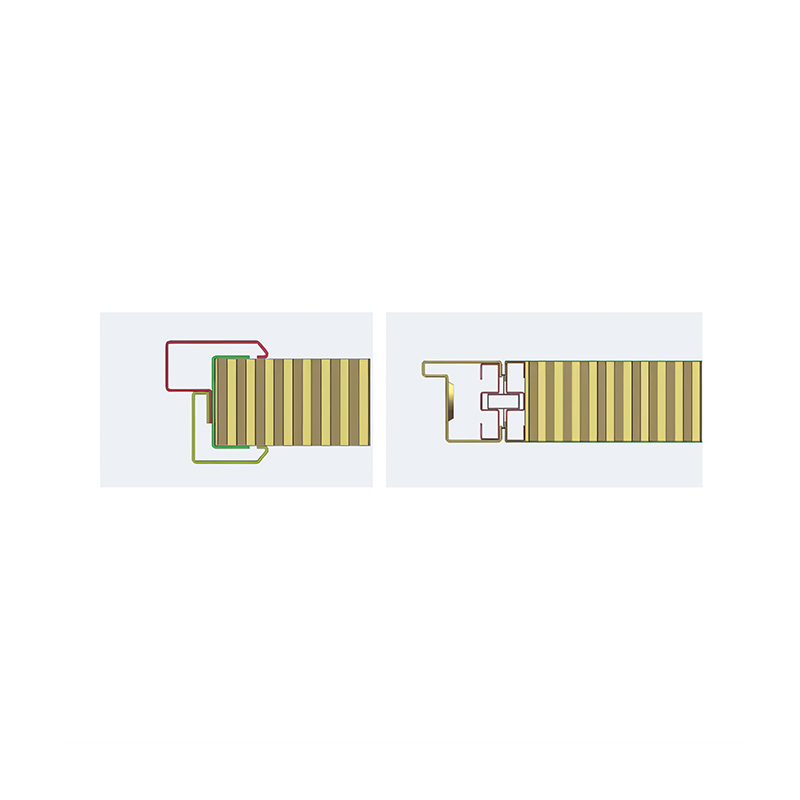
 Built-in Hermetic Sliding Door for Cleanroom InterfacesA flush-installed cleanroom sliding door with continuous sealing and Level 8 airtightness, relevant where interface hardware and closure reliability are being assessed.View Product →
Routine transfer
- Frames, handles and gasket lines wiped at each shift change
- Interlocked doors, one leaf open at a time
- Waste bagged inside the room, never carried through the clean corridor
- Pressure differential logged, not assumed
Emergency decontamination
- Dedicated route that does not cross clean zones
- Outer layer removed before the inner layer is touched
- Runoff collected and treated, not mopped into a drain
- Area stays reclassified until the verification result is signed
The envelope decides how fast an emergency decontamination can run. A room with coved joints and replaceable gaskets recovers in hours; a room with open profiles and screwed-on trims may need panels replaced.
Specifying doors, windows and panels that can be decontaminated
A surface only counts as cleanable if it can be wiped, sealed and re-verified. Anything with a ledge, an exposed fixing or a porous cut edge will fail that test no matter how good the air handling behind it happens to be.
| Component | What to write into the order | Why it survives decontamination |
| Door leaf and frame | 304 or 316L stainless with a smooth finish, or colour-coated steel where corrosion risk is low | flat, wipable face with no recessed screw heads |
| Gasket | continuous EPDM or silicone, replaceable without removing the leaf | a compression seal that can be inspected and swapped on schedule |
| Closing hardware | drop-down seal or inflatable gasket, with door interlock | keeps the pressure step intact while one leaf is open |
| Window and vision panel | flush double glazing, silicone sealed to the frame, no inner rebate | stops dust collecting along the frame line |
| Wall and ceiling panel | colour-coated steel skins on rock wool or PU core, aluminium joining profiles, sealed joints | coved corners and no exposed insulation edge |
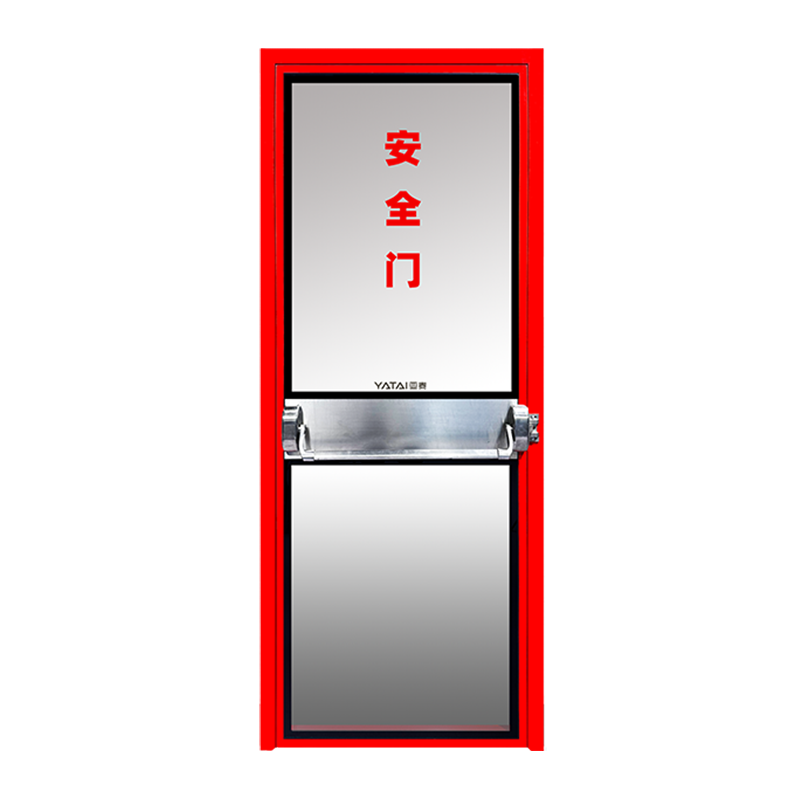
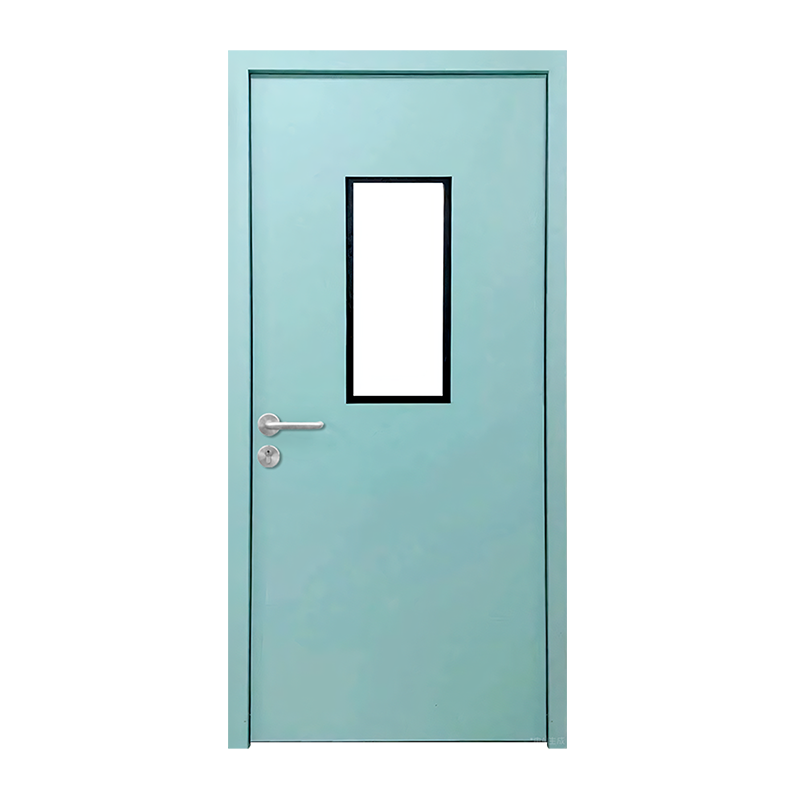
 Stainless Steel Clean Door for Healthcare and LaboratoriesA SUS304 stainless steel cleanroom door with brushed frame and leaf, suited to healthcare and laboratory settings where durable surfaces face frequent cleaning.View Product →
Hospitals and laboratories are the hardest test of these details, because cleaning happens several times a day and the person holding the cloth is rarely the person who wrote the specification. Our notes on airtight doors in healthcare and laboratory hygiene cover the same checks from the clinical side.
 Handmade Rock Wool Sandwich Panel for Cleanroom EnclosuresA handmade rock wool sandwich panel in the colour-coated range, relevant when reviewing cleanroom enclosure materials alongside decontamination-area planning.View Product →
Write the cleaning method into the purchase order. If the specification does not say which agent will be used and how often, the gasket supplier and the disinfectant supplier are quietly guessing at each other.
A Workable Sequence for People and Equipment
A defensible sequence works from the dirtiest item outward and finishes with the most sensitive item, normally the respirator, so that nothing clean ever touches anything dirty. The steps below follow maximum-protection logic and translate directly into the layout of a decontamination corridor.
Equipment drop
Tools, sample containers and radios are set down at the first station, before any wash water is used.
Gross decontamination
A high-volume rinse takes off the bulk of the material. This is where most contamination actually leaves the site.
Detergent and neutralisation wash
Surfactant lifts residue from the suit surface; a neutraliser handles corrosive residues where the substance is known.
Final rinse
Clean water flows from the clean end toward the dirty end. Never the reverse, and never from a shared tank.
Boot and glove removal
Outer gloves and boots come off while the inner layer is still intact, seated if the suit allows it.
Suit removal
The suit is rolled outward, away from the body, and bagged at the station rather than carried along the line.
Respirator removal and residue check
The respirator comes off last, followed by a visual check under adequate light and medical monitoring where exposure warrants it.
Two practical details decide whether the line survives a real shift: enough space between stations for a person in an encapsulated suit to turn around, and a written route for the water that answers the disposal question before anyone needs it.
Failure Points That Show Up in Audits
Most decontamination failures inside controlled environments are envelope failures, not chemistry failures. The disinfectant is usually correct; the surface it lands on is not.
- Gaskets that have hardened or split, so the leaf closes onto a gap no cloth can reach.
- Silicone joints tooled by eye, now holding a bead of residue along every panel edge.
- Windows set into a rebate, creating a horizontal ledge at exactly hand height.
- Closers and hinges with exposed adjustment screws that trap lint and resist wiping.
- Cleaning records that name the room but not the agent, the concentration or the contact time.
An auditor can usually judge how a facility is cleaned by looking at three places: the bottom door gasket, the corner where panel meets floor, and the frame around the pass box. Residue collects wherever the design gave it somewhere to sit.
Frequently Asked Questions
What is the correct answer to decontamination is needed in order to?
Remove contaminants from people and equipment. The phrase describes the purpose of the process rather than the method: removal may be physical, chemical or a combination, but the objective is to stop contamination leaving the controlled area on a person, a tool or a surface.
How often should cleanroom doors and windows be decontaminated?
Frequency follows risk, not the calendar. High-touch surfaces such as handles, push plates and gasket lines are usually wiped at every shift change, while full frame and glass cleaning is scheduled with the room disinfection cycle. Whatever the interval, it should be written with the agent, concentration and contact time named.
Does door design really change decontamination results?
Yes, because design decides how much of the surface a cloth can reach. Flush leaves, continuous replaceable gaskets and sealed frames clean in a single pass; recessed fixings and open profiles cannot be cleaned at all without dismantling something first.
What should be recorded after a decontamination step?
At minimum the area, the agent and concentration, the contact time, the person performing the task and any deviation. For emergency decontamination, add the route used, the waste disposition and the verification result before the area returns to its normal classification.
Decontamination is needed in order to keep contamination from travelling, and in a cleanroom the first place it tries to travel is the doorway. Pressure steps, interlocked airlocks and sealed frames are not background detail; they are the parts of the building that make the procedure physically possible.
If a cleaning procedure cannot be carried out on the door in front of you, it is not a cleaning problem. It is a specification problem, and it will repeat at every shift change until the envelope is corrected.
Previous Post
No previous article
Next Post
Cleanroom Installation Guide: Build Sequence, Sealing and Envelope Checks
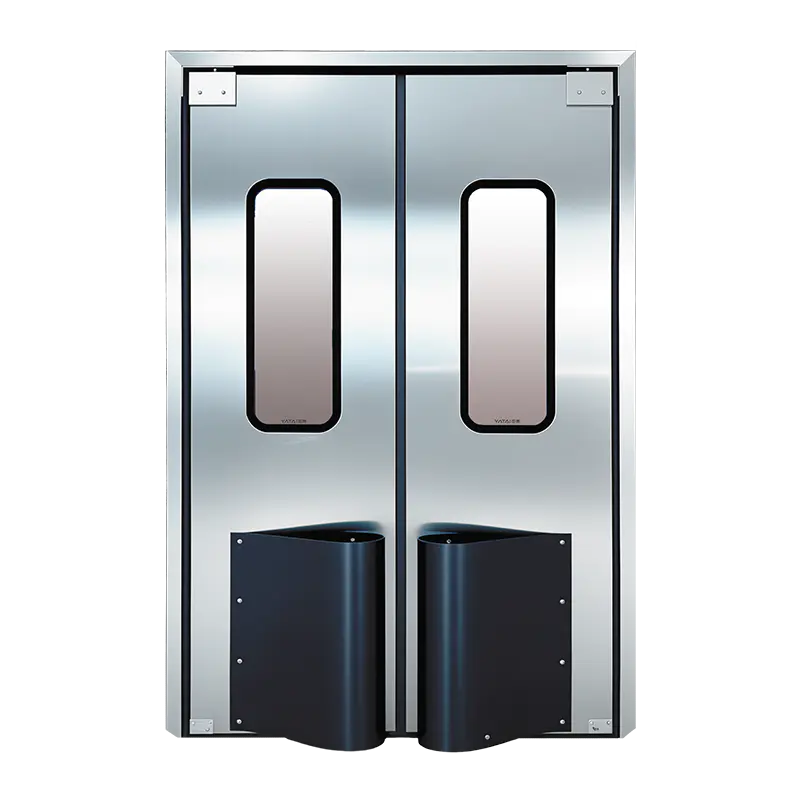

Jiangyin Yatai Purification Equipment Technology Co., Ltd. is a modern and specialized manufacturer of clean doors and windows. Cleanroom Project Factory, offer Custom Clean Doors and Windows.
QUICK LINKS
PRODUCTS
GET IN TOUCHs
-
 +86 13616113658
-
 +86(0)510-86661588 / 86668687
-
 [email protected]
-
 +86(0)510-86661588
-
 No.2, Huagang West Road, Shizhuang, Jiangyin, Jiangsu province
© Jiangyin Yatai Purification Equipment Technology Co., Ltd.
All Rights Reserved.
 Cleanroom Door Manufacturers