-
 +86 13616113658
-
 [email protected]
 English
 Español
 русский
 عربى
عربى
Home / Media / Industry News / HPL Cleanroom Door Performance in Pharmaceutical and Electronic Industries
HPL Cleanroom Door Performance in Pharmaceutical and Electronic Industries
Content
- 1 Why HPL Material Suits Critical Cleanroom Environments
- 2 Key Performance Characteristics: Sealing, Fire Resistance, and Durability
- 3 Installation Considerations for Leak-Free Operation
- 4 Maintenance Protocols to Extend Door Service Life
- 5 Comparing HPL with Alternative Cleanroom Door Materials
- 6 Practical Selection Criteria for Your Facility
Why HPL Material Suits Critical Cleanroom Environments
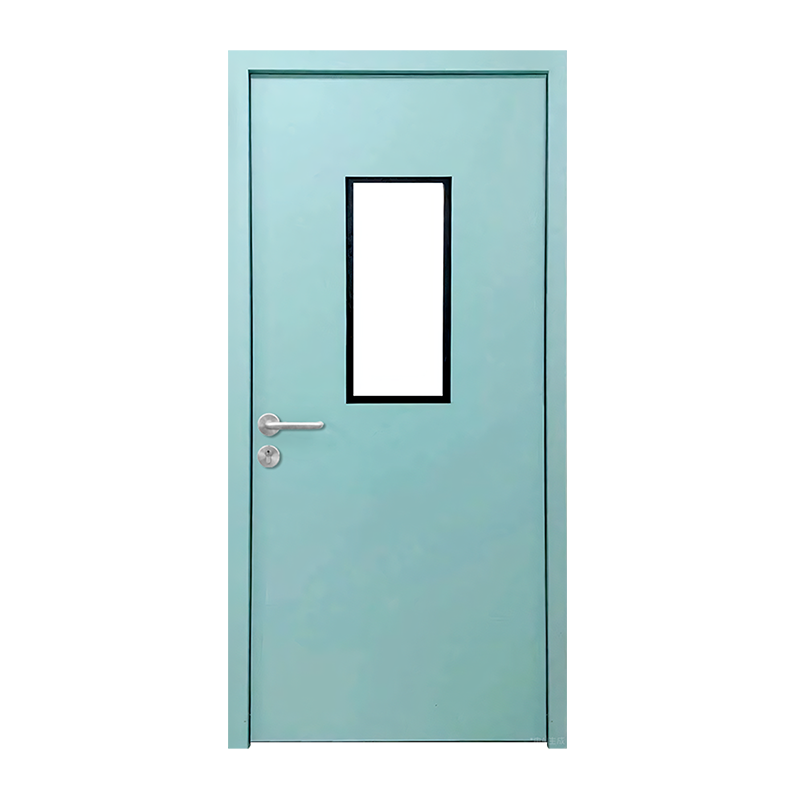
HPL cleanroom doors represent a proven solution that balances strict hygiene demands with long-term mechanical reliability. The material’s layered structure, cured under heat and pressure, creates a non-porous surface with an average roughness below 0.5 µm Ra. This smoothness prevents particle accumulation and allows complete wipe-down within seconds. HPL panels resist over 50 common disinfectants—including 5% hydrogen peroxide, quaternary ammonium compounds, and peracetic acid blends—without swelling, discoloration, or loss of integrity. For facilities operating at ISO Class 5 through 8, this chemical tolerance directly reduces the risk of contamination from door surface degradation.
Moisture resistance further supports cleanroom stability. In environments where relative humidity reaches 90% RH during wash-downs, HPL doors exhibit negligible dimensional change, typically less than 0.3% thickness swell after 24-hour water immersion per EN 438 standards. This dimensional stability maintains the tight gap tolerances required for pressurized cascades, preserving the room’s pressure hierarchy without door warping.
Key Performance Characteristics: Sealing, Fire Resistance, and Durability
Air Leakage and Gasket Systems
Controlled leakage defines cleanroom door performance. High-quality HPL doors equipped with continuous compression gaskets routinely achieve air leakage rates below 0.3 m³/h per linear metre of door perimeter at a 50 Pa pressure differential. The gasket compression, typically 3–5 mm, is maintained by adjustable hinges and multi-point latching systems. This value easily satisfies the tightest ISO cleanroom pressure cascade specifications and helps reduce fan energy consumption for room pressurization.
Fire Integrity Without Sacrificing Cleanability
In pharmaceutical and biotech corridors, fire-rated doors must combine smoke control with washable surfaces. HPL doors can be manufactured with mineral-based core materials to achieve integrity ratings EI30 or EI60 (30 or 60 minutes) under EN 1634-1, while the laminate face sheet fully covers the core, leaving no exposed edges that might trap contaminants. The flush, gapless design retains the same cleanroom-compatible geometry as non-rated versions.
Mechanical Strength for High-Traffic Operations
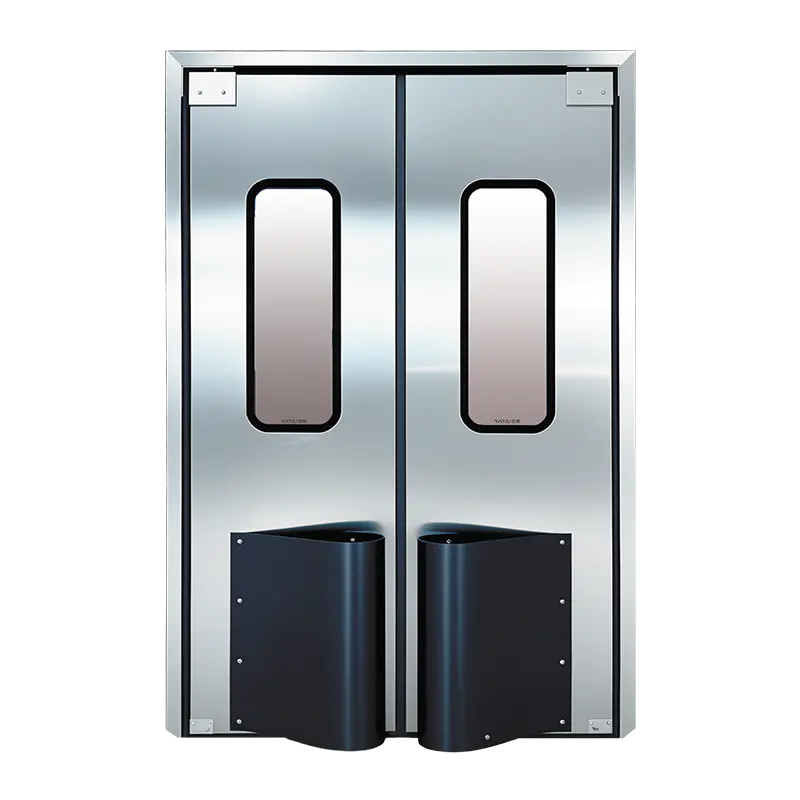
Impact resistance is critical where trolleys and carts move continuously. HPL door panels, with a typical thickness of 40–50 mm, demonstrate impact toughness above 20 kJ/m², far exceeding standard melamine-faced doors. Reinforced aluminium or stainless steel edge profiles further protect the door leaf from denting, ensuring that daily material transfer does not compromise sealing alignment.
Installation Considerations for Leak-Free Operation
Achieving the rated leakage performance depends on correct interface between door and wall system. The following practices, drawn from cleanroom construction experience, prevent common installation failures:
- Install frames with stainless steel or aluminium sub-frames that provide a continuous sealing surface against the cleanroom wall panel.
- Use fully flush thresholds where floor level allows; where a raised threshold is necessary, keep the height under 10 mm and cap it with a smooth, coved profile to avoid particle traps.
- After hanging the door leaf, verify gasket compression with a paper drag test or light gap inspection, adjusting hinges until uniform contact is achieved along all four edges.
- Seal the frame-to-wall junction with food-grade silicone sealant, leaving no cavities where microbes or moisture could accumulate.
In pressurised rooms, installation tolerances of ±1.5 mm in door-to-frame gap are essential; looser fits will prevent the gasket from reaching design compression and can increase exhaust air demand.
Maintenance Protocols to Extend Door Service Life
An HPL door’s decades-long life expectancy is realised only through consistent, GMP-aligned maintenance. A practical inspection cycle includes:
- Daily visual check of gasket integrity and surface cleanliness during shift handover.
- Monthly cleaning of hinges, latch mechanisms, and closers with cleanroom-approved lubricants that do not outgas.
- Quarterly measurement of closing speed and final latch engagement, especially on fire-rated assemblies, to verify compliance with safety regulations.
- Annual full leakage test under operational pressure differential, using a calibrated anemometer at the door perimeter to confirm that leakage has not exceeded the facility’s acceptance limit.
Surface cleaning requires only a damp wipe with a neutral or mildly oxidising disinfectant; abrasive pads must be avoided to preserve the original surface gloss and sub-0.5 µm roughness. Documented maintenance records support regulatory audits and pre-empt unscheduled downtime.
Comparing HPL with Alternative Cleanroom Door Materials
| Material | Chemical Resistance | Cleanability (Ra) | Fire Rating Potential | Relative Initial Cost |
|---|---|---|---|---|
| HPL | High | <0.5 µm | EI30–EI60 | Moderate |
| Stainless steel | Excellent | <0.3 µm | Up to EI120 | High |
| Fiberglass-reinforced plastic (FRP) | Moderate | ~0.8 µm | Limited | Low–Moderate |
| Melamine-faced panel | Low | ~0.8–1.2 µm | Rare | Low |
The comparison confirms HPL’s position as a cost-effective middle ground. While stainless steel offers superior fire and chemical extremes, its price and weight often limit use to aseptic processing cores. FRP and melamine doors, though cheaper initially, frequently fail surface roughness and chemical resistance requirements within two to three years, leading to higher lifecycle costs.
Practical Selection Criteria for Your Facility
Choosing the right HPL door configuration requires alignment with operational and regulatory needs. The following factors should guide specification:
- ISO classification and pressure cascade: Match the door’s tested leakage class to the room’s pressure differential, especially for ISO Class 7 or cleaner zones where cross-contamination risk is highest.
- Door operation and traffic: For high-frequency openings, specify a heavy-duty closer and reinforced hinges. Consider electric swing operators if hands-free access is required, ensuring the operator’s housing does not create a ledge for particle collection.
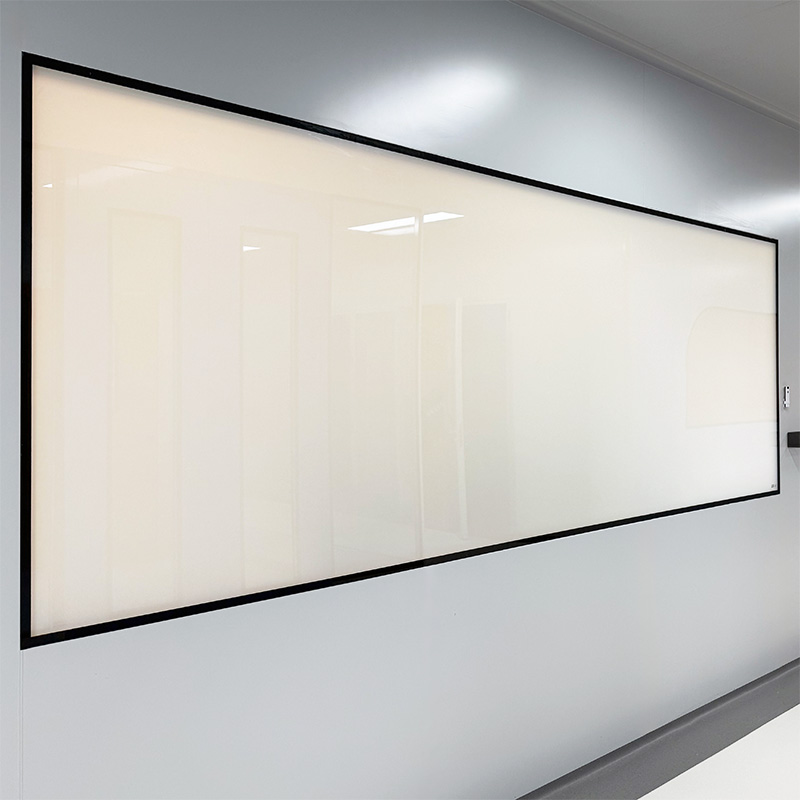
- Vision panel and light transmission: Double-glazed flush windows in HPL doors support visibility and supervision without compromising insulation. Ensure the glazing bead is completely sealed and sits flush with the laminate surface.
- Fire safety compliance: If the door serves as part of a compartmentation line, verify that the complete assembly—door leaf, frame, seals, and ironmongery—holds a valid test certificate for the required integrity period.
- Interlocking and access control: In airlock configurations, HPL doors can integrate electromagnetic locks and status sensors that interface with the building management system, preventing simultaneous opening of two doors.
Specifying a door that meets these criteria directly translates into lower particle counts during routine monitoring and fewer deviations in environmental performance reports. Facilities that align door selection with actual cleanroom dynamics rather than upfront cost alone consistently achieve more stable operating conditions and longer asset life.
Previous Post
Cleanroom Door Guide: Materials, Sealing, and Regulatory Compliance
Next Post
Cleanroom Fire-Rated Doors: Safety & Containment Essentials

Jiangyin Yatai Purification Equipment Technology Co., Ltd. is a modern and specialized manufacturer of clean doors and windows. Cleanroom Project Factory, offer Custom Clean Doors and Windows.
QUICK LINKS
PRODUCTS
GET IN TOUCHs
-
 +86 13616113658
-
 +86(0)510-86661588 / 86668687
-
 [email protected]
-
 +86(0)510-86661588
-
 No.2, Huagang West Road, Shizhuang, Jiangyin, Jiangsu province
© Jiangyin Yatai Purification Equipment Technology Co., Ltd.
All Rights Reserved.
 Cleanroom Door Manufacturers