-
 +86 13616113658
-
 [email protected]
 English
 Español
 русский
 عربى
عربى
Home / Media / Industry News / Medical Device Packaging: Sterile Barrier Integrity & Cleanroom Essentials
Medical Device Packaging: Sterile Barrier Integrity & Cleanroom Essentials
Content
- 1 What a medical device package must actually do
- 2 Regulatory requirements define the testing boundary
- 3 Materials, sealing, and sterilization compatibility
- 4 Integrity testing and process validation
- 5 The cleanroom envelope is part of the packaging process
- 6 What to review before you finalize a packaging room design
- 7 Treat packaging as a system, not a component
A sterile packaging line looks deceptively simple: a roll of film, a forming die, and a heated sealing bar. But every sterile barrier that leaves that line has already passed through material qualification, seal-jaw calibration, environmental monitoring, and a series of integrity tests that most manufacturing processes never think about. Medical device packaging fails when the system around it fails — the room, the transfer route, the door, the operator. This article explains what sterile packaging must achieve, which standards govern it, and why the cleanroom envelope determines whether a good package design survives daily production.
What a medical device package must actually do
A sterile medical device package has four jobs that are easy to overlook until one of them fails:
- Maintain sterile barrier integrity from the moment of sterilization until the device is opened at the point of use.
- Protect the device from physical damage, vibration, moisture, and contamination during distribution and storage.
- Remain compatible with the chosen sterilization method — ethylene oxide (EO), gamma irradiation, electron beam, or steam — without degrading.
- Allow aseptic presentation in the operating room or procedure suite without requiring contact between the sterile device and the package edges.
The total package is usually a two-layer system. The sterile barrier system is the sealed pouch, tray, or clamp that holds sterility. The protective packaging is the outer carton, cushioning, and labeling that absorb transport forces. Both layers must be validated together, because a carton that creases a pouch can create a micro-channel that destroys the seal.
Regulatory requirements define the testing boundary
Every packaging decision traces to a regulatory framework. If you source packaging materials or invest in a packaging cleanroom, the following standards appear in almost every audit and design review.
| Standard | What it governs | Why it matters in practice |
|---|---|---|
| ISO 11607-1 | Materials, design, and performance of sterile barrier systems | Sets the benchmark for seal strength, microbial barrier, and aging requirements. |
| ISO 11607-2 | Validation of forming, sealing, and assembly processes | Requires process qualification (IQ/OQ/PQ) and re-qualification after changes. |
| EN 868 series | Test methods for packaging materials used in terminally sterilized devices | Provides the practical test routes used to demonstrate ISO 11607 compliance. |
| FDA 21 CFR Part 820 | Quality system regulation for medical device manufacturers | Brings packaging under design controls, CAPA, and supplier oversight. |
| EU MDR 2017/745 | General safety and performance requirements | Packaging is assessed as part of the device's technical documentation. |
The immediate consequence is that packaging is not a consumable procurement decision. Changing a film supplier, a seal temperature, or even the geometry of a tray cavity can qualify as a design change that triggers verification and, if sterility is affected, a new biological evaluation.
Materials, sealing, and sterilization compatibility
Medical packaging materials are chosen to balance three competing demands: they must let sterilant penetrate, keep microorganisms out, and remain intact after years of storage. The most common combinations include medical-grade paper, spunbonded polyethylene, polyester trays, and polyolefin film laminates. Paper and porous materials allow EO gas exchange; non-porous films provide moisture resistance and puncture resilience.
Seal quality depends on material choice, jaw temperature, pressure, dwell time, and the environmental conditions around the sealer. Two seal-related defects dominate failure investigations: peel contamination and delamination. Peel contamination means the seal opens with visible fibers that can shed into the sterile field. Delamination means the material layers separate while the seal itself is intact. Both defects pass a simple visual check yet fail in a peel test.
Sterilization compatibility deserves an explicit review. EO and gamma irradiation affect polymers differently. A film that passes shelf-life testing with EO may become brittle after gamma exposure because of chain scission. If you plan to change sterilization methods, the package design must be re-validated, not assumed.
Integrity testing and process validation
Sterile barrier integrity is verified at three levels: sample-based physical testing, routine process monitoring, and periodic re-validation. Typical physical tests include seal strength (peel test), dye ingress testing, bubble emission leak testing, package burst and creep testing, and microbial barrier testing. Real-time aging and accelerated aging establish the shelf-life claim; accelerated aging alone is a screening tool, and regulators look for real-time data before approving extended expiration dates.
Process validation follows the standard IQ/OQ/PQ sequence. Installation qualification documents that the sealer is calibrated and traceable. Operational qualification maps the sealing window — the acceptable range of temperature, pressure, and dwell time. Performance qualification demonstrates that the process produces seals within the window using production materials and operators. After validation, any change in material, sealer, or environment requires documented evidence before production resumes.
The cleanroom envelope is part of the packaging process
Here is where a packaging strategy often collides with facility reality. A packaging line for sterile devices is rarely a stand-alone machine; it sits inside a classified cleanroom, typically ISO Class 7 or ISO Class 8, with a pressure cascade that pushes air out of the packaging area and prevents ingress from uncontrolled corridors. That envelope is not background scenery. The wall panels, doors, windows, and transfer hatches define whether the room can hold its classification under production conditions.
Door operation is the most visible risk point. Every time an operator pushes through a swing door, the differential pressure drops, and turbulence carries particles from the corridor side. In a packaging line where trays are exposed before sealing, that movement is a primary contamination source. The door system itself must be cleanable, gap-free, and capable of holding a stable seal after thousands of cycles. A medical airtight clean door that uses continuous gaskets and a cam-closing frame is often specified for this reason, because it changes the weak point from the door edge to the wall itself.
 Medical Airtight Clean Door with Continuous Gasket SealThis door uses continuous gaskets and a cam-closing frame to maintain a stable seal, reducing contamination risk at the door edge. Suitable for cleanroom packaging lines where operator traffic can disrupt differential pressure.View Product →
Material flow creates the second risk. A packaging cleanroom receives formed trays, films, and labels from storage areas, then moves packed devices to sterilization and quarantine. If that movement happens through manually operated doors, the process relies on operator discipline in a way that is difficult to audit. An airtight automatic sliding door addresses this by opening only when the conveyor or trolley approaches, then closing with a controlled motion that minimizes pressure disturbance.
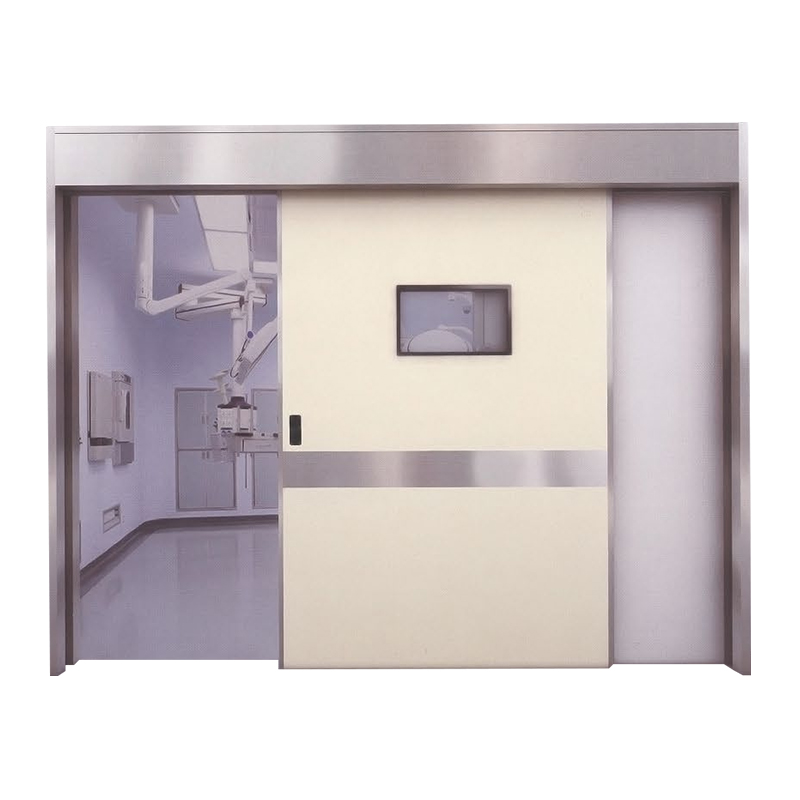 Airtight Automatic Sliding Door with Magnetic DriveOpens only when a conveyor or trolley approaches, minimizing pressure disturbance and cross-contamination. Features smooth, quiet operation and meets airtight performance standards for cleanroom environments.View Product →
The third risk is the wall surface itself. Cleanroom partitions for packaging areas should be made from materials that withstand repeated disinfection with hydrogen peroxide or isopropyl alcohol, do not off-gas, and have no exposed fastener points where microbial niches can form. Handmade PU sandwich panels provide a smooth, low-shedding surface and are commonly used in pharmaceutical and device packaging rooms because they can be joined with sealed joints and coved skirting.
 Handmade PU Sandwich Panel for Cleanroom PartitionsProvides a smooth, low-shedding surface that withstands repeated disinfection. Sealed joints and coved skirting prevent microbial niches, making it a practical choice for packaging room walls.View Product →
What to review before you finalize a packaging room design
If you are involved in planning or expanding a medical device packaging line, use the following checklist to close the gaps between packaging engineering and cleanroom infrastructure:
- Define the ISO class and pressure cascade for each zone, including the sealing room, the transfer corridor, and the quarantine area after packaging.
- Map the actual operator and material routes. Count how many times a door opens per hour, and select door systems based on that cycle demand, not on static leakage numbers.
- Verify that the cleanroom door hardware aligns with the pressure differential and airlock logic. Airtight cleanroom door sealing technology explains the performance parameters that matter during leak testing.
- Confirm that wall panels and ceiling joints can be disinfected with the same chemicals used on process equipment, and require documented compatibility data before installation.
- Check the flow of packaged devices into sterilization. If the sterilizer is outside the classified area, the transfer hatch must protect the sealed packages from the same contamination risks as the open trays.
- Plan for re-validation. A change in seal material, a new door gasket, or a different panel joint compound can each affect the validated cleanroom performance.
The same principle applies when medical manufacturers renovate existing spaces: the requirements for medical door systems in healthcare facilities are a useful reference for how door placement and sealing affect infection control.
Treat packaging as a system, not a component
Medical device packaging is the last controlled environment a product passes through before it reaches a patient. The seal on a pouch, the integrity of a tray, and the surfaces of the room where they come together are all part of the same system. Start with the standards, qualify the materials, test the seals, and then look critically at the cleanroom envelope. When those layers are designed together, a packaging line can run thousands of cycles without producing a single questionable seal. That is the practical definition of sterile barrier success.
Previous Post
Cell Therapy Manufacturing Process: GMP Cleanroom Design and Facility Guide
Next Post
Cleanroom Fire-Resistant Doors: Standards, Ratings, Materials and Selection
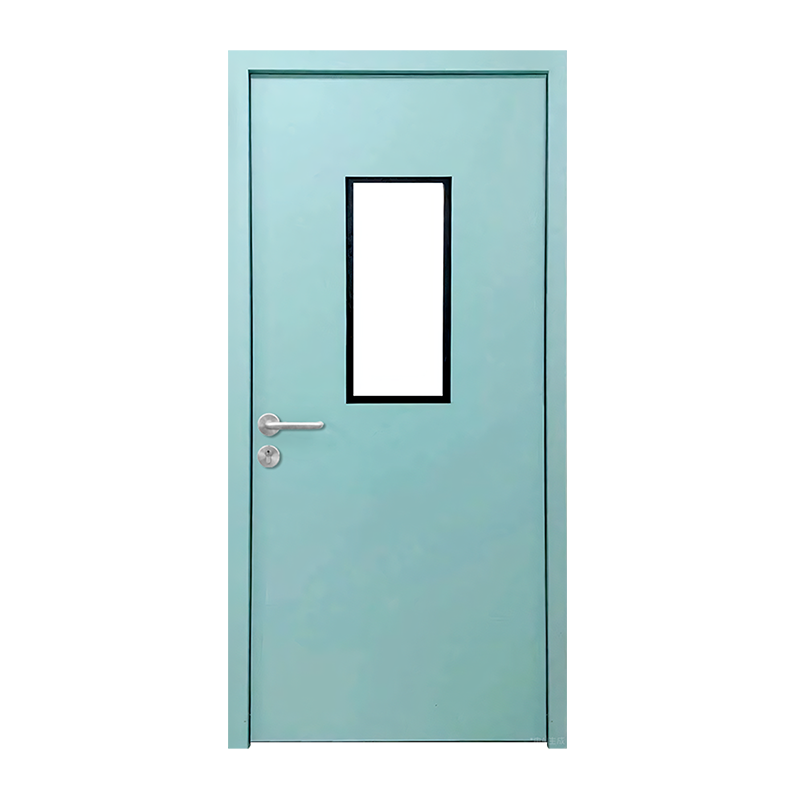

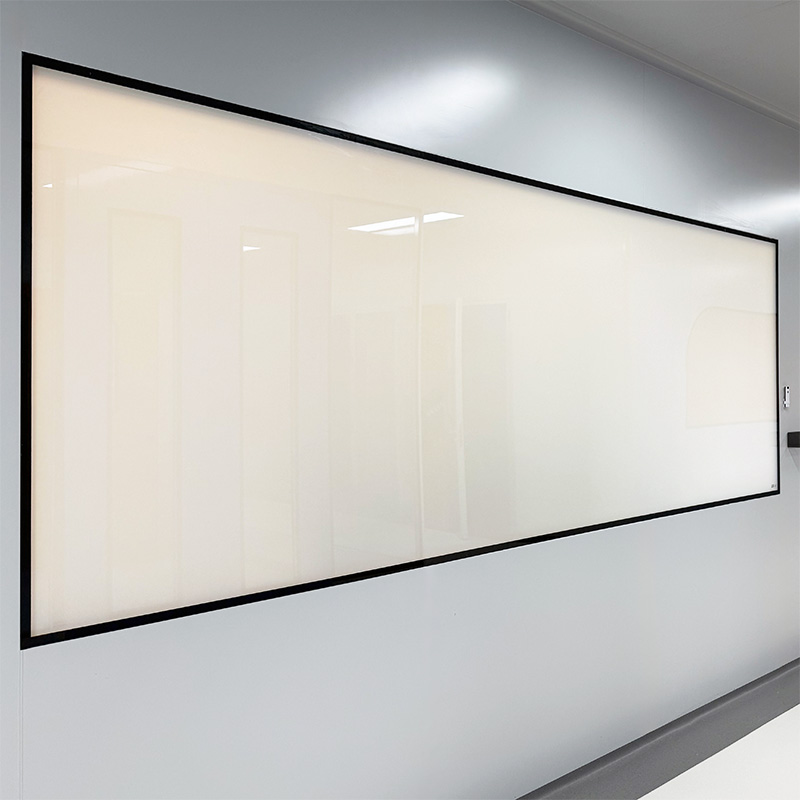

Jiangyin Yatai Purification Equipment Technology Co., Ltd. is a modern and specialized manufacturer of clean doors and windows. Cleanroom Project Factory, offer Custom Clean Doors and Windows.
QUICK LINKS
PRODUCTS
GET IN TOUCHs
-
 +86 13616113658
-
 +86(0)510-86661588 / 86668687
-
 [email protected]
-
 +86(0)510-86661588
-
 No.2, Huagang West Road, Shizhuang, Jiangyin, Jiangsu province
© Jiangyin Yatai Purification Equipment Technology Co., Ltd.
All Rights Reserved.
 Cleanroom Door Manufacturers