-
 +86 13616113658
-
 [email protected]
 English
 Español
 русский
 عربى
عربى
Home / Media / Industry News / Stainless Steel Cleanroom Door: Design, Standards & Performance Guide
Stainless Steel Cleanroom Door: Design, Standards & Performance Guide
Content
- 1 What Makes Stainless Steel the Optimal Material for Cleanroom Doors
- 2 Critical Design Features That Define Performance
- 3 Configuration Options for Different Cleanroom Applications
- 4 Integration with Access Control and Monitoring Systems
- 5 Regulatory Compliance and Testing Standards
- 6 Installation Considerations and Common Pitfalls
- 7 Maintenance Protocols for Long-Term Performance
- 8 Cost Analysis and Return on Investment
- 9 Emerging Technologies and Future Developments
What Makes Stainless Steel the Optimal Material for Cleanroom Doors
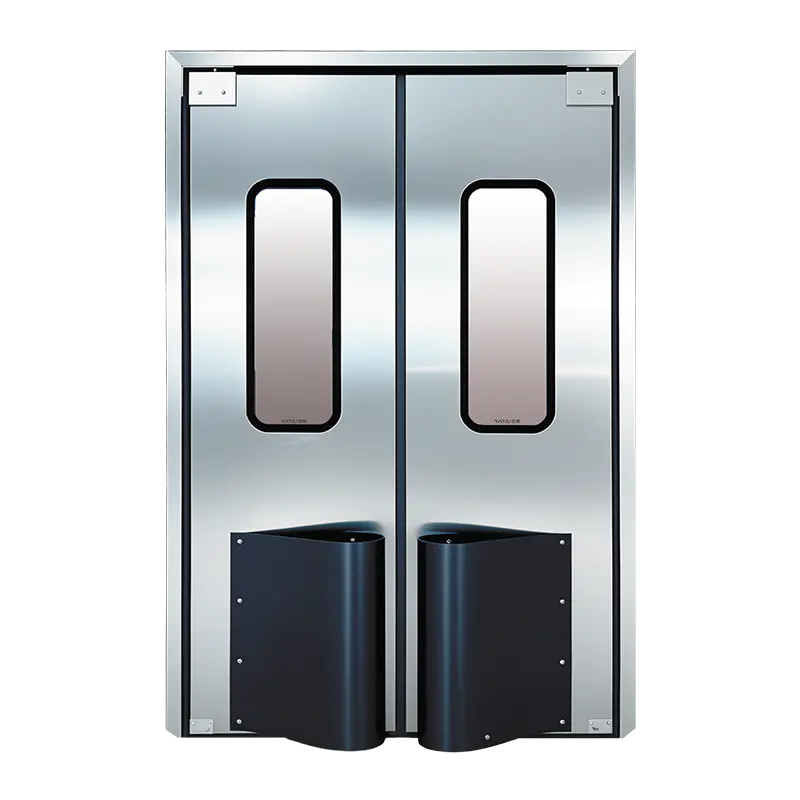
Stainless steel cleanroom door represent the industry standard for controlled environments due to their non-porous surface, corrosion resistance, and ability to withstand repeated chemical cleaning. These doors are engineered to maintain ISO-classified cleanroom integrity while providing durability that can last 20-30 years with proper maintenance, significantly outperforming alternatives like powder-coated steel or aluminum in pharmaceutical, semiconductor, and biotechnology facilities.
The material composition typically utilizes 304 or 316L stainless steel grades, with 316L preferred for environments requiring superior chemical resistance. These alloys contain 18% chromium and 8-10% nickel, creating a passive oxide layer that self-heals when scratched, ensuring continuous contamination control even after years of service.
Critical Design Features That Define Performance
Sealing Systems and Air Leakage Prevention
The effectiveness of a cleanroom door hinges on its sealing mechanism. High-performance stainless steel cleanroom doors incorporate inflatable seals or compression gaskets that achieve air leakage rates below 0.1 cfm per linear foot at 0.3 inches of water pressure differential. This level of sealing is essential for maintaining ISO Class 5 and higher classifications.
Advanced models feature multi-point locking systems with 6-8 contact points around the door perimeter, distributing sealing pressure evenly to prevent particle infiltration. For reference, a standard pharmaceutical cleanroom operating at ISO Class 7 requires doors that limit particle counts to 352,000 particles (≥0.5 μm) per cubic meter.
Flush Construction and Surface Finish Requirements
Cleanroom-grade stainless steel doors must eliminate particle traps through completely flush surfaces. This means:
- No protruding hinges, handles, or fasteners on the cleanroom-facing side
- Continuous welds ground to Ra 0.8 μm surface roughness or better
- Coved corners with minimum 3mm radius to prevent microorganism accumulation
- Electropolished finishes that reduce surface roughness by 30-40% compared to mechanical polishing
Configuration Options for Different Cleanroom Applications
| Door Type | Typical Application | Key Advantage | ISO Class Suitability |
|---|---|---|---|
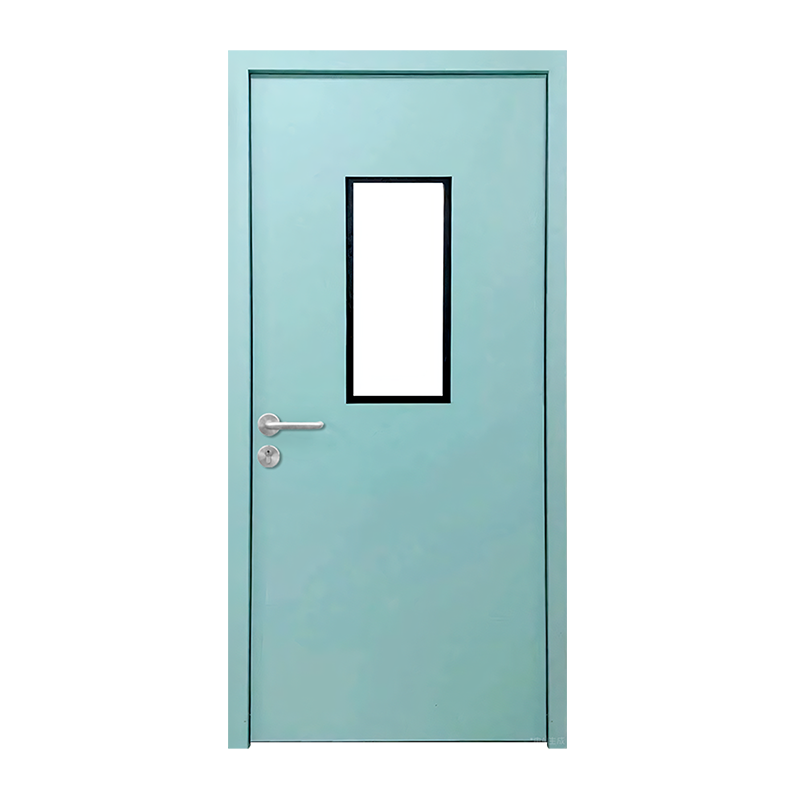
| Hinged Single/Double | Personnel entry, low traffic areas | Simplest maintenance | ISO 4-8 |
| Sliding Hermetic | Hospital ORs, pharmaceutical production | Zero air infiltration | ISO 3-6 |
| Rapid Roll-Up (SS Frame) | Material transfer, high traffic zones | Speed (up to 80"/sec) | ISO 6-8 |
| Interlocking Airlocks | Sterile manufacturing, containment | Contamination barrier | ISO 3-5 |
For semiconductor fabrication facilities requiring ISO Class 3 or better, sliding hermetic doors with motorized operation are preferred. These doors can achieve complete hermetic sealing with leakage rates as low as 0.01 cfm per door, critical when maintaining pressure differentials of 0.05-0.1 inches water column between adjacent cleanrooms.
Integration with Access Control and Monitoring Systems
Modern stainless steel cleanroom doors function as intelligent components within facility management systems. Standard integration capabilities include:
- RFID or biometric access control with audit trail logging for FDA 21 CFR Part 11 compliance
- Magnetic reed switches or position sensors providing real-time door status to building management systems
- Interlock protocols preventing simultaneous opening of airlocks or incompatible zones
- Integration with HVAC systems to adjust airflow when doors open, maintaining pressure cascades
A case study from a biologics manufacturing facility demonstrated that implementing automated door monitoring reduced contamination incidents by 34% over 18 months by eliminating instances of doors left ajar during personnel transitions.
Regulatory Compliance and Testing Standards
Industry-Specific Requirements
Stainless steel cleanroom doors must satisfy multiple regulatory frameworks depending on their application environment:
- FDA cGMP - Current Good Manufacturing Practice guidelines requiring documentation of materials, surface finishes, and cleaning validation protocols
- ISO 14644-1 - Classification of air cleanliness specifying particle concentration limits
- USP 797/800 - Standards for pharmaceutical compounding cleanrooms with specific pressure differential requirements
- EU GMP Annex 1 - European guidelines for sterile medicinal product manufacturing
Performance Verification Testing
Before commissioning, cleanroom doors undergo rigorous testing protocols. Air leakage testing using the ASTM E283 standard measures performance at both positive and negative pressure differentials. High-grade doors consistently achieve results showing less than 0.05 cfm/ft² at 1.57 psf test pressure.
Fire-rated stainless steel cleanroom doors carry additional certifications, typically meeting UL 1784 for air leakage under ambient and elevated temperatures, and NFPA 80 for positive pressure testing during fire conditions.
Installation Considerations and Common Pitfalls
Proper installation is crucial for achieving design performance. The most critical factors include:
- Frame alignment within ±1.5mm tolerance - Exceeding this causes uneven gasket compression and air leakage
- Continuous perimeter sealing between frame and wall penetration using compatible sealants
- Verification of substrate strength - cleanroom walls must support minimum 150 lbf lateral load for hinged doors
- Electrical rough-in coordination for powered operators, typically requiring 110-120V, 15A dedicated circuits
A common installation error involves inadequate floor preparation for sliding doors. The guide track must be installed on surfaces with flatness tolerance within 3mm over 3 meters to prevent binding and ensure smooth operation over the door's lifespan.
Maintenance Protocols for Long-Term Performance
Daily and Weekly Cleaning Procedures
Stainless steel cleanroom doors require cleaning protocols matched to the cleanroom classification and process requirements. For ISO Class 5-7 environments, typical procedures include:
- Daily wiping with 70% isopropyl alcohol or approved quaternary ammonium compounds
- Weekly disinfection using sporicidal agents for pharmaceutical applications
- Avoidance of chloride-containing cleaners which can cause pitting corrosion
Scheduled Mechanical Maintenance
Preventive maintenance schedules should include quarterly inspection of gaskets and seals, with replacement every 3-5 years depending on door cycle frequency. Facilities with high-traffic doors (200+ cycles/day) benefit from semi-annual lubrication of hinges and locking mechanisms using cleanroom-compatible, low-outgassing lubricants.
Annual recertification testing should verify air leakage rates remain within specification. Industry data shows properly maintained stainless steel cleanroom doors retain 95% of original sealing performance after 10 years, compared to 60-70% for powder-coated alternatives.
Cost Analysis and Return on Investment
Initial acquisition costs for stainless steel cleanroom doors range from $2,500-$8,000 for standard hinged units to $15,000-$35,000 for automated sliding hermetic systems, representing a 40-60% premium over powder-coated steel equivalents. However, lifecycle cost analysis reveals significant long-term advantages.
A 10-year total cost of ownership comparison for a pharmaceutical facility with 50 cleanroom doors showed:
- Stainless steel: $425,000 (acquisition) + $85,000 (maintenance) = $510,000 total
- Powder-coated steel: $265,000 (acquisition) + $180,000 (maintenance and replacement) = $445,000 total
The apparent savings disappear when factoring in contamination risk reduction. Each contamination event in pharmaceutical manufacturing averages $500,000 in investigation, remediation, and production delays. Facilities using stainless steel doors report 25-40% fewer contamination incidents attributed to door system failures.
Emerging Technologies and Future Developments
Recent innovations in stainless steel cleanroom door technology focus on automation, antimicrobial properties, and smart monitoring:
- Antimicrobial stainless steel alloys incorporating copper achieve 99.9% bacterial reduction within 2 hours of contact
- Predictive maintenance systems using vibration sensors and cycle counters to forecast seal degradation before failure
- Touchless operation systems combining motion sensors with voice activation, reducing cross-contamination from handle contact
- Integration of transparent OLED displays in door panels showing real-time pressure differential and particulate counts
Manufacturers are also developing modular door systems with field-replaceable seal cassettes that reduce maintenance downtime from 4-6 hours to under 30 minutes, particularly valuable for continuous manufacturing operations where cleanroom access interruptions cost $10,000-$50,000 per hour in lost production.
Previous Post
Cleanroom Windows: Design, Standards, and Best Practices
Next Post
Steel Cleanroom Doors: Design, Performance Standards, and Installation Best Practices for Controlled Environments

Jiangyin Yatai Purification Equipment Technology Co., Ltd. is a modern and specialized manufacturer of clean doors and windows. Cleanroom Project Factory, offer Custom Clean Doors and Windows.
QUICK LINKS
PRODUCTS
GET IN TOUCHs
-
 +86 13616113658
-
 +86(0)510-86661588 / 86668687
-
 [email protected]
-
 +86(0)510-86661588
-
 No.2, Huagang West Road, Shizhuang, Jiangyin, Jiangsu province
© Jiangyin Yatai Purification Equipment Technology Co., Ltd.
All Rights Reserved.
 Cleanroom Door Manufacturers