-
 +86 13616113658
-
 [email protected]
 English
 Español
 русский
 عربى
عربى
Home / Media / Industry News / Steel Automatic Swing Door for Cleanrooms: Features, Specs & Selection Guide
Steel Automatic Swing Door for Cleanrooms: Features, Specs & Selection Guide
Content
A cleanroom door that requires hand contact is a contamination point — full stop. Every push, pull, and grab transfers particles, oils, and microbes directly into a controlled environment. That's why the steel automatic swing door has become the preferred access solution for pharmaceutical manufacturers, hospital operating suites, and electronics cleanrooms worldwide. This article breaks down exactly how these doors work, what specs matter, and how to choose the right one for your facility.
What Is a Steel Automatic Swing Door?
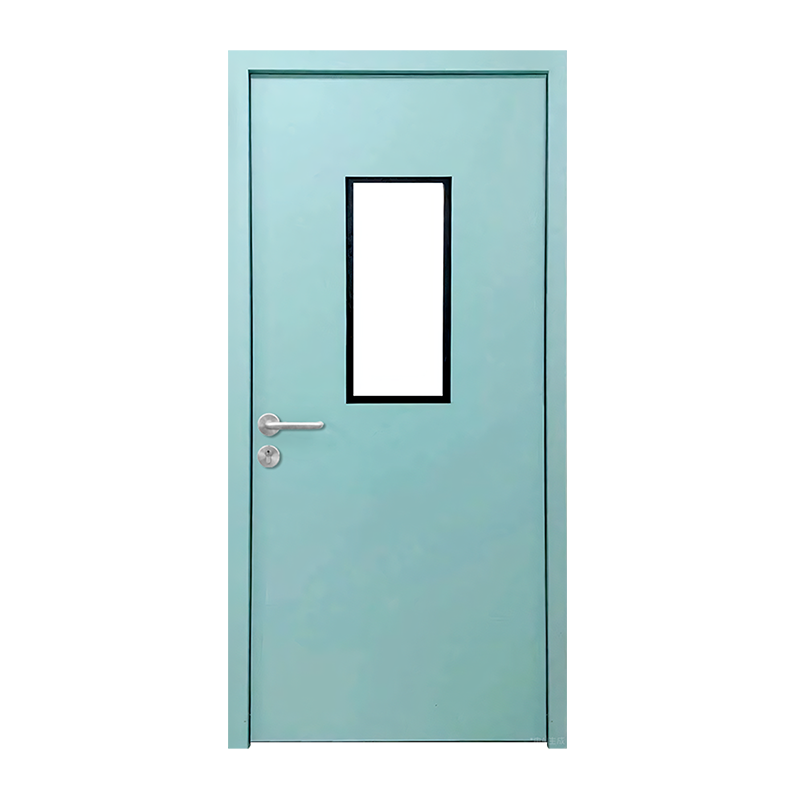
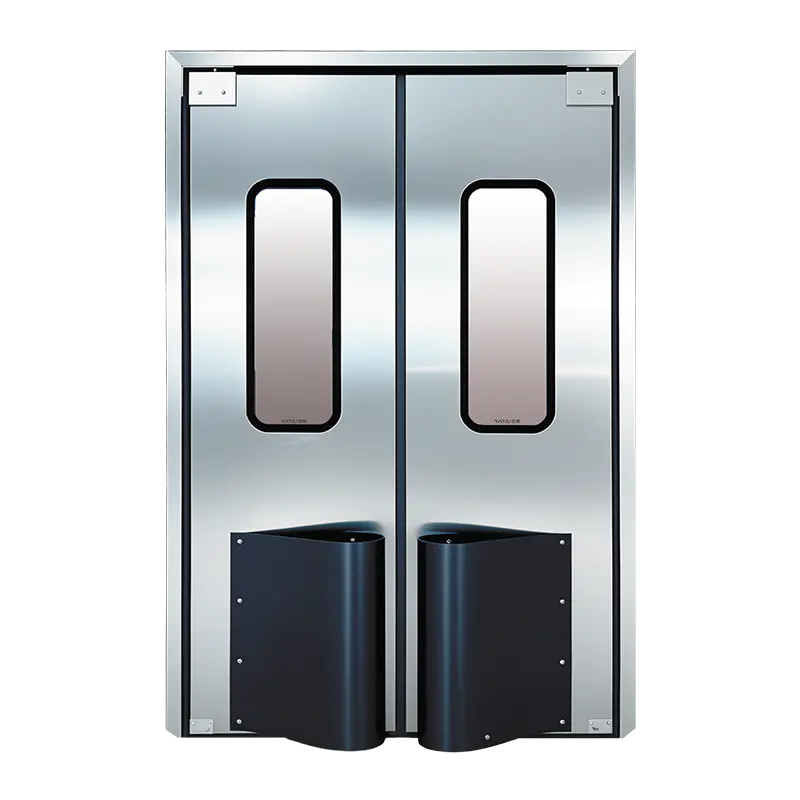
A steel automatic swing door combines a galvanized or cold-rolled steel door body with an electromechanical operator that drives the door open and closed via motion sensor, foot switch, or access control trigger — no hand contact required. Unlike sliding doors, the swing mechanism uses a traditional hinged arc, making it suitable for spaces where wall clearance prevents a lateral track system.
The door leaf is typically filled with flame-retardant paper honeycomb, aluminum honeycomb, or rock wool, giving it high compressive strength at low weight. The surface is finished with electrostatically sprayed powder coating — smooth, non-porous, and easy to wipe down with disinfectants. All hardware, including hinges, closers, and frame components, is made from 304 stainless steel to resist corrosion in environments requiring frequent chemical cleaning.
Why Steel Over Other Materials?
The material choice matters more than most buyers realize. Here's a direct comparison of the three most common door materials in cleanroom applications:
| Property | Steel (Galvanized + Powder Coat) | Stainless Steel | Aluminum Alloy Frame |
|---|---|---|---|
| Impact resistance | High | Very High | Medium |
| Corrosion resistance | Good (with coating) | Excellent | Good |
| Weight | Medium | Heavy | Light |
| Cost efficiency | High | Lower | Medium |
| Best for | ISO Class 6–8, general cleanrooms | ISO Class 5–6, pharma, food | Light-traffic areas |
For most ISO Class 6 to ISO Class 8 environments — food processing, electronics manufacturing, standard pharmaceutical production — galvanized steel with powder-coat finishing delivers the best cost-to-performance ratio. It handles AGV collisions, cart impacts, and heavy daily cycling without deforming. When ISO Class 5 sterility or direct food contact is required, a stainless steel variant is the upgrade path.
Key Features to Specify Before Purchasing
Procurement teams often focus on price and miss the specs that determine whether a door actually holds up in service. These are the features that matter:
- Sealing system: Look for full-perimeter EPDM or silicone gaskets. The door should maintain the pressure differential between clean and non-clean zones — typically 5–20 Pa for ISO 7/8 environments. A poorly sealed swing door negates the entire HVAC investment.
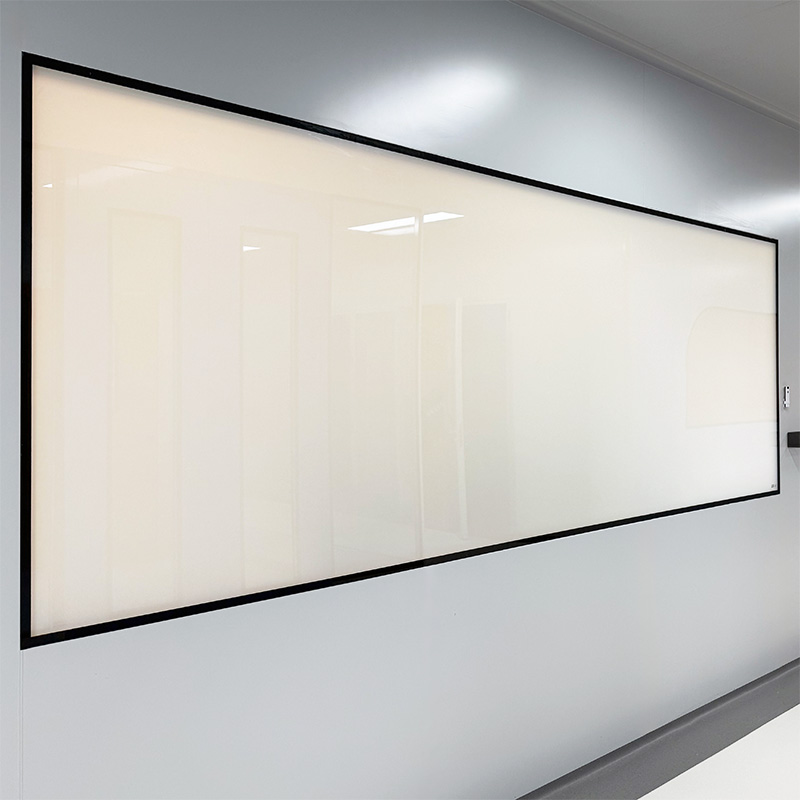
- Door leaf glazing: Double-layer hollow tempered glass, flush-mounted with the door leaf surface, prevents fogging and maintains visual clarity into and out of the cleanroom. The glass-to-door flush fit eliminates ledges where particles accumulate.
- Operator type: Choose between low-energy operators (suitable for areas with occasional foot traffic) and full-power operators (for high-cycle, hands-free environments). Full-power operators support opening widths up to 1,200 mm or more and handle heavier steel door leaves reliably.
- Safety sensing: Microwave or infrared presence detection on both sides ensures the door stops or reverses if someone is in the swing arc. Non-negotiable in any facility with moving personnel or equipment.
- Fire rating compatibility: If the cleanroom is within a fire compartment, the automatic swing door may need to integrate with a fire alarm system for fail-safe closure. Up to 2-hour fire ratings are available with appropriate core materials like rock wool.
Activation Methods: Choosing the Right Trigger
The activation mechanism is where contamination control and workflow efficiency intersect. The three most common options for cleanroom swing doors are:
- Motion sensors (microwave/PIR): Automatic detection from 1–3 meters. Best for corridors with constant personnel movement. No physical contact required.
- Foot switches or knee pads: Activated by deliberate physical contact with a floor or wall-mounted switch. Preferred where hands are occupied (e.g., carrying trays, pushing carts) and where unintended openings must be avoided.
- Access control integration (RFID / keypad / card reader): For restricted zones. The swing door operator receives a signal from the access system and opens only for authorized personnel. Fully compatible with interlock systems that prevent two doors in an airlock from opening simultaneously.
For pharmaceutical and biological cleanrooms under GMP requirements, interlocking with an adjacent entry door is often mandatory. The automatic swing door's controller should natively support interlock logic — verify this in the specification sheet before ordering.
Installation and Maintenance Checklist
A correctly specified door installed poorly will fail. These are the installation and maintenance points that facilities managers should verify:
- Frame must be set flush with the cleanroom wall panel system — any gap or protrusion creates a particle trap and breaks the visual cleanline of the enclosure.
- Operator arm alignment should be checked with a torque gauge at commissioning. Misaligned arms cause premature wear on hinges and uneven seal compression.
- Seal integrity testing: measure pressure differential before and after door installation. If the differential drops significantly with the door installed, the perimeter gasket is not seated correctly.
- Lubrication schedule: operator mechanisms with moving parts should be serviced every 6 months in high-cycle environments (500+ cycles/day). Use only manufacturer-approved lubricants — standard greases can off-gas VOCs that contaminate sensitive processes.
- Gasket inspection: silicone and EPDM seals compress permanently over 2–3 years of use. Replace when compression set exceeds 20% of the original seal height.
Which Cleanroom Applications Benefit Most?
Not every access point needs an automatic swing door. Here's where they genuinely outperform manual or sliding alternatives:
- Hospital operating rooms and ICUs: Surgical teams move with full hands; touchless entry is a clinical requirement, not a preference. The swing door's wider clear opening (vs. sliding) accommodates gurney passage in tight corridors.
- Pharmaceutical production zones: GMP environments under EU Annex 1 or FDA 21 CFR Part 211 require personnel and material airlocks. Automatic swing doors with interlock controllers are the standard solution.
- Electronics and semiconductor cleanrooms: ESD-safe variants with conductive door body coatings and grounded frames protect sensitive components from electrostatic discharge during entry and exit cycles.
- Food processing facilities: Steel doors resist high-pressure washdown cycles. Stainless steel hardware eliminates rust contamination in wet processing areas.
For a broader look at the full range of cleanroom door configurations, including airtight and radiation-shielding variants, review the complete product series. Facilities that require high-speed access for frequent material transfers may also benefit from high-speed roll-up door options as a complement to swing doors in loading zones.
Final Buying Advice
Steel automatic swing doors are not a commodity purchase. The right configuration for a pharmaceutical cleanroom differs significantly from what an electronics fab needs. Before finalizing a specification, confirm the ISO class requirement, pressure differential target, fire rating obligation, and access control integration needs. Get the gasket and operator warranty terms in writing — a 1-year warranty on a door expected to run 500 cycles/day is inadequate. Established manufacturers with ISO 9001 certification and documented third-party test reports for fire resistance and steel performance offer meaningfully lower long-term risk than lower-cost alternatives without that documentation.
The door is the most used component in any cleanroom enclosure. Specifying it correctly from the start protects both the environment and the operational budget.
Previous Post
Single Glass Cleanroom Windows: Key Specs, Frame Types & Selection Tips
Next Post
High Speed Roll Up Doors for Cleanroom: Types, Specs & Selection Guide

Jiangyin Yatai Purification Equipment Technology Co., Ltd. is a modern and specialized manufacturer of clean doors and windows. Cleanroom Project Factory, offer Custom Clean Doors and Windows.
QUICK LINKS
PRODUCTS
GET IN TOUCHs
-
 +86 13616113658
-
 +86(0)510-86661588 / 86668687
-
 [email protected]
-
 +86(0)510-86661588
-
 No.2, Huagang West Road, Shizhuang, Jiangyin, Jiangsu province
© Jiangyin Yatai Purification Equipment Technology Co., Ltd.
All Rights Reserved.
 Cleanroom Door Manufacturers