-
 +86 13616113658
-
 [email protected]
 English
 Español
 русский
 عربى
عربى
Home / Media / Industry News / Single Glass Cleanroom Windows: Key Specs, Frame Types & Selection Tips
Single Glass Cleanroom Windows: Key Specs, Frame Types & Selection Tips
Content
- 1 Why Single Glass Is Still the Default Choice for Most Cleanrooms
- 2 Frame Material: Aluminum Alloy vs. Stainless Steel
- 3 Glass Thickness Selection: 5 mm, 6 mm, or 8 mm
- 4 Sealing Performance: Where Single Glass Windows Fail Without Proper Gaskets
- 5 Single Glass vs. Double-Layer: Which One Does Your Facility Actually Need?
- 6 Installation Requirements You Should Confirm Before Ordering
Why Single Glass Is Still the Default Choice for Most Cleanrooms
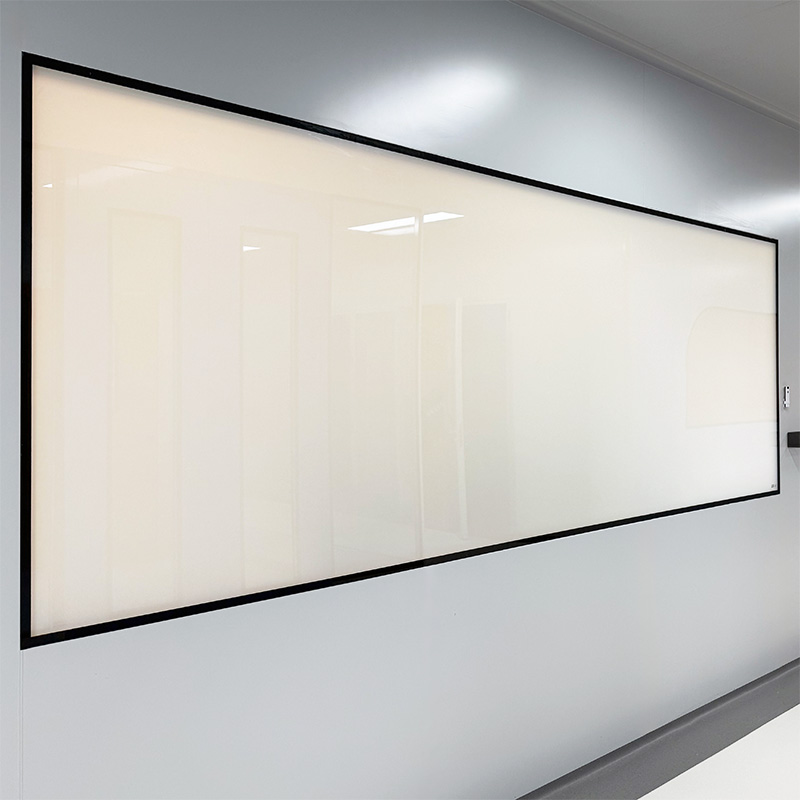
Glass thickness drives the decision before anything else. single glass cleanroom windows are available in 5 mm, 6 mm, and 8 mm tempered glass — each suited to a different level of mechanical demand. The 5 mm option covers standard observation needs in pharmaceutical and food processing zones. Move to 8 mm where personnel traffic is heavy or where pressure differentials across the wall are significant.
The defining advantage is clarity. Single-pane tempered glass delivers higher light transmittance than double-layer alternatives, with zero fogging risk. For operators who need unobstructed visual confirmation of what's happening inside a controlled zone — without walking in — that optical performance matters more than insulation.
Frame Material: Aluminum Alloy vs. Stainless Steel
The frame choice affects long-term cleanability as much as structural performance. Yatai's single glass cleanroom windows use either aluminum alloy or stainless steel frames — both corrosion-resistant, both compatible with standard disinfection protocols. The difference comes down to environment severity.
| Frame Material | Best For | Key Advantage |
|---|---|---|
| Aluminum Alloy | Pharma, electronics, food GMP | Lightweight, anti-oxidation surface treatment, conventional gray/white finish |
| Stainless Steel | Hospital ORs, biocontainment labs | Resists harsh biocides, no contaminants during sterilization |
Both frame types can be flush-mounted so the outer surface sits level with the wall panel — eliminating the horizontal ledge where particles accumulate. That flush profile is the first structural detail to confirm on any cleanroom window specification.
Glass Thickness Selection: 5 mm, 6 mm, or 8 mm
Picking the wrong thickness is a compliance problem, not just an engineering preference. Here's how to match glass thickness to application:
- 5 mm tempered glass — suitable for interior observation windows in ISO Class 7–8 environments where mechanical impact risk is low.
- 6 mm tempered glass — the mid-range option for production areas in pharmaceutical and electronics facilities, balancing weight and strength.
- 8 mm tempered glass — recommended for high-traffic corridors, gowning room interfaces, or wherever carts and equipment pass close to the wall.
All three options use tempered glass as standard. Tempering increases impact resistance roughly four to five times compared to annealed glass, and when breakage does occur, it fractures into small blunt fragments rather than dangerous shards — a baseline safety requirement in any GMP facility.
Sealing Performance: Where Single Glass Windows Fail Without Proper Gaskets
The glass itself rarely causes contamination breaches. The seal between glass, frame, and wall panel does. Single-pane windows are installed with the clean-side face flush against the controlled environment — but that orientation only works if the perimeter gasket maintains consistent compression across the entire frame. A gap of even 1–2 mm creates a particle migration path that renders the ISO classification of the room meaningless at that section of wall.
Yatai's single glass cleanroom windows use corrosion-resistant framing specifically because frame dimensional stability directly affects long-term gasket compression. Frames that warp or corrode over time — even marginally — compromise the seal. Specify aluminum alloy or stainless steel; avoid painted carbon steel in any environment exposed to cleaning agents.
Single Glass vs. Double-Layer: Which One Does Your Facility Actually Need?
Double-layer hollow glass adds condensation resistance and sound attenuation — both genuine benefits. But they come with trade-offs: reduced light transmittance, greater wall depth requirement, and higher unit cost. For most ISO 6–8 cleanrooms in temperate climates, the extra complexity isn't justified.
Single glass is the right call when:
- The temperature differential between inside and outside the cleanroom is modest (under 15°C).
- Maximum optical clarity is a priority for real-time process monitoring.
- Budget efficiency matters and contamination control requirements don't mandate insulated glazing.
If your facility sits in a region with extreme ambient winters, or if the cleanroom runs significantly colder than surrounding corridors, evaluate hollow double-layer glass cleanroom windows instead — the anti-condensation performance justifies the added cost in those conditions.
Installation Requirements You Should Confirm Before Ordering
Three details determine whether a window performs as specified once installed:
- Wall panel thickness compatibility. The window frame depth must match the sandwich panel thickness in use (commonly 50 mm, 75 mm, or 100 mm). Confirm this before manufacturing.
- Flush-mount vs. lipped frame. Flush-mount sits level with the wall surface — preferred for critical environments. Lipped frames are easier to retrofit but create a narrow ledge that requires more frequent cleaning.
- Orientation of the clean face. Single-pane windows must be installed with the sealed, smooth face directed toward the controlled environment. Reversing this during installation is a common site error with no field fix.
For a broader overview of window types across different cleanroom classifications, the complete guide to cleanroom window selection, installation, and maintenance covers compliance checkpoints from specification through commissioning. The full cleanroom window product range — including arc, dimming, and double-layer variants — is available for comparison if your project requirements extend beyond standard single-glass configurations.
Previous Post
Cleanroom Fire-Resistant Doors: Ratings, Materials & Selection Guide
Next Post
Steel Automatic Swing Door for Cleanrooms: Features, Specs & Selection Guide

Jiangyin Yatai Purification Equipment Technology Co., Ltd. is a modern and specialized manufacturer of clean doors and windows. Cleanroom Project Factory, offer Custom Clean Doors and Windows.
QUICK LINKS
PRODUCTS
GET IN TOUCHs
-
 +86 13616113658
-
 +86(0)510-86661588 / 86668687
-
 [email protected]
-
 +86(0)510-86661588
-
 No.2, Huagang West Road, Shizhuang, Jiangyin, Jiangsu province
© Jiangyin Yatai Purification Equipment Technology Co., Ltd.
All Rights Reserved.
 Cleanroom Door Manufacturers