-
 +86 13616113658
-
 [email protected]
 English
 Español
 русский
 عربى
عربى
Steel Cleanroom Doors: A Complete Guide to Selection & Compliance
Content
- 1 Conclusion: The Steel Cleanroom Door is a Critical Control Point
- 2 Core Material Science: Why Steel Dominates Cleanroom Architecture
- 3 Engineering the Seal: Pressure, Airflow, and Acoustic Integrity
- 4 Comparative Analysis: Steel Cleanroom Door Panels
- 5 Integration and Automation: The Hardware Interface
Conclusion: The Steel Cleanroom Door is a Critical Control Point
The correct specification of a steel cleanroom door directly determines the viability of your contamination control strategy. In ISO 14644-1 classified environments, the door is not merely an entry point; it is a active mechanical barrier that must withstand rigorous sanitation, maintain differential pressure, and prevent particle accumulation. For ISO Class 5 (Class 100) pharmaceutical suites or semiconductor fabrication plants, a standard commercial door will fail validation within weeks. The core conclusion is that material, sealing mechanism, and surface finish are non-negotiable parameters that dictate both compliance and total cost of ownership.
Core Material Science: Why Steel Dominates Cleanroom Architecture
The selection of steel as the primary substrate is driven by quantifiable performance metrics against contamination risks. While other materials exist, steel—specifically stainless steel—offers a unique combination of durability and cleanability that alternatives cannot match.
Gauging Corrosion Resistance: The 304 vs. 316 Distinction
Approximately 85% of pharmaceutical cleanroom doors utilize 304 stainless steel due to its excellent resistance to oxidation and cost-effectiveness. However, in environments where caustic cleaning agents (like VHP or bleach) are used daily, or in coastal facilities, 316L stainless steel is mandated. The inclusion of molybdenum in 316L provides superior resistance to pitting and chlorides. For example, a door in a biotech cleanroom subjected to hourly sanitization with chlorine dioxide will experience surface degradation if specified in 304; switching to 316L can extend the functional lifespan of the door skin from 3 years to over 10 years.
Surface Finish and Particle Retention
The surface roughness (Ra value) is a critical performance metric. A standard mill finish might have an Ra between 0.5 µm and 1.0 µm. A properly specified steel cleanroom door requires a #4 brushed finish or better, achieving an Ra of less than 0.4 µm. This micro-smooth surface ensures that particles and microbes have minimal anchoring points, allowing cleaning solutions to effectively wash away contaminants during wipe-down procedures.
Engineering the Seal: Pressure, Airflow, and Acoustic Integrity
The physical door panel is only half the system; the interface between the door and the frame dictates the room's ability to maintain its classified status. A poorly sealed door negates the HEPA filtration system's work.
Magnetic vs. Compression Gasketing
To maintain a differential pressure of 0.05 inches of water gauge (inWG) as required by ISO 8 or cleaner spaces, two primary sealing methods exist:
- Magnetic Seals: Similar to a refrigerator door, these provide a constant, even compression. They are ideal for high-traffic areas where rapid closure is needed to minimize pressure loss.
- Compression Gaskets (Bulb or Blade): These rely on the door closing mechanism to physically compress the gasket. They offer superior sealing against airborne particles but require precise hinge alignment and increased closing force. Data from air leakage tests (ASTM E283) shows that a triple-seal compression system can reduce air infiltration by up to 40% compared to a single-point magnetic strip.
The Hermetic Requirement
For BSL-3 (Biosafety Level 3) or potent compound handling facilities, a "cleanroom door" is insufficient. A hermetic sealing steel door is required. These units are tested to withstand positive and negative pressure differentials of up to 500 Pa and are verified with a vacuum decay test. They incorporate inflatable gaskets or cam-lift hinges that pull the door tight against a precision-machined frame, creating a gas-tight seal.
Comparative Analysis: Steel Cleanroom Door Panels
Understanding the internal construction of the door is essential for predicting thermal performance (insulation) and structural rigidity. The table below outlines the primary types used in GMP facilities.
| Core Type | Weight (lbs) | R-Value | STC Rating | Typical Application |
|---|---|---|---|---|
| Honeycomb | 60-80 | R-4 to R-6 | 25-30 | ISO 7/8 Back-of-house |
| Mineral Wool | 90-120 | R-12 to R-16 | 35-42 | ISO 5/6, Fire-rated corridors |
| Polyurethane Foam | 70-100 | R-14 to R-20 | 28-34 | Cold rooms, HVAC-controlled suites |
The mineral wool core is the preferred specification for GMP facilities because it provides fire resistance (up to 90 minutes) and superior acoustic dampening without the risk of off-gassing associated with some foams.
Integration and Automation: The Hardware Interface
The value of a steel cleanroom door is realized through its integration with facility controls. Manual operation in a critical area is a source of contamination and inefficiency.
Motorization and Interlocks
In a gowning room cascade, electronic interlocking systems are mandatory to prevent two doors from opening simultaneously, which would collapse the pressure differential. A steel door in this application is typically fitted with a swing-drive operator. High-cycle testing (e.g., 1 million cycles) is required to validate the hinge and operator assembly. For material transfer pass-throughs, the steel door must interface with a PLC to control access and initiate UV sterilization cycles.
Vision Panels and Flush Design
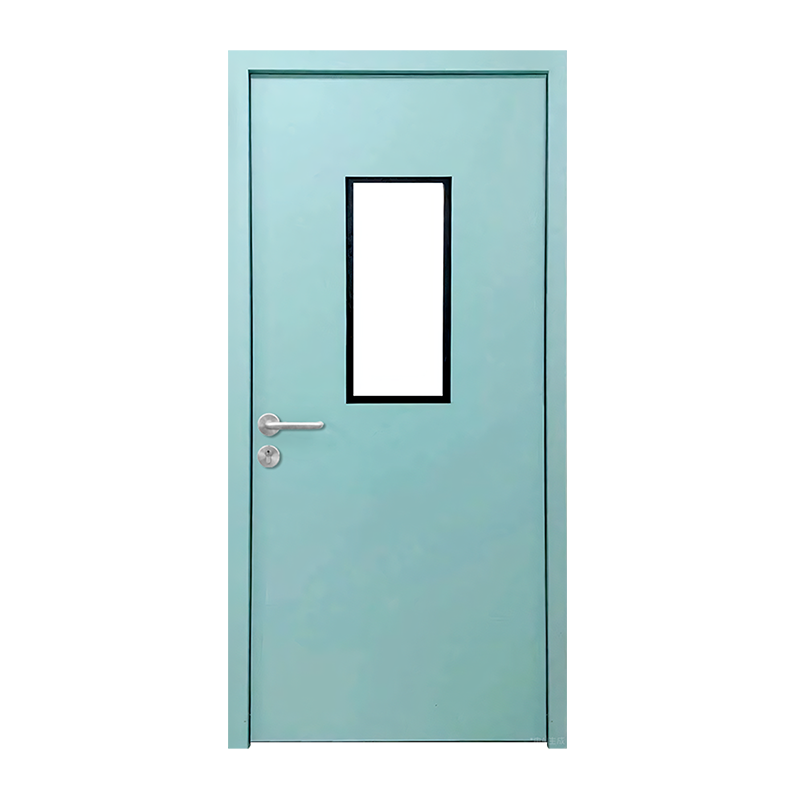
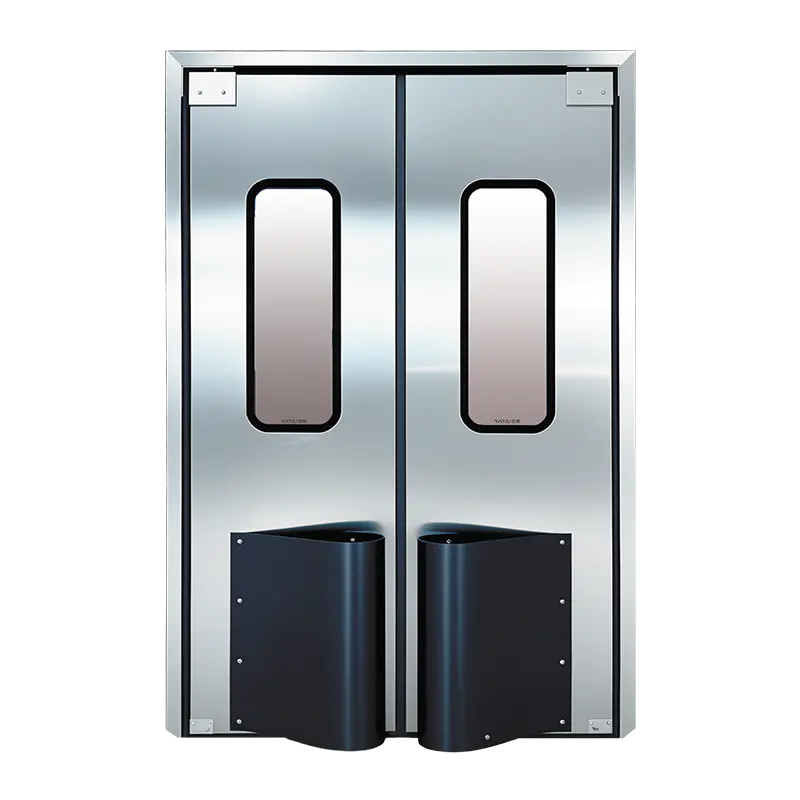
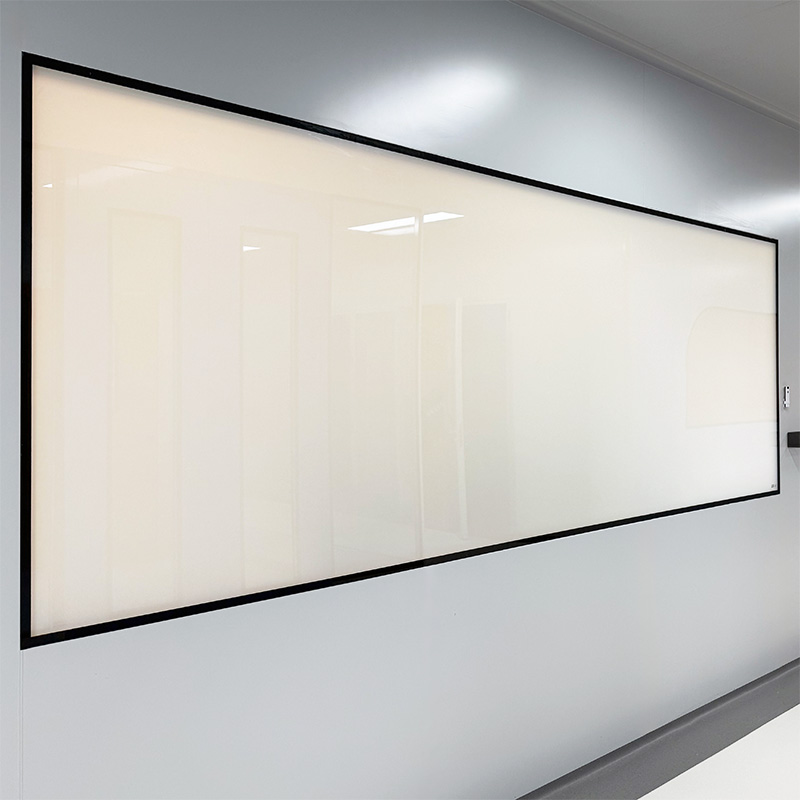
Safety and visibility are balanced with hygiene. A steel cleanroom door must feature flush-mounted, double-glazed vision panels. The frame of the window must be welded into the steel skin, not mechanically fastened, to eliminate screw heads which act as bacterial traps. A standard specification requires tempered safety glass on both sides with a slope on the internal reveal to prevent shelfing of dust.
Previous Post
Fast Rolling Doors: Types, Benefits & Buying Guide
Next Post
Cleanroom Windows: Design, Standards, and Best Practices

Jiangyin Yatai Purification Equipment Technology Co., Ltd. is a modern and specialized manufacturer of clean doors and windows. Cleanroom Project Factory, offer Custom Clean Doors and Windows.
QUICK LINKS
PRODUCTS
GET IN TOUCHs
-
 +86 13616113658
-
 +86(0)510-86661588 / 86668687
-
 [email protected]
-
 +86(0)510-86661588
-
 No.2, Huagang West Road, Shizhuang, Jiangyin, Jiangsu province
© Jiangyin Yatai Purification Equipment Technology Co., Ltd.
All Rights Reserved.
 Cleanroom Door Manufacturers