-
 +86 13616113658
-
 [email protected]
 English
 Español
 русский
 عربى

Home / Media / Industry News / Sterilized Environment Design: Doors, Panels and Monitoring for Cleanrooms
Sterilized Environment Design: Doors, Panels and Monitoring for Cleanrooms
Content
- 1 What a Sterilized Environment Actually Requires
- 2 Cleaning, Disinfection and Sterilization Are Three Different Jobs
- 3 The Room Envelope Sets the Ceiling on Sterility
- 4 Airlocks, Pressure Cascades and Door Behaviour
- 5 Materials That Survive Repeated Sterilization
- 6 Verification and Where Sterile Suites Actually Lose Containment
- 7 Frequently Asked Questions
Ask five people on the same cleanroom project what a sterilized environment is and you will get five answers: an ISO class, a cleaning rota, a pressure reading, or a door specification. The gap between those answers is where contamination problems start, because a room can pass a particle count on Monday and fail a settle plate on Friday.
A sterilized environment is a controlled space where airborne particles, surface residues and viable microorganisms are each held below a validated limit, and that limit is proven by routine monitoring rather than assumed from design drawings.
What a Sterilized Environment Actually Requires
Sterility in a room is a claim backed by three controls running at the same time: air, surface and access. Air handling removes particles and carries them away, surfaces must be cleanable and compatible with the agent used on them, and access control stops what the first two controls removed from walking back in through the door.
H14
Terminal HEPA grade, 99.995% at the most penetrating particle size
20-60
Air changes per hour across ISO 7 down to ISO 5 zones
6-log
Viable count reduction expected from a validated sterilization cycle
A clean room and a sterilized environment are not synonyms. Cleanliness is a particle statement, sterility is a biological one. A packaging hall can sit comfortably inside ISO 8 particle limits while carrying a bioburden that would ruin a sterile fill, which is why pharmaceutical and hospital clients specify an air class and a disinfection regime as two separate line items.
Cleaning, Disinfection and Sterilization Are Three Different Jobs
Cleaning removes soil, disinfection reduces viable organisms by a stated log factor within a defined contact time, and sterilization destroys all viable microorganisms including bacterial spores. They run in that order, and each step fails if the one before it was rushed.
Disinfection
Reduces bioburden but does not eliminate spores. Typical parameters: 70% IPA or a quaternary ammonium wipe, one to five minutes of wet contact time, three to five log reduction on the target organisms.
Sterilization
Kills all viable organisms including spores. Typical parameters: saturated steam at 121 degrees C for 15 minutes, or a vaporized hydrogen peroxide cycle of 30 to 60 minutes with controlled humidity.
Contact time is a specification, not a suggestion. A surface wiped and left wet for twenty seconds has had roughly a tenth of the exposure the label requires, and the log reduction claimed on that label no longer applies to your room.
Residual soil is the quieter failure. Most disinfectant chemistries lose effectiveness against protein and fat residue, which is why gross soil removal comes first in every validated procedure. In corridors with heavy trolley traffic that means a two-cloth method and a documented sequence from the cleanest surface toward the dirtiest, not a circular wipe with whatever cloth is nearest.
The Room Envelope Sets the Ceiling on Sterility
You cannot hold a sterilized environment inside a leaky envelope. Panel joints, door frames, window seals and service penetrations decide whether the pressure cascade survives, whether surfaces can be wiped without leaving residue traps, and whether the room can be revalidated after a maintenance shutdown.
| Element | Typical specification | Failure mode when under-specified |
| Wall and ceiling panels | 50 mm sandwich panel, flush joints, sealed fixings | Joint gaps trap residue and bleed pressure |
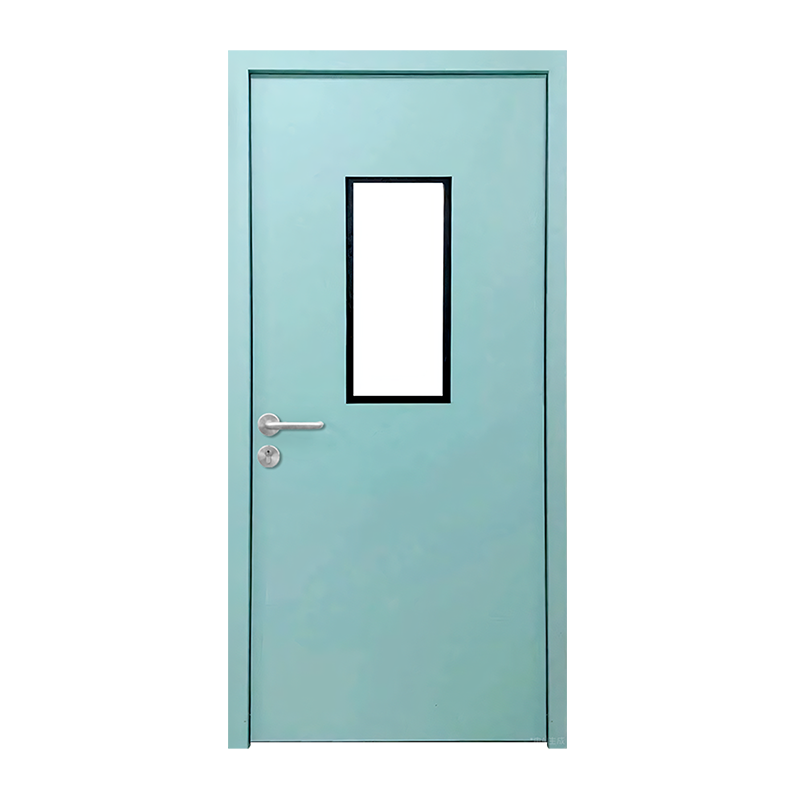
| Cleanroom doors | Airtight single or double leaf with drop seal and interlock-ready frame | Seal fatigue collapses the cascade at every pass |
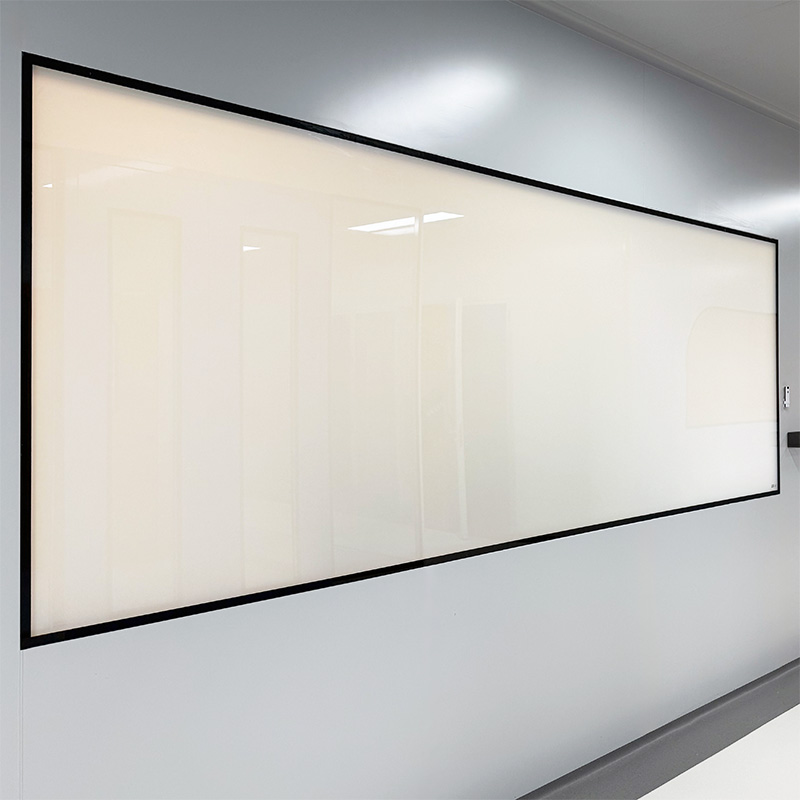
| Vision windows | Double glazed, flush on both faces, sealed frame | Rebate ledges collect dust and cleaning fluid |
| Service penetrations | Sealed sleeves and gasketed service plates | Open conduits bypass the terminal filters entirely |
The real test of an envelope is not how it looks at handover but how it behaves after a year of daily wipe-downs. Coved junctions and gasketed frames keep chemistry out of the joints; recessed skirting, exposed cable trays and unsealed cut cores do the opposite and slowly become harbourage points that no cleaning rota can reach.
 Handmade Rock Wool Sandwich PanelHandmade rock wool sandwich panel for cleanroom enclosures; review joint and sealant detailing, since unsealed gaps can become harbourage points after daily cleaning.View Product →
Walk the room with a torch held flat against the wall before you accept it. Shadows across a panel joint show you where the sealant stopped short, and those gaps are invisible under normal lighting once the room is in service.
Airlocks, Pressure Cascades and Door Behaviour
A sterile environment is held by pressure, not by walls. A workable cascade runs around +15 Pa in the critical zone, +10 Pa in the change room and +5 Pa in the outer corridor, so air always moves from cleaner toward dirtier and never reverses when a door opens.
Gowning room
Outer clothing comes off, hands are disinfected, dedicated garments and goggles go on. The outer door must latch fully before the inner leaf is released.
Airlock entry
Interlocked leaves with a short dwell between movements, while the differential gauge confirms the cascade has recovered before the next person enters.
Critical zone
Positive pressure held near +15 Pa, HEPA supply at ceiling level, low-level returns, and nothing stored above knee height that would disturb the airflow pattern.
Exit path
A separate route where the layout allows it. Sharing one airlock for entry and exit reverses the gradient twice per pass and drags contaminated air back into the critical zone.
Door speed is a pressure decision before it is a convenience decision. A leaf closing in 1.5 seconds is not better than one closing in 3 seconds if the faster movement stirs the floor boundary layer, trips the safety sensor on every pass, or slams against a seal that was never designed for that impact.
In a hospital sterile operation area the same logic applies with tighter tolerances, because the door is opened dozens of times per procedure and every opening is a pressure event. Specify the leaf weight, the seal type and the closing force together, not as three separate purchasing lines.
 Magnetic Automatic Airtight Cleanroom DoorMagnetic automatic airtight door for cleanrooms and hospital sterile areas; its external power beam simplifies installation and its sealing helps limit cross-contamination.View Product →
Materials That Survive Repeated Sterilization
Surfaces must tolerate the agent, the frequency and the mechanical action behind it. Stainless steel, HPL and fully cured powder coatings handle routine alcohol and hydrogen peroxide cycles; cut edges, hinge pockets and seal channels are where corrosion and microbial harbourage actually begin.
- Stainless steel 304 or 316L for leaves, frames and hardware, with welds ground flush and passivated so there is no roughened surface to scrub around.
- HPL or cured powder coating on panel faces, since under-cured coatings chalk and micro-crack within a few months of chemical exposure.
- Silicone or EPDM gaskets rather than low grade PVC, because seal shrinkage opens a leak path long before the door itself fails mechanically.
- Sealed panel edges on every cut, as exposed mineral or honeycomb cores absorb cleaning fluid and turn a scratch into a permanent contamination source.
That is why a pharmaceutical production workshop running vaporized hydrogen peroxide cycles should not be fitted with the same door finish as a dry electronics hall. The agent compatibility list matters more than the colour card.
Finish compatibility is a purchasing question, not a maintenance afterthought. Ask the supplier for the cleaning agents the coating was tested against, the concentration and the contact time, and compare that sheet with your own disinfection procedure before the doors are ordered.
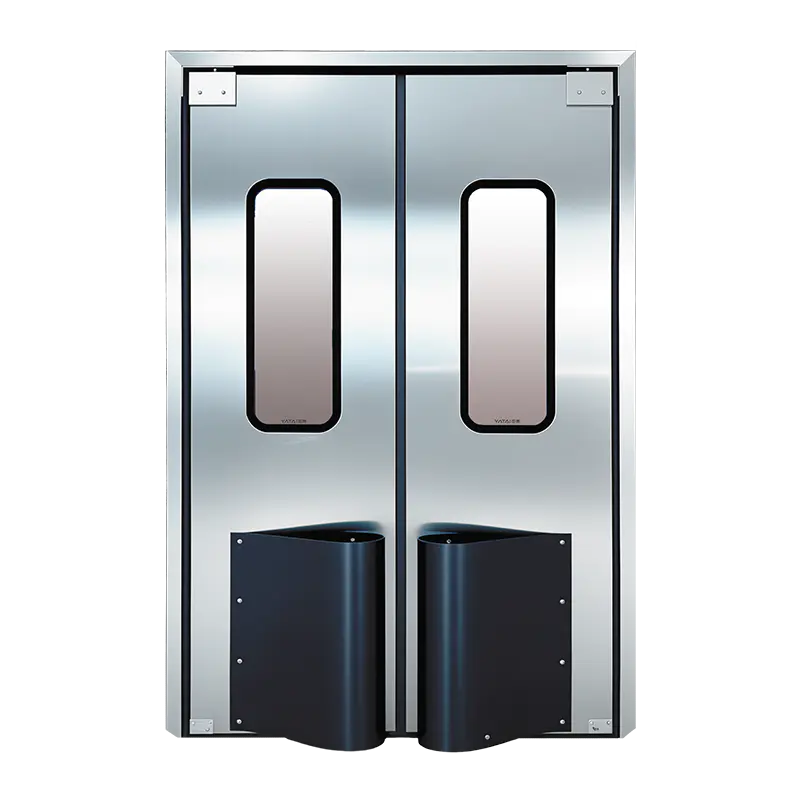
 SUS304 Stainless Steel Cleanroom DoorSUS304 stainless steel clean door for pharmacy, electronics, food and hospital spaces; check finish compatibility with your disinfection agents before ordering.View Product →
Verification and Where Sterile Suites Actually Lose Containment
Sterility is a monitored claim. Particle counts at rest and in operation, settle plates, pressure differential logs and door seal checks generate the evidence, and when a suite does lose containment the cause usually sits among a small set of repeat offenders.
Door seal fatigue
34%
Personnel traffic
26%
Panel joint gaps
18%
Cleaning residue
12%
Filter frame leaks
10%
Recurring containment issues in sterile suites, ranked by how often they appear in routine audits. The pattern is consistent: most losses come from the boundary between zones rather than from the air handling unit, and the door is the busiest part of that boundary.
A pressure log that runs flat for weeks is a warning, not a comfort. A sticking gauge, a drifting sensor and an airlock propped open during a delivery all look identical on a chart nobody actually reads.
Frequently Asked Questions
What is the difference between a clean environment and a sterilized environment?
A clean environment limits particle contamination to a defined ISO class. A sterilized environment goes further and controls viable microorganisms, which requires a disinfection or sterilization cycle, validated contact times, and monitoring of surfaces as well as air.
How often should airtight door seals be replaced?
Inspect quarterly and replace the seal when a visible gap appears, when the door no longer holds its differential, or when the gasket shows cracking or permanent set. High traffic sterile corridors often need annual replacement even when the door still looks serviceable.
Can a sterile area be maintained without an airlock?
Not reliably. An airlock or pass-through hatch separates the pressure zones and lets people and materials change status without breaking the cascade. A direct door from a corridor into a critical zone produces a pressure reversal every time it is used.
Which materials suit a room cleaned with hydrogen peroxide?
316L stainless steel, HPL and fully cured powder coated panels are the usual choices. Avoid bare aluminium edges, unsealed cut panel cores and low grade elastomers, which degrade under repeated vaporized hydrogen peroxide exposure.
Keep the specification sheet, the agent compatibility list and the seal inspection record in one place. A sterile suite is revalidated on evidence, and evidence that lives in three different folders rarely survives its first serious audit.
Previous Post
No previous article
Next Post
Mobile Cleanroom Design: Envelope, Door and Relocation Guide for Modular Units

Jiangyin Yatai Purification Equipment Technology Co., Ltd. is a modern and specialized manufacturer of clean doors and windows. Cleanroom Project Factory, offer Custom Clean Doors and Windows.
QUICK LINKS
PRODUCTS
GET IN TOUCHs
-
 +86 13616113658
-
 +86(0)510-86661588 / 86668687
-
 [email protected]
-
 +86(0)510-86661588
-
 No.2, Huagang West Road, Shizhuang, Jiangyin, Jiangsu province
© Jiangyin Yatai Purification Equipment Technology Co., Ltd.
All Rights Reserved.
 Cleanroom Door Manufacturers