-
 +86 13616113658
-
 [email protected]
 English
 Español
 русский
 عربى

Home / Media / Industry News / USP 1116 Environmental Monitoring: A Design Brief for Aseptic Processing Rooms
USP 1116 Environmental Monitoring: A Design Brief for Aseptic Processing Rooms
Content
A settle plate rarely fails because of the air itself. When an environmental monitoring excursion reaches the hardware stage, it usually traces back to a gasket that lost compression, a door propped open during a pallet transfer, a sealant bead that pulled away from a panel joint, or a handle nobody wipes. USP 1116 does not regulate doors, but its monitoring logic only holds together when the enclosure behaves the way the room classification assumes.
USP <1116> is the general information chapter on microbiological control and monitoring of aseptic processing environments. It explains how to judge whether a controlled environment is in a state of control, and how to build the sampling programme that supports that judgement. Read it as a design brief for the whole room, not only for the microbiology laboratory.
What USP 1116 Covers, and What It Does Not
USP 1116 is an informational chapter rather than a pass or fail specification: its numerical values describe a well-controlled environment instead of setting absolute limits.
The chapter states that position plainly. Sampling devices and methods vary so widely that no single count can guarantee microbial control, and a value above a published number is not automatically a loss of control. Improper sampling, on the other hand, can add variability and even introduce contamination. That framing matters in an audit: the question is not whether one plate exceeded a figure, but whether the programme, the trend, and the room tell a consistent story.
The chapter works through eleven connected areas:
- Classification of cleanrooms by airborne particle count
- Microbiological evaluation programmes for controlled environments
- Personnel training and its influence on data quality
- Critical factors in programme design and implementation
- Development of a sampling plan
- Establishment of microbiological alert and action levels
- Methods and instrumentation for microbiological sampling
- Media and diluents used in monitoring
- Identification of microbial isolates
- Operational evaluation through media fills
- Glossary of terms
Two details are easy to miss. First, the title has shifted across editions: earlier printings called the chapter "Microbiological Evaluation of Clean Rooms and Other Controlled Environments," while the current title reads "Microbiological Control and Monitoring of Aseptic Processing Environments." Evaluation asks what a room was on the day of the visit; control asks what the room is doing continuously, under real working conditions. Second, pharmacy compounding of sterile products for home use is excluded here and covered by USP 797.
Monitoring never proves sterility. It shows that the environment was in a state of control while you sampled it, and that it stayed there across the trend window.
Alert Levels, Action Levels, and the Trend Between Them
An alert level is an internal early warning derived from your own historical data, while an action level is the threshold that triggers a documented investigation and a batch impact assessment.
Both are site-specific. The chapter does not hand out fixed numbers with regulatory force; it asks you to derive levels from your own baseline and then defend that derivation. Most teams build alert levels from a rolling mean plus two standard deviations, or from a high percentile of routine data, and reserve action levels for departures that clearly break with that history.
Alert level
- Early warning of drift, not a failure
- Derived from site historical data
- Answered with review, extra cleaning, extra sampling
- Documented, usually without a formal deviation
Action level
- Signals a condition outside routine control
- Triggers root cause investigation
- Requires an assessment of batches made in the window
- Often tracked against regulatory guidance values
The trap is treating a single number as a verdict. A Grade A result cannot be averaged away, and a Grade C count that sits just under the action level for six consecutive months tells you more than the same count appearing once. Trending is where USP 1116 does most of its work.
Where the Building Envelope Enters the Programme
Door seals, panel joints, and window frames determine how quickly a room recovers after a transfer, and recovery speed is exactly what a monitoring programme measures.
Once you accept that, the specifications stop being cosmetic. Five elements carry most of the risk:
- Doors and gaskets. Interlocking gasket geometry, replaceable seals, and dependable interlock logic keep an airlock a buffer rather than a leak path.
- Panel joints and coving. Closed joints, compatible sealant, and a coved floor transition leave nowhere for residue to sit.
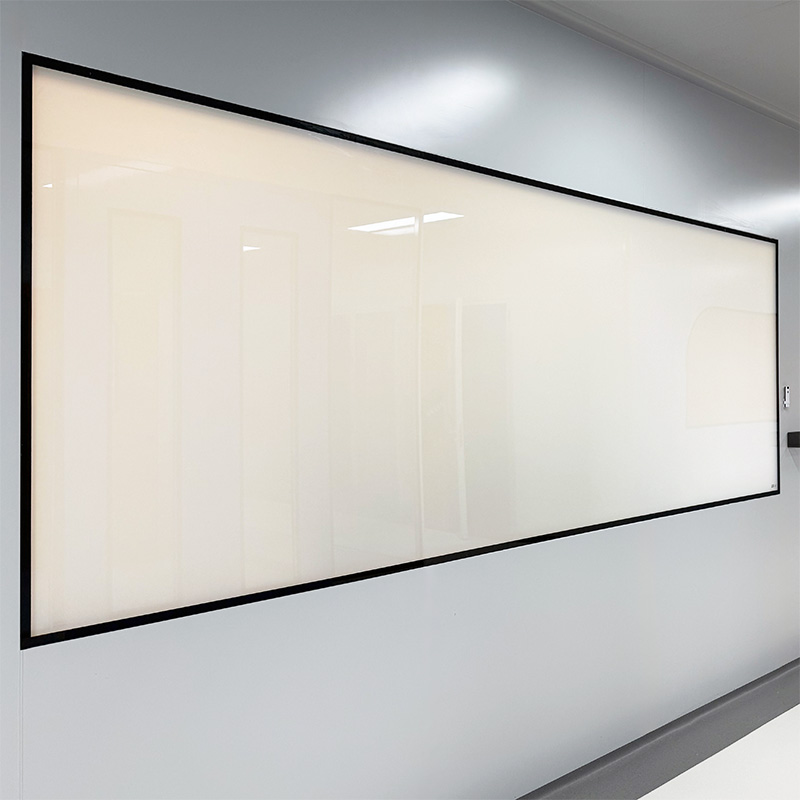
- Windows. Flush glazing on both faces, sealed frames, and no ledges, with double glazing where pressure and thermal load demand it.
- Hardware. Smooth handles, closers, and fasteners with minimal seams reduce the number of surfaces a wipe must reach.
- Airlocks and pass-throughs. Interlocked doors with a defined dwell time and visible differential pressure gauges at the threshold.
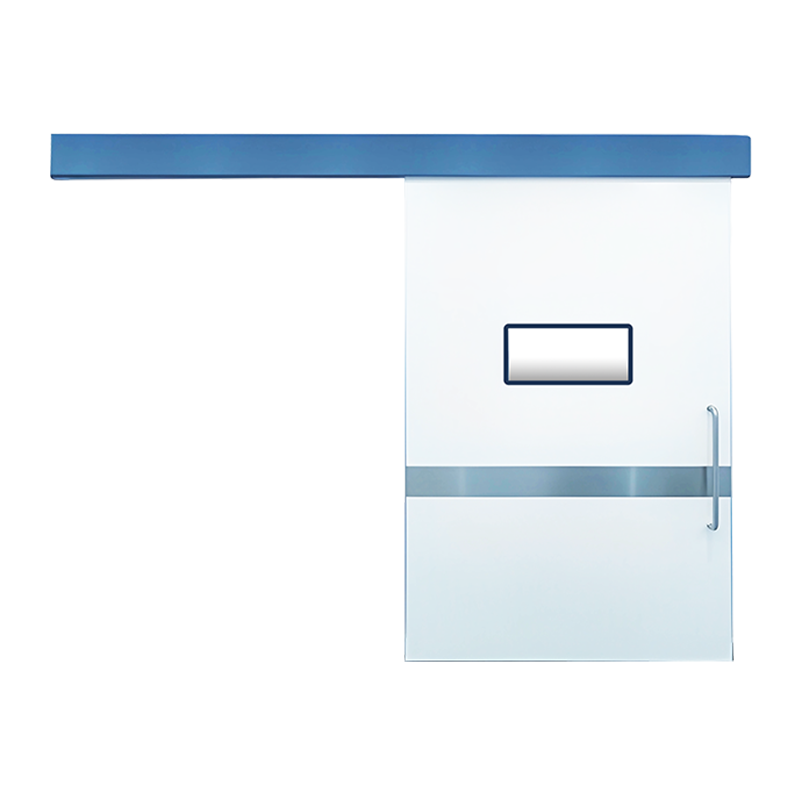 Magnetic Automatic Airtight Door for Cleanroom EnclosuresMagnetic-drive cleanroom door with external wall mounting and JG/T 257-2009 Level 8 airtightness; review where sealing and patient/cart access matter.View Product →
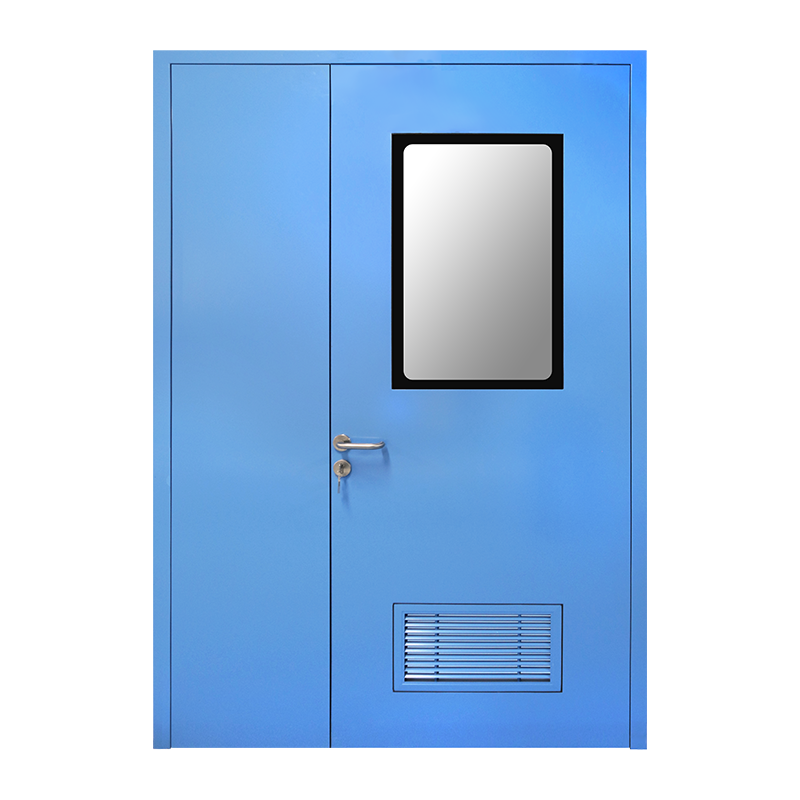 Handmade Rock Wool Sandwich Panel for Cleanroom EnclosuresColour-coated cleanroom sandwich panel entry with limited published technical data; check alongside aluminum honeycomb and PU panel options before requesting specifications.View Product →
A seal that depends on perfect adjustment will drift within a year, so gasket compression set and closing force belong in the purchase specification rather than the datasheet alone. The engineering behind sealing technology for airtight cleanroom doors explains why the interface, and not the leaf, usually decides performance.
10 to 15 Pa Typical differential held between adjacent cleanliness grades
Ra 0.8 micron Surface roughness commonly written into wipe-down specifications
Grade A Critical zone where first-air protection and interventions are assessed
None of those figures comes from USP 1116 itself; they are industry values that support the chapter's intent. What the chapter does insist on is that the environment you monitor is the environment you designed, operated by people who understand how quickly it degrades when a door stays open.
Sampling Locations That Reflect Contamination Risk
Locate samples where contamination is most likely to enter or accumulate, not where sampling is convenient.
That single principle, repeated throughout the chapter, changes a sampling map more than any published number. In practice, most aseptic facilities end up with a location set that looks like this:
| Location | Typical method | What an excursion usually points to |
| Airlock threshold, both sides | Settle plate and surface swab | Door held open, interlock bypassed, or gasket leaking |
| Door handle and push plate | Contact plate | Cleaning frequency or disinfectant contact time too low |
| Floor coving at a panel joint | Swab | Sealant gap or micro-crack holding residue |
| Return air grille and adjacent wall | Settle plate | Airflow pattern disturbed by equipment or open doors |
| Edge of the Grade A filling zone | Settle plate and active air sample | First-air protection compromised during an intervention |
| Interior of a pass-through hatch | Swab | Transfer practice or hatch seal condition |
Results must be read as a series rather than as isolated events. Microbiological methods carry real variability in recovery efficiency, media performance, and incubation conditions, and the person holding the sampler is part of the control system; a technician who crowds the critical zone adds contamination while measuring it.
Two counts that look identical on paper can come from different samplers, different recovery efficiency, and different media lots. Method variability belongs inside your trend analysis, not in a footnote.
Specifying Doors and Panels Against the Monitoring Plan
Start with the grade map and pressure cascade, then let the door and panel schedule follow; specifying finishes first is how envelope leaks get designed in.
- Fix the grade map and the pressure cascade for every adjacent pair of rooms before any product is selected.
- Match the door type to traffic and criticality: airtight automatic sliding doors at material transfer points, hinged or swing doors at personnel entries.
- Write the seal into the specification, covering interlocking gasket geometry, replaceable seals, and a compression tolerance that survives daily use.
- Define panel joints and coving: closed joints, sealant compatible with your disinfectants, no exposed core, and a coved floor transition.
- Match surface material to chemical load, using stainless steel in washdown and aggressive disinfection areas and coated steel or melamine resin where the load is lighter.
- Commission with data: particle counts at rest and in operation, airflow patterns, recovery time, and a baseline monitoring round before release.
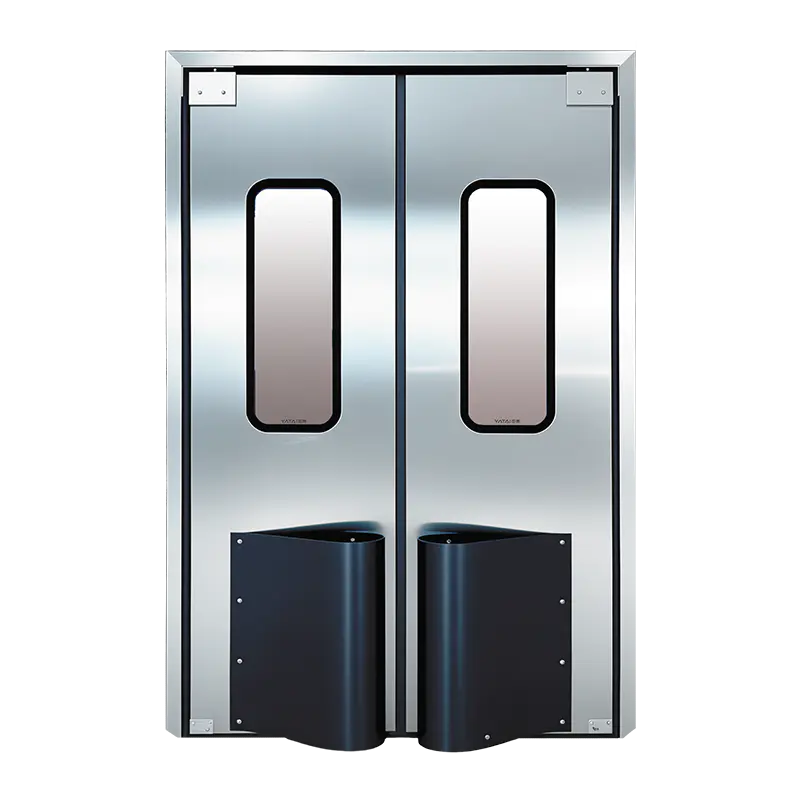
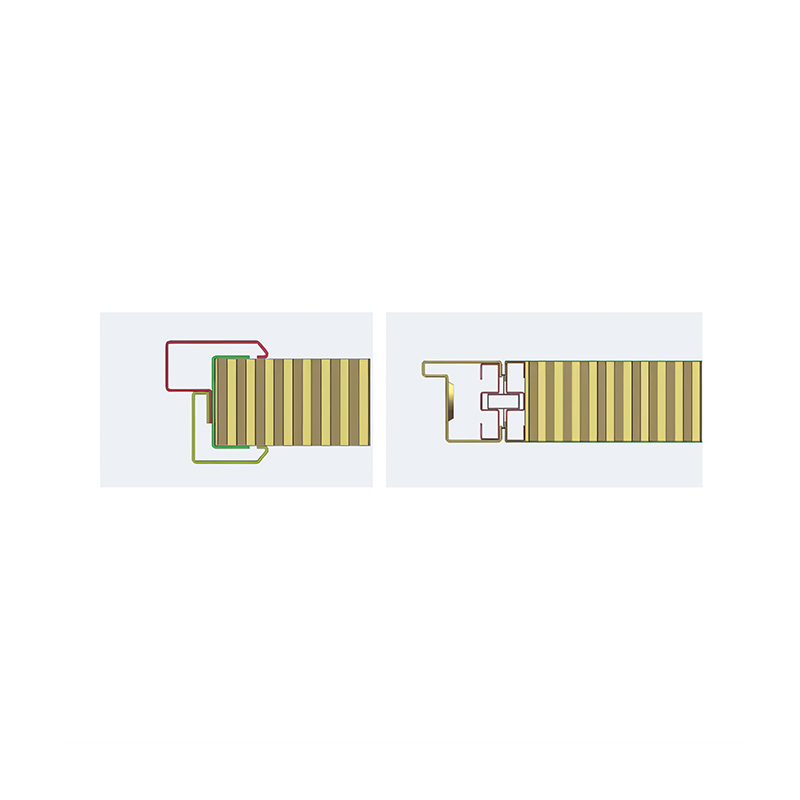 Stainless Steel Cleanroom Door for Pharmaceutical and Hospital SpacesSUS304 cleanroom door with selectable leaf materials, honeycomb or rock wool infill, and airtight performance for pharmacy, electronics, food, biology, and hospital rooms.View Product →
For pharmaceutical production workshops, the door schedule has to satisfy two documents at once: the room's classification drawing and the cleaning validation protocol. When those two disagree, the seal usually loses.
Frequently Asked Questions
Is USP 1116 a regulatory requirement?
No. It is a general information chapter, so it does not carry the enforceability of a chapter with mandatory requirements. Inspectors still expect its concepts to appear in your environmental monitoring programme, because GMP regulations require that such a programme exists, is risk-based, and is justified in writing.
How does USP 1116 differ from USP 797?
USP 797 sets requirements for compounding sterile preparations, including its own monitoring expectations. USP 1116 addresses aseptic processing environments more broadly and explicitly excludes pharmacy compounding of sterile products for home use, which remains under 797.
How many sampling locations does a cleanroom need?
There is no fixed number. Samplers should be placed where people, materials, and air converge, informed by airflow visualization and historical data, with the rationale documented. Adding locations without a stated risk reason does not strengthen a programme.
Can door and panel choices really change monitoring results?
They change recovery time, background counts, and cleaning feasibility, so yes. A leaking gasket or an unsealed panel joint tends to appear first as a persistent low-level elevation at one location, long before it appears as a single dramatic excursion.
USP 1116 is often filed under microbiology, yet half of its practical value sits in the door schedule and the panel specification. A monitoring programme can only trend what the enclosure allows it to measure, and a room that recovers in seconds gives you a clean signal. Get the envelope right at specification stage, and the chapter becomes a record of good design instead of a list of investigations.
Previous Post
No previous article
Next Post
Sterilized Environment Design: Doors, Panels and Monitoring for Cleanrooms
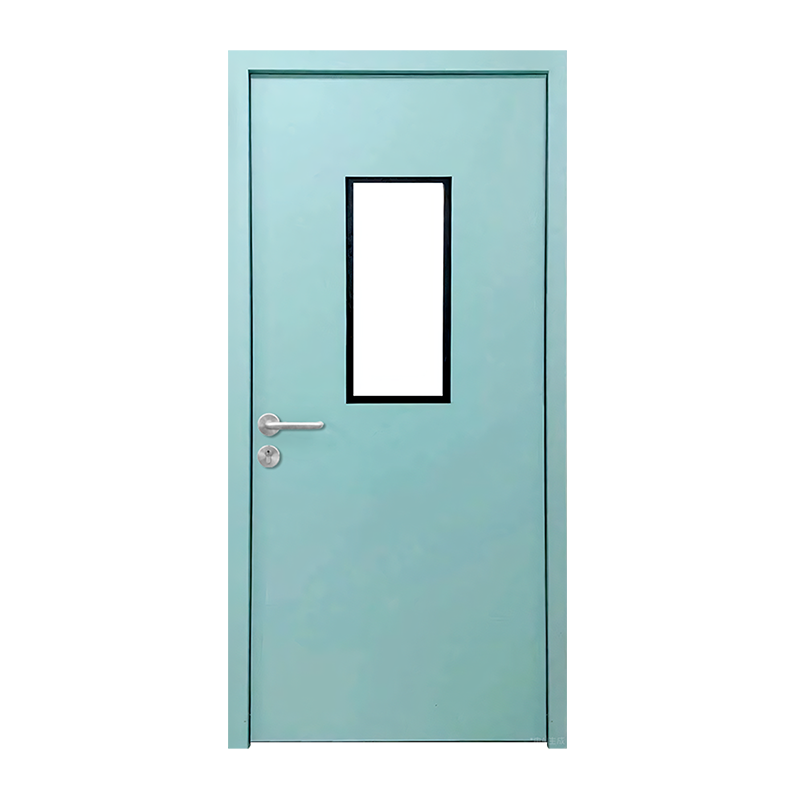

Jiangyin Yatai Purification Equipment Technology Co., Ltd. is a modern and specialized manufacturer of clean doors and windows. Cleanroom Project Factory, offer Custom Clean Doors and Windows.
QUICK LINKS
PRODUCTS
GET IN TOUCHs
-
 +86 13616113658
-
 +86(0)510-86661588 / 86668687
-
 [email protected]
-
 +86(0)510-86661588
-
 No.2, Huagang West Road, Shizhuang, Jiangyin, Jiangsu province
© Jiangyin Yatai Purification Equipment Technology Co., Ltd.
All Rights Reserved.
 Cleanroom Door Manufacturers