-
 +86 13616113658
-
 [email protected]
 English
 Español
 русский
 عربى
عربى
Home / Media / Industry News / Cell Therapy Manufacturing Process: GMP Cleanroom Design and Facility Guide
Cell Therapy Manufacturing Process: GMP Cleanroom Design and Facility Guide
Content
A CAR-T cell therapy batch is manufactured for one patient at a time. T cells leave the body in a leukapheresis collection, get engineered and expanded over roughly two to three weeks, and must return sterile, viable, and on schedule — a lost batch can delay a treatment that no alternative product can replace. Because of that, the cell therapy manufacturing process is judged as much by contamination control as by cell biology. Open manipulations happen inside Grade A zones, closed bioreactors run behind sealed walls, and every door cycle, panel joint, and window frame either protects the batch or puts it at risk. The bottom line comes first: the biology may set the sequence, but the facility decides whether the sequence succeeds.
The Cell Therapy Manufacturing Process, Step by Step
Most platforms follow the same backbone, whether the product is a CAR-T cancer therapy, a dendritic cell vaccine, or a mesenchymal stem cell treatment. The real divide is autologous versus allogeneic. Autologous manufacturing starts from the patient's own cells, so hundreds of small, patient-specific batches run in parallel, each with its own chain of identity records. Allogeneic manufacturing starts from healthy donor cells and produces larger batches for many patients, which favors scale but demands tighter characterization of every donor line.
Figure 1. Unit operations from collection to release; every step after collection occurs inside a classified cleanroom.
The table below summarizes what happens at each step and the facility interface it creates. Note how many steps either generate open manipulations or connect to mobile equipment — both are contamination transfer points.
| Process Step | What Happens | Facility Interface |
|---|---|---|
| Collection | Leukapheresis or tissue harvest; cold-chain transport of starting material | Receiving airlock, temperature-controlled staging |
| Isolation & selection | Target cells enriched by centrifugation, filtration, or magnetic selection | Grade A open work in a Grade B background, or closed tubing sets |
| Activation & engineering | Cells activated and genetically modified, often with viral vectors | Biosafety-rated zones with segregated flows |
| Expansion | Culture in bioreactors for several days to reach therapeutic dose | Incubators and clean utilities inside Grade C/D support rooms |
| Formulation & fill | Washing, concentration, and filling of the final drug product | Grade A/B filling zone with restricted access |
| Cryopreservation & release | Controlled-rate freezing, vapor-phase LN2 storage, QC release testing | LN2 storage room, sampling pass-throughs, QC laboratory |
What GMP Demands From a Cell Therapy Cleanroom
Regulators apply the same sterile product logic used for injectables. EU GMP Annex 1 and FDA guidance expect open cell manipulations in Grade A (ISO 5) conditions inside a Grade B (ISO 7) room, while fully closed systems with welded or sterile-connected tubing can be run in Grade C or D backgrounds. Two consequences matter for the building itself.
A cleanroom's pressure cascade is only as airtight as its weakest door cycle — recovery time, not just the number on the gauge, is what inspectors notice.
- Pressure cascades must hold. Adjacent grades are typically separated by 10–15 pascals, so air always moves from clean to less clean. Every door opening transiently erodes that differential, and the envelope has to recover it within seconds.
- Everything must be cleanable and documented. Surfaces face repeated disinfectant and sporicidal agent rotation, so materials must resist corrosion and discoloration, and suppliers must back them with material certificates that validation teams can trace.
Environmental monitoring then converts design into evidence: viable and non-viable particle counts, differential pressure logs, and temperature and humidity records reviewed batch by batch. A facility that leaks — through walls, frames, or doors — shows up in those logs long before it shows up in a sterility test.
Controlling Flow: People, Materials, and Waste
Most contamination events trace back to movement, not equipment. Staged gowning rooms, material airlocks with wipe-down zones, and dedicated waste exits exist to keep the pressure cascade intact while the suite stays busy. Door selection sits at the center of this. Airtight hinged doors suit lower-traffic boundaries, but gowned operators pushing transfer trolleys need hands-free, fast-cycling hardware. This is where the airtight automatic sliding door earns its place in a cell therapy suite: the leaf seals into its frame to protect the pressure differential, a motion sensor keeps gloved hands off any surface, and the slide action clears wide transfer routes without the door swing conflicts that plague retrofit projects.
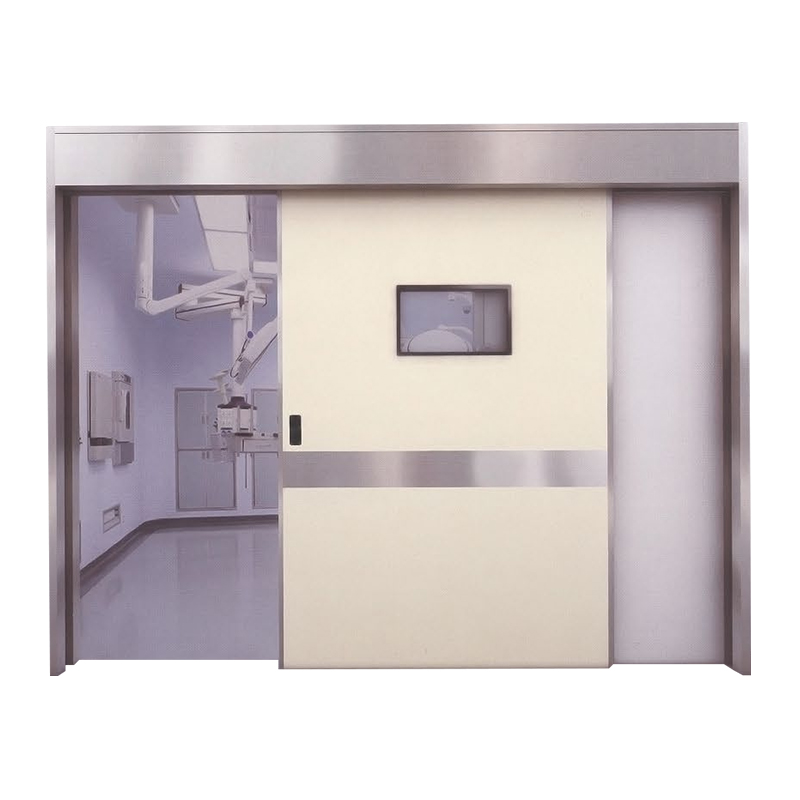 Airtight Automatic Sliding Door for CleanroomsMotion-activated, quick-cycling door whose leaf seals into the frame to hold pressure differentials. Suited to cell therapy suites where gowned staff move trolleys without touching surfaces.View Product →
Interlocks complete the picture — two doors in an airlock must never open at once, and door status can be wired into the building management system so a blocked or propped door triggers an alarm instead of quietly collapsing the cascade. For a closer look at how sealing performance and hygiene requirements are specified together, this overview of airtight doors in healthcare and laboratories covers the contamination standards that also drive advanced therapy suites.
Specifying the Envelope: Doors, Panels, and Windows
Walls and ceilings built from sandwich panels
Cell therapy suites are almost universally built from prefabricated cleanroom panels because they combine smooth, washable faces with fast installation and predictable airtightness. Core choice is a genuine engineering decision: aluminum honeycomb gives flatness and strength for tall wall runs, rock wool delivers the fire performance demanded by building codes, and glass-magnesium variants add moisture resistance. Flush-mounted doors and windows keep surfaces uninterrupted, and coved wall-to-floor junctions eliminate the corners where disinfectant residue accumulates. A handmade aluminum honeycomb panel is a common specification for pharmaceutical wall systems because its hand-finished edges tolerate repeated sealing work at junctions and openings.
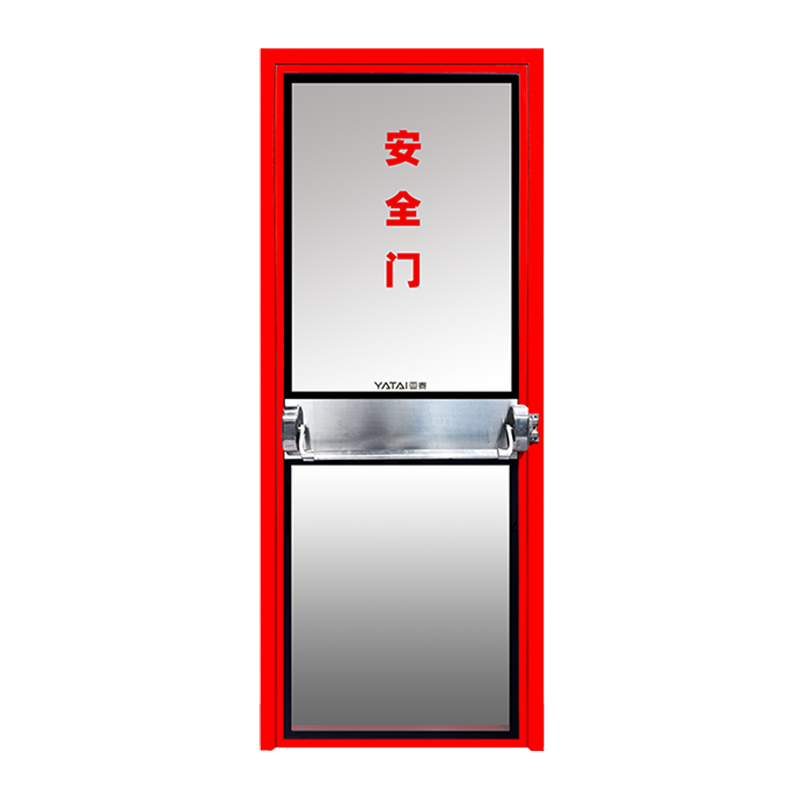 Handmade Aluminum Honeycomb Sandwich PanelHand-finished cleanroom wall panel offering flatness and strength for tall wall runs, with edges that tolerate repeated sealing at junctions and openings in pharmaceutical suite construction.View Product →
Vision panels that stay clear
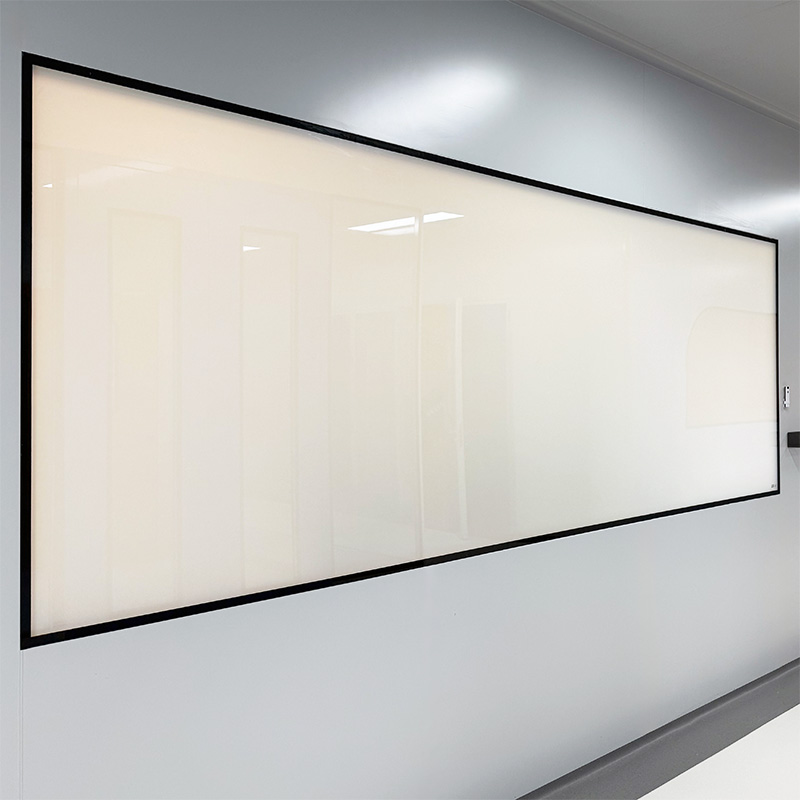
Supervision without entry is a GMP advantage: supervisors and auditors can observe operations without adding particle load or disturbing the pressure cascade. The practical failure mode is condensation — single glazing fogs up in humidity-controlled rooms and obscures the view you paid for. Hollow double-layer glass constructions insulate the pane against the temperature gap, and flush or slightly inclined frames shed cleaning water instead of pooling it. A double-glazed cleanroom window addresses both the condensation risk and the flush-surface requirement in one assembly.
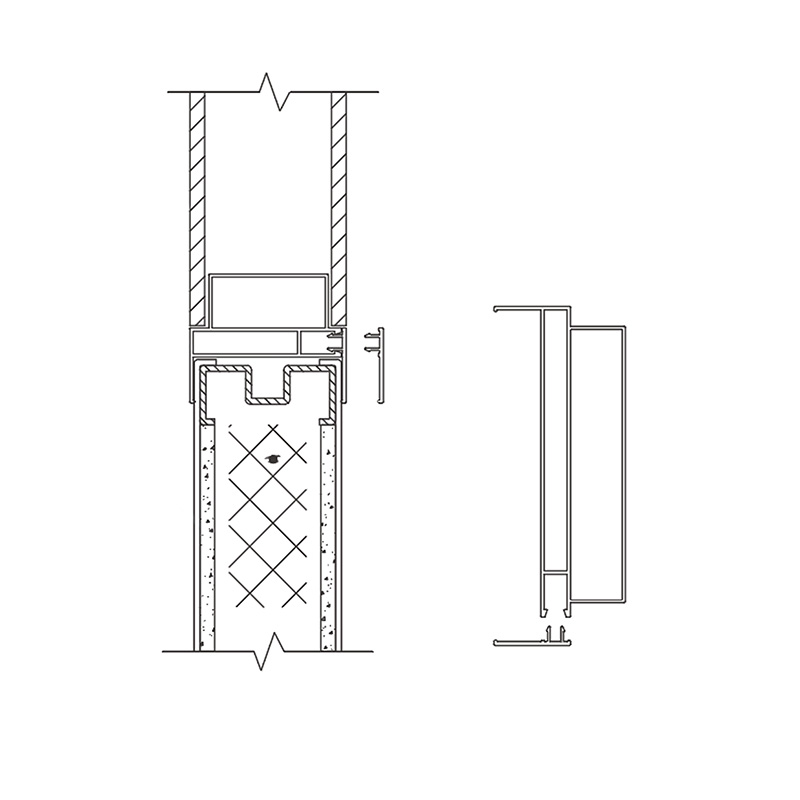 Hollow Double-Layer Glass Cleanroom WindowDouble-glazed window with aluminum or SUS304 frames that insulates against humidity-controlled rooms, resisting condensation while maintaining flush surfaces for cleanability and viewing.View Product →
Door boundaries that respect the cascade
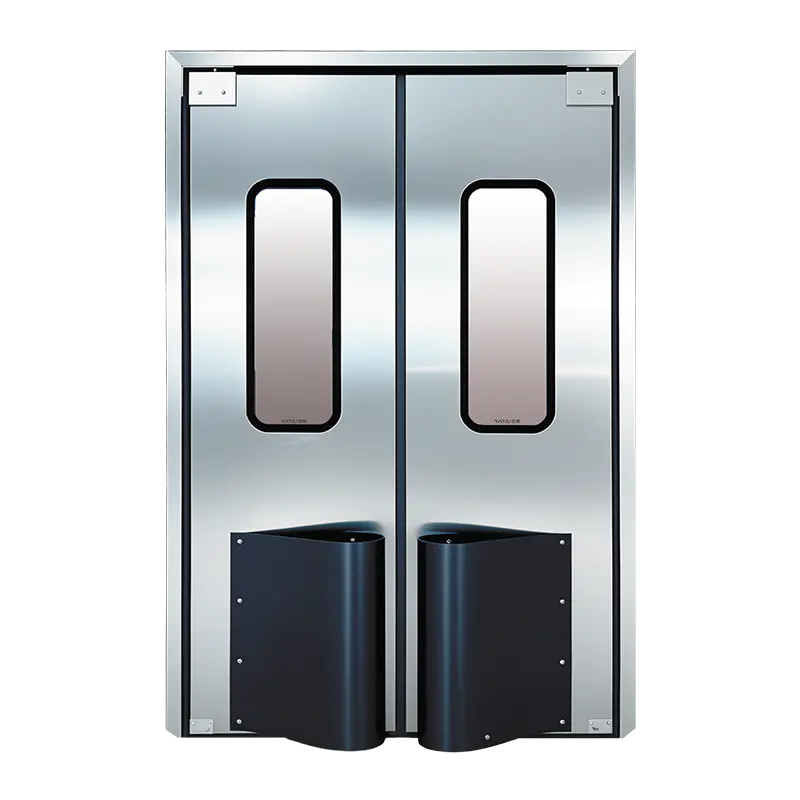
Within the door family, match leaf material to the room: stainless steel or HPL faces where aggressive disinfectants dominate, steel or aluminum-framed leaves for general suites, and fire-rated leaves wherever code requires compartmentation. Seals, hinges, and closers deserve as much attention as the leaf itself, because an airtight leaf with a fatigued seal is just a heavy door.
Procurement Risks That Show Up After Handover
Cleanroom envelopes are bought once and lived with for a decade, so the expensive mistakes are specification mistakes. These are the recurring ones in cell therapy and advanced therapy projects:
- Non-flush frames and exposed fasteners that trap disinfectant residue and shed particles at exactly the places where monitoring samples are taken.
- Undersized hinges, closers, and motors — airtight leaves are heavy, and hardware rated for a warehouse door fails within months of a 200-cycle-a-day suite.
- Fire performance mismatches, where a combustible core is specified in a compartment that local code assigns a fire rating, forcing rework at inspection.
- Single-glazed vision panels that fog in humidity-controlled rooms and end up obscured within a year.
- Missing documentation — material certificates, cleanability data, and dimensional tolerances that validation teams need but some suppliers treat as optional.
None of these risks are exotic. All of them are cheaper to fix on a drawing than in an operating GMP suite.
A Practical Checklist Before You Order
- Map personnel, material, and waste flows first; place doors where the flows need them, not where the layout has room left.
- Define the pressure cascade numerically and ask each door supplier for leakage and recovery performance against it.
- Assign a core material to every wall zone, reconciling structural loads, fire compartments, and moisture exposure.
- Specify hands-free activation and interlock logic for every airlock, and wire door status into environmental monitoring.
- Require material certificates and cleanability statements with the quotation, so validation starts with evidence instead of requests.
- Confirm lead times for custom sizes early — door and window frames sit on the critical path of nearly every cleanroom build.
The direction of cell therapy manufacturing is clear: more closed systems, more automation, and tighter schedules per batch. None of that removes the facility's role — it raises the bar, because as open manipulations shrink, every remaining envelope defect becomes proportionally more visible in the data. Treat doors, panels, and windows as process equipment with a regulatory job, source them from a manufacturer that builds cleanroom products as its core business, and the GMP story told by your environmental monitoring will be a boring one. That is exactly what a good facility should be. YATAI, a cleanroom project factory based in Jiangyin, China, manufactures airtight doors, cleanroom windows, and sandwich panel systems for pharmaceutical and advanced therapy projects worldwide.
Previous Post
No previous article
Next Post
Medical Device Packaging: Sterile Barrier Integrity & Cleanroom Essentials
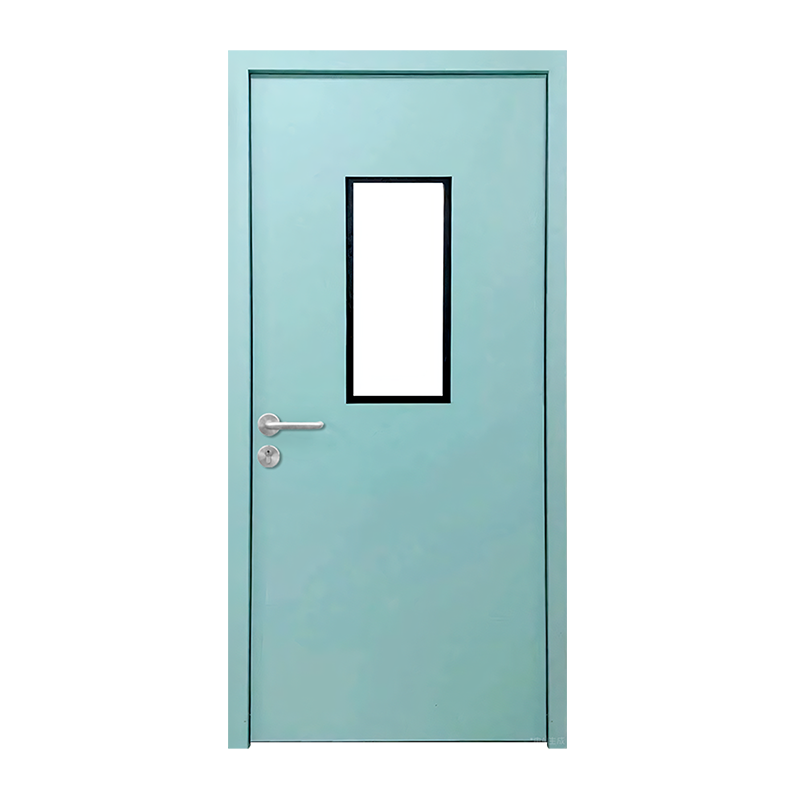

Jiangyin Yatai Purification Equipment Technology Co., Ltd. is a modern and specialized manufacturer of clean doors and windows. Cleanroom Project Factory, offer Custom Clean Doors and Windows.
QUICK LINKS
PRODUCTS
GET IN TOUCHs
-
 +86 13616113658
-
 +86(0)510-86661588 / 86668687
-
 [email protected]
-
 +86(0)510-86661588
-
 No.2, Huagang West Road, Shizhuang, Jiangyin, Jiangsu province
© Jiangyin Yatai Purification Equipment Technology Co., Ltd.
All Rights Reserved.
 Cleanroom Door Manufacturers