-
 +86 13616113658
-
 [email protected]
 English
 Español
 русский
 عربى
عربى
Fast Rolling Doors: Types, Benefits & Buying Guide
Content
What Fast Rolling Doors Actually Do
Fast rolling doors — also called high-speed doors or rapid roll doors — open and close at speeds typically between 0.8 m/s and 2.5 m/s, compared to just 0.1–0.2 m/s for standard industrial doors. That difference is not cosmetic. In high-traffic facilities, a door that cycles dozens or hundreds of times per day becomes a critical variable in temperature control, contamination prevention, productivity, and safety.
The core value proposition is simple: minimize the time a door is open, and you minimize every risk and cost associated with that open door. Whether you're running a cold storage warehouse, a food processing plant, a logistics hub, or an automotive facility, fast rolling doors are engineered to keep operations moving without compromise.
Types of Fast Rolling Doors
Not all high-speed doors are built alike. The right type depends on your environment, traffic volume, and regulatory requirements.
High-Speed Fabric Roll-Up Doors
The most common type. The curtain is made from reinforced PVC or polyester fabric that rolls onto a drum above the opening. These doors can reach speeds of up to 2.5 m/s and are self-repairing — if struck by a forklift, the curtain reinsertion into the guide rails automatically, avoiding costly downtime.
High-Speed Hard Panel Doors
These use rigid aluminum or steel panels and offer superior insulation and security. They operate slightly slower (typically 0.8–1.2 m/s) but are preferred for exterior applications or locations that need high wind resistance and thermal performance.
High-Speed Spiral Doors
Spiral doors use interlocking aluminum slats that roll upward around a drum at speeds of 1.0–2.0 m/s. They combine the durability of hard panel doors with faster cycle times, making them ideal for demanding exterior openings such as loading docks and drive-through areas in cold climates.
Clean Room & Hygienic Fast Doors
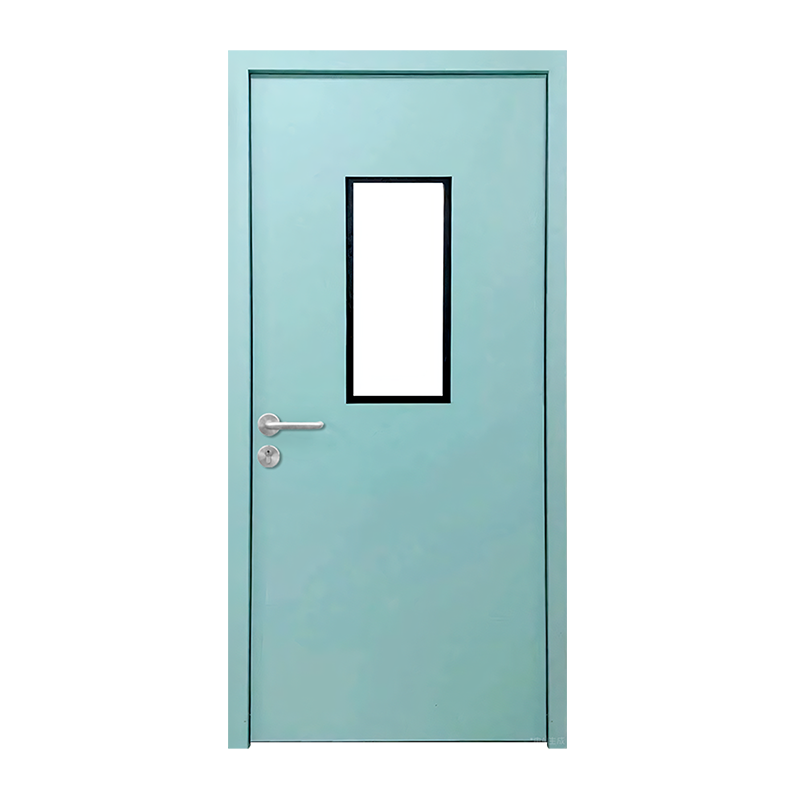
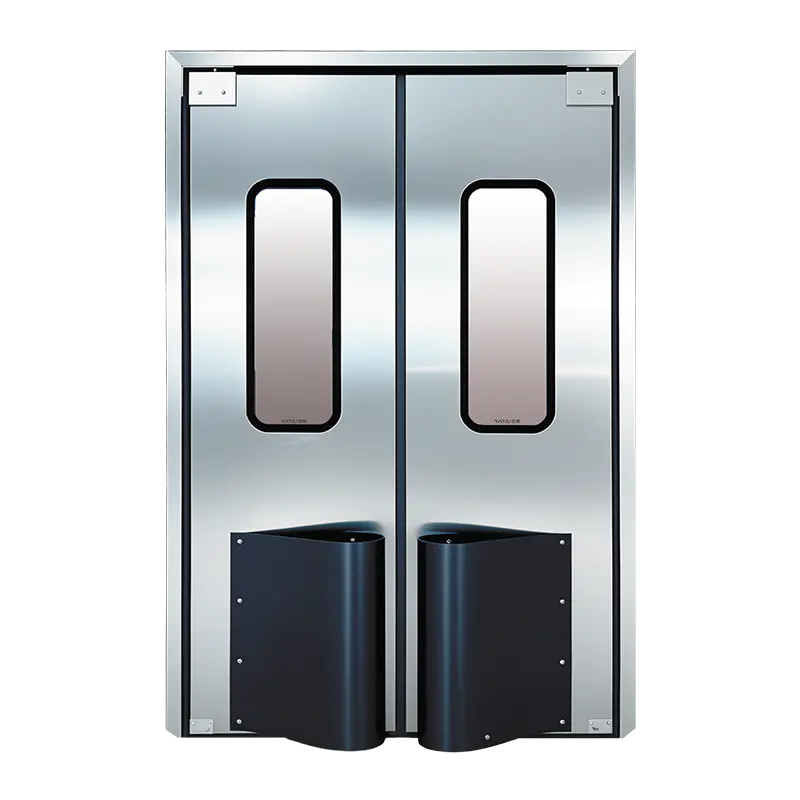
Designed for pharmaceutical, food, and medical environments, these doors feature seamless, easy-to-clean surfaces with no crevices where bacteria can accumulate. They comply with HACCP and FDA hygiene standards and are typically made from smooth PVC in light colors for easy contamination detection.
| Door Type | Typical Speed | Best For | Impact Resistance | Insulation |
|---|---|---|---|---|
| Fabric Roll-Up | 1.5–2.5 m/s | Interior, high-traffic | Self-repairing | Moderate |
| Hard Panel | 0.8–1.2 m/s | Exterior, security | High | High |
| Spiral | 1.0–2.0 m/s | Exterior, cold climates | Very High | Very High |
| Clean Room | 1.0–2.0 m/s | Food, pharma, medical | Moderate | Moderate |
Key Benefits Backed by Real Numbers
Energy Savings
A standard industrial door left open for just 10 minutes in a refrigerated warehouse can allow enough warm air infiltration to raise the internal temperature by several degrees, forcing refrigeration systems to compensate. Studies have shown that replacing a standard door with a high-speed door in cold storage can reduce energy consumption by 20–40% in that zone. Over a year, this typically translates to thousands of dollars in energy savings for a mid-sized facility.
Improved Throughput & Productivity
In a busy distribution center where forklifts pass through a door 150 times per day, consider the cumulative wait time. A slow door taking 15 seconds to open adds 37.5 minutes of idle time per day per door. A fast rolling door opening in 3–4 seconds reduces that to under 10 minutes — essentially recovering half an hour of productive forklift time daily.
Safety Improvements
Fast rolling doors are equipped with multiple safety systems as standard:
- Inductive loop detectors or radar sensors that detect approaching vehicles
- Photocell safety beams that instantly reverse the door if an obstruction is detected
- Soft bottom edges that collapse on contact rather than causing injury
- Emergency breakaway features compliant with EN 13241 safety standards
Facilities that install high-speed doors report a measurable reduction in door-related accidents, which is a significant factor in environments where forklift traffic and pedestrian access overlap.
Contamination & Dust Control
In pharmaceutical or food manufacturing, a door that closes in under 2 seconds is far more effective at maintaining positive or negative pressure zones than one that lingers open. Fast rolling doors are a standard requirement in many HACCP and GMP-regulated production environments precisely because of this capability.
Industries That Rely on Fast Rolling Doors
Fast rolling doors are not a niche product. They serve a wide range of sectors where efficiency, hygiene, or climate control is non-negotiable:
- Cold storage & logistics: Prevent temperature loss, reduce condensation, and maintain food safety compliance.
- Automotive manufacturing: Separate paint booths, assembly lines, and delivery bays with minimal airflow disruption.
- Food & beverage processing: Meet strict hygiene standards while keeping production lines moving.
- Pharmaceuticals: Maintain cleanroom integrity and controlled environments.
- Retail distribution centers: Handle high forklift cycle volumes without bottlenecks at internal doorways.
- Chemical & hazardous material handling: Contain fumes and maintain zone separation.
What to Look for When Choosing a Fast Rolling Door
Selecting the right high-speed door requires matching the door specification to the demands of your specific application. Here are the most important factors to evaluate:
Opening Speed & Cycle Rate
Confirm not just the opening speed but the full cycle rate — how many full open/close cycles per hour the door is rated for. Many high-speed doors are rated for up to 300 cycles per hour, but heavy-duty models can handle significantly more. Underspecifying this will lead to premature motor and mechanism wear.
Curtain Material & Thickness
For interior doors, a 1.5–2 mm PVC curtain is standard. For exterior applications with wind load requirements, look for reinforced fabrics or rigid panels with appropriate wind resistance ratings. Check that the material suits your temperature range — standard PVC can become brittle below -20°C, so cold storage applications may require specialized low-temperature curtain materials.
Activation & Control Systems
Modern fast rolling doors can be triggered by:
- Inductive loop detectors embedded in the floor (ideal for forklifts)
- Radar or motion sensors (best for pedestrian traffic)
- Push buttons or remote controls
- Integration with WMS or ERP systems for automated door control linked to logistics events
Insulation Value (U-Value)
If thermal separation is a priority, check the door's U-value. A standard fabric fast door offers minimal insulation. Insulated panel doors can achieve U-values as low as 0.5–1.0 W/m²K, which is relevant for cold storage or climate-controlled spaces where every degree matters.
Safety Certification
In Europe, fast rolling doors must comply with EN 13241 (industrial, commercial, and garage doors) and the Machinery Directive 2006/42/EC. Always verify CE marking and ask for documentation. In the US, ANSI/DASMA standards apply. Compliance is not optional — it directly affects your liability in the event of an accident.
Installation Considerations
Even the best fast rolling door will underperform if the installation is poorly executed. Key factors to address before installation:
- Header clearance: Fast rolling doors require adequate space above the opening for the drum and motor. Confirm available headroom before specifying a model.
- Side room: Guide rails need clear side space. Insufficient side room leads to misalignment and tracking problems.
- Floor condition: Inductive loops need to be cut into a sound concrete floor. Damaged or uneven floors complicate installation and can affect sensor reliability.
- Electrical supply: Confirm voltage and phase requirements. Most industrial fast doors run on three-phase 400V supplies, though some compact models operate on single-phase.
Maintenance: What to Expect
Fast rolling doors are mechanical systems under continuous stress. A well-maintained door can operate reliably for 10–15 years, but neglecting maintenance accelerates wear and leads to costly unplanned downtime. A standard annual maintenance schedule should include:
- Inspection and lubrication of guide rails and drum bearings
- Testing and calibration of all safety sensors and photocells
- Inspection of curtain or panel condition for tears, cracks, or deformation
- Motor and drive unit inspection for signs of overheating or wear
- Verification of emergency stop and breakaway functionality
Many manufacturers offer service contracts that include preventive visits and priority response for breakdowns — a worthwhile investment for facilities where a door failure directly halts operations.
Cost vs. Return on Investment
Fast rolling doors represent a higher upfront investment than standard sectional or swing doors. A basic interior fabric high-speed door typically costs $3,000–$8,000 installed, while premium spiral or insulated panel doors for exterior use can run $15,000–$40,000 or more depending on size and specification.
However, the ROI calculation is generally favorable. When you factor in energy savings, productivity gains, reduced accident risk, and lower product spoilage in temperature-controlled environments, most facilities recover their investment within 2–4 years. In cold storage or pharmaceutical settings with strict compliance requirements, the payback period is often shorter.
A useful way to frame the decision: the question is not whether a fast rolling door is expensive, but what it costs your operation every day that you don't have one.
Previous Post
HPL Cleanroom Doors: Types, Standards, and Selection Guide
Next Post
Steel Cleanroom Doors: A Complete Guide to Selection & Compliance

Jiangyin Yatai Purification Equipment Technology Co., Ltd. is a modern and specialized manufacturer of clean doors and windows. Cleanroom Project Factory, offer Custom Clean Doors and Windows.
QUICK LINKS
PRODUCTS
GET IN TOUCHs
-
 +86 13616113658
-
 +86(0)510-86661588 / 86668687
-
 [email protected]
-
 +86(0)510-86661588
-
 No.2, Huagang West Road, Shizhuang, Jiangyin, Jiangsu province
© Jiangyin Yatai Purification Equipment Technology Co., Ltd.
All Rights Reserved.
 Cleanroom Door Manufacturers