-
 +86 13616113658
-
 [email protected]
 English
 Español
 русский
 عربى
عربى
HPL Cleanroom Doors: Types, Standards, and Selection Guide
Content
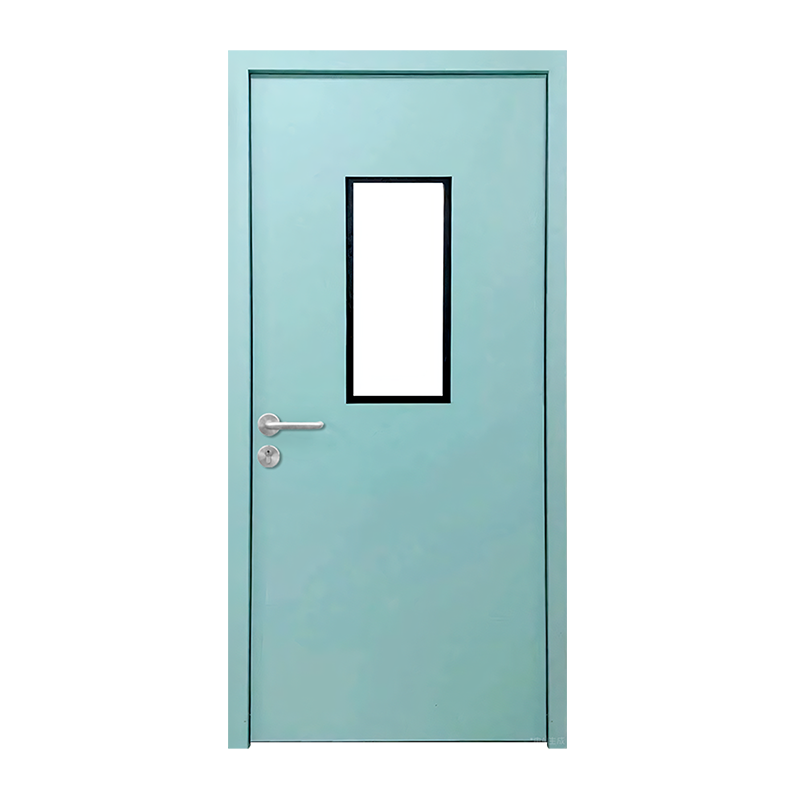
HPL cleanroom doors are panel doors faced with High Pressure Laminate, engineered to meet the strict hygiene, airtightness, and durability demands of controlled environments. They are widely used in pharmaceutical manufacturing, semiconductor fabrication, food processing, and medical device production, where particle contamination, chemical exposure, and pressure differentials must be tightly managed. Choosing the right HPL cleanroom door directly affects your room classification compliance, workflow efficiency, and long-term maintenance cost.
This guide covers the core properties of HPL as a door surface material, the structural configurations available, relevant ISO and GMP standards, and practical selection criteria for different cleanroom classes.
Why HPL Is Used in Cleanroom Door Construction
High Pressure Laminate is manufactured by bonding multiple layers of resin-impregnated kraft paper under high heat and pressure, typically exceeding 1,000 psi. The resulting surface is non-porous, dimensionally stable, and resistant to a wide range of disinfectants including isopropyl alcohol, hydrogen peroxide vapor, and quaternary ammonium compounds.
Compared to painted steel or fiberglass-reinforced panels, HPL offers several measurable advantages for cleanroom applications:
- Surface hardness: HPL typically achieves a Brinell hardness of 35 to 45 N/mm2, reducing the risk of surface damage from equipment contact or frequent cleaning.
- Chemical resistance: Most HPL grades withstand exposure to pH 2 to pH 12 solutions without delamination or discoloration.
- Low particle shedding: The dense, sealed surface does not flake or shed fibers, a critical property for ISO Class 5 and cleaner environments.
- Moisture resistance: Unlike painted MDF cores, HPL-faced doors resist swelling and surface bubbling in high-humidity cleanrooms such as those used in food or biotech processing.
- Color and texture consistency: HPL is available in smooth, matte, and anti-fingerprint finishes, maintaining visual cleanliness between decontamination cycles.
A common alternative, powder-coated galvanized steel, offers comparable chemical resistance but is more prone to surface pitting over repeated high-concentration disinfectant exposure. HPL also allows for seamless integration of vision panels and frame inserts without exposed fasteners that could harbor contamination.
Structural Configurations of HPL Cleanroom Doors
The door leaf in a cleanroom HPL door is almost always a composite sandwich panel. The surface HPL skins are bonded to a rigid core, and the choice of core material significantly affects acoustic performance, weight, and fire rating.
Core Material Options
- Honeycomb aluminum core: Lightweight, excellent stiffness-to-weight ratio, suitable for large door widths exceeding 1,200 mm. Common in semiconductor and microelectronics cleanrooms.
- Mineral wool core: Provides fire resistance ratings up to EI 60 and acoustic insulation in the range of 38 to 42 dB Rw. Used in pharmaceutical Grade B and Grade C areas where fire compartmentalization is required.
- Polyurethane foam core: High thermal insulation value, often used in cleanrooms that operate at temperature-controlled conditions below 15 degrees Celsius, such as cold storage pharmaceutical areas.
- Particle board or MDF core: Lower cost option for ISO Class 7 and 8 environments where fire and acoustic ratings are less critical. Not recommended for areas with high humidity cycling.
Frame and Seal Systems
The door frame in a cleanroom application is typically extruded aluminum with a thermal break or solid stainless steel for higher classifications. The seal system determines airtightness, which is critical in rooms operating at positive or negative pressure relative to adjacent spaces.
A standard cleanroom door seal package includes three-sided compression seals on the head and jambs, plus an automatic drop seal on the bottom that deploys when the door closes. Well-specified HPL cleanroom doors can achieve air leakage rates below 1.0 m3/h per meter of perimeter at 25 Pa pressure differential, which is a common benchmark in EU GMP Annex 1 compliant facilities.
HPL Cleanroom Door Types by Operation
The operating mechanism affects particle generation at the threshold, hands-free operation capability, and compatibility with airlocks. The table below summarizes the most common types used in cleanroom environments:
| Door Type | Typical ISO Class | Key Advantage | Key Limitation |
|---|---|---|---|
| Single swing | ISO 6 to ISO 8 | Simple installation, low cost | Air disturbance on opening |
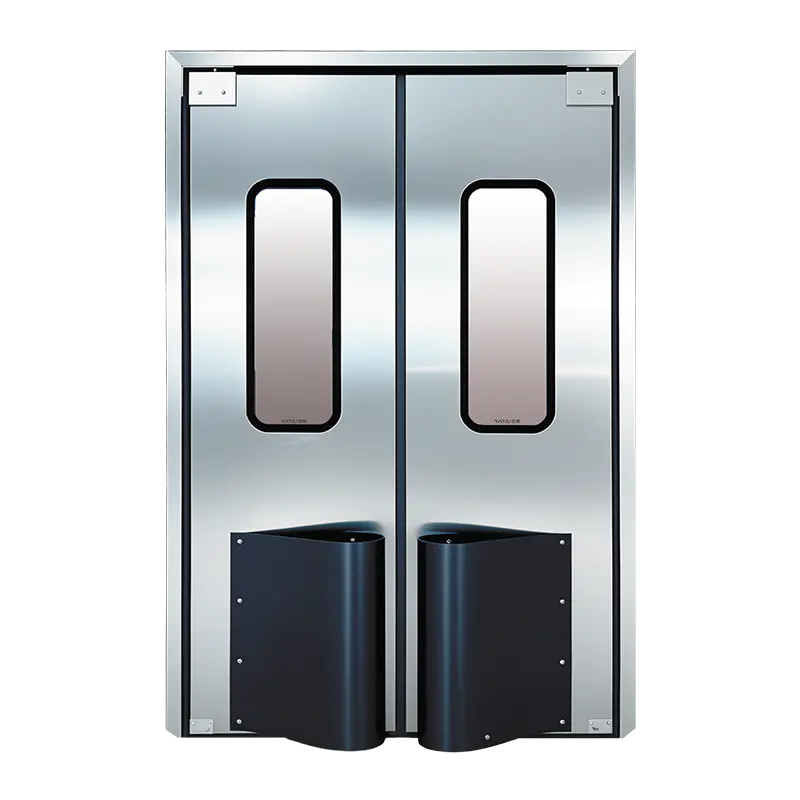
| Double swing | ISO 6 to ISO 8 | Wide clear opening for equipment | More complex sealing at center joint |
| Sliding | ISO 5 to ISO 7 | Minimal air disturbance, space-saving | Track maintenance, higher unit cost |
| Automatic sliding | ISO 5 to ISO 7 | Hands-free, reduces contamination risk | Requires power, interlocking programming |
| Pass-through / airlock | ISO 4 to ISO 6 | Prevents simultaneous opening, maintains pressure cascade | Higher space and cost requirement |
For ISO Class 5 environments such as aseptic filling suites, automatic sliding HPL doors with interlocked airlock controls are the standard configuration. Manual swing doors remain acceptable for ISO Class 7 and 8 gowning rooms and support corridors.
Relevant Standards and Compliance Requirements
HPL cleanroom doors must meet multiple overlapping standards depending on the industry and regional regulatory framework. The most commonly referenced include:
ISO 14644 Cleanroom Classification
ISO 14644-1 defines cleanroom classes based on airborne particle concentration. The door specification must not compromise the room classification. For ISO Class 5 and below, door materials must contribute zero particle generation and the seal system must prevent cross-contamination between adjacent zones.
EU GMP Annex 1 (2022 Revision)
The revised EU GMP Annex 1 places greater emphasis on Contamination Control Strategy documentation. All surfaces in Grade A and Grade B areas, including doors, must be demonstrably cleanable and non-shedding. HPL surfaces meet this requirement, but the door specification must include evidence of material compatibility with the validated cleaning and disinfection protocol used in the facility.
Fire and Building Codes
In most jurisdictions, cleanroom doors in corridors and between fire compartments must achieve a minimum fire rating. In Europe, EN 1634-1 governs fire door testing. Common ratings for pharmaceutical cleanrooms are EI 30 or EI 60. The HPL surface must retain its integrity and not contribute to fire spread, which is addressed by selecting phenolic resin-based HPL grades with low flame spread classifications such as EN 13501-1 Class B or better.
Electrostatic Discharge Requirements
In semiconductor and electronics cleanrooms, static charge buildup on door surfaces can damage components. ESD-dissipative HPL grades maintain surface resistance between 10 to the power of 6 and 10 to the power of 9 ohms, meeting ANSI/ESD S20.20 requirements without requiring conductive floor connections at the door threshold.
Key Selection Criteria for HPL Cleanroom Doors
Selecting the correct HPL cleanroom door requires matching the door specification to the room classification, industry regulation, traffic type, and maintenance protocol. The following criteria should guide the specification process:
- Room classification and pressure differential: Higher classifications require better airtightness. Specify the required leakage rate at a defined test pressure and verify with factory test certificates.
- Traffic frequency and type: High-frequency pedestrian traffic favors automatic sliding doors. Forklift or pallet access requires reinforced leaf construction and protection plates at impact zones.
- Disinfection agent compatibility: Request a chemical resistance report from the HPL manufacturer for every agent in your validated cleaning protocol, including sporicidal agents such as chlorine dioxide or vaporized hydrogen peroxide.
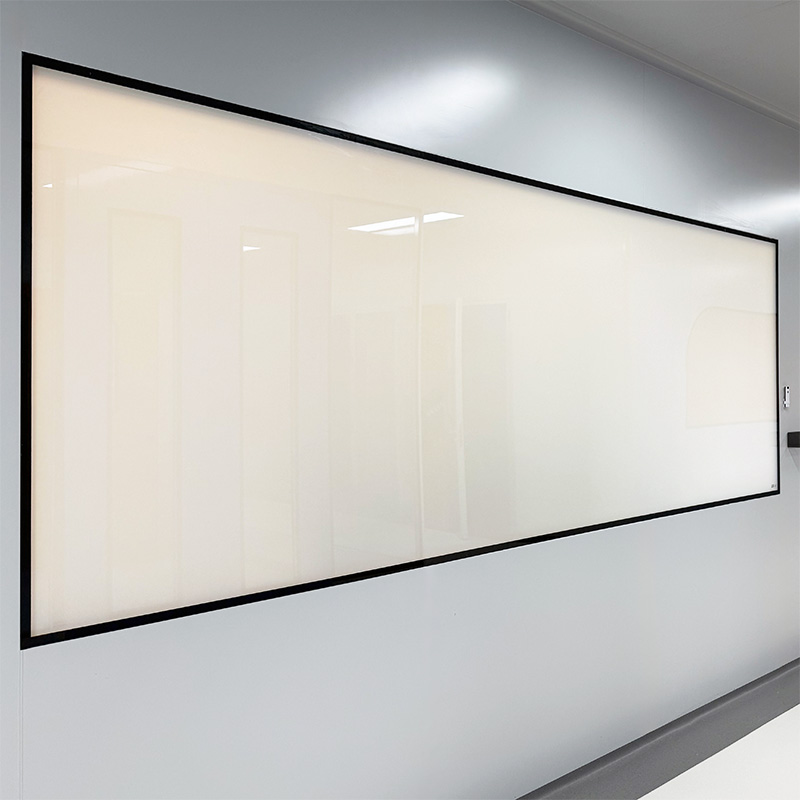
- Vision panel integration: Vision panels must use flush-mounted, sealed glazing. Recessed or protruding frames create ledges that accumulate contamination. Specify flush glazing with silicone-free sealant compatible with your cleaning agents.
- Hardware and accessories: All hardware including hinges, handles, closers, and kick plates must be fabricated from 316 stainless steel for pharmaceutical applications or anodized aluminum for semiconductor environments. Exposed fasteners should be minimized or countersunk.
- Fire rating requirement: Confirm the required EI rating with your fire safety engineer before finalizing the door specification. Adding fire rating after initial specification often requires replacing the entire door assembly.
- Lead time and documentation: Custom HPL cleanroom doors typically carry lead times of 8 to 14 weeks. Ensure the supplier provides a full documentation package including material data sheets, test certificates, installation instructions, and maintenance manuals to support qualification activities.
HPL Cleanroom Door Maintenance and Service Life
One of the practical advantages of HPL cleanroom doors is their low maintenance requirement relative to painted or coated alternatives. The laminate surface does not require periodic repainting and resists the surface degradation that powder-coated steel shows after repeated wiping with aggressive disinfectants over three to five years of service.
A routine maintenance program for HPL cleanroom doors should include:
- Monthly inspection of compression seals and automatic drop seals for wear, deformation, or gaps. Seal replacement is typically required every two to four years depending on traffic volume.
- Quarterly lubrication of hinges and sliding door track mechanisms using approved non-outgassing lubricants. Standard petroleum-based lubricants are not suitable in ISO Class 5 and cleaner environments.
- Annual airtightness verification using a calibrated pressure decay test, especially in rooms where the pressure differential is part of the contamination control strategy.
- Visual inspection of HPL surface integrity. Edge delamination at the bottom of the door leaf is the most common failure mode and is usually caused by standing water accumulation during floor cleaning. This is preventable with a properly functioning automatic drop seal.
A properly specified and maintained HPL cleanroom door should deliver 15 to 20 years of service life in a pharmaceutical or semiconductor environment, compared to 7 to 10 years for painted steel doors in equivalent conditions.
Conclusion
HPL cleanroom doors combine a chemically resistant, non-porous surface with flexible core and frame configurations to meet the contamination control requirements of a wide range of controlled environments. The material is well-suited to both pharmaceutical GMP compliance and semiconductor ESD protection when the correct HPL grade and hardware specification are applied. Successful specification depends on matching the door to the room classification, pressure regime, disinfection protocol, and fire safety requirements rather than selecting on price alone. With the right specification and a basic maintenance schedule, HPL cleanroom doors are one of the most cost-effective long-term investments in a cleanroom envelope.
Previous Post
How to Choose the Right Door for Your Cleanroom
Next Post
Fast Rolling Doors: Types, Benefits & Buying Guide

Jiangyin Yatai Purification Equipment Technology Co., Ltd. is a modern and specialized manufacturer of clean doors and windows. Cleanroom Project Factory, offer Custom Clean Doors and Windows.
QUICK LINKS
PRODUCTS
GET IN TOUCHs
-
 +86 13616113658
-
 +86(0)510-86661588 / 86668687
-
 [email protected]
-
 +86(0)510-86661588
-
 No.2, Huagang West Road, Shizhuang, Jiangyin, Jiangsu province
© Jiangyin Yatai Purification Equipment Technology Co., Ltd.
All Rights Reserved.
 Cleanroom Door Manufacturers