-
 +86 13616113658
-
 [email protected]
 English
 Español
 русский
 عربى
عربى
How to Choose the Right Door for Your Cleanroom
Content
- 1 Why the Door Choice Matters More Than Most People Realize
- 2 Start With Your Cleanliness Classification
- 3 Match the Door Type to the Traffic Pattern
- 4 Selecting the Right Panel Material
- 5 Industry-Specific Requirements You Cannot Ignore
- 6 Fire Safety and Emergency Egress — Non-Negotiable Compliance Requirements
- 7 Hardware and Accessories: The Details That Determine Long-Term Performance
- 8 A Practical Checklist Before You Specify
Why the Door Choice Matters More Than Most People Realize
A cleanroom is only as effective as its weakest point of contamination control — and in most facilities we work with, that weak point is the door. It is opened dozens or even hundreds of times per day, it sits at the boundary between controlled and uncontrolled zones, and it is expected to maintain air pressure differentials, seal against particulate infiltration, and withstand repeated physical contact — all simultaneously.
We have been manufacturing cleanroom enclosure solutions for many years, and the single most common mistake we see buyers make is treating the door as an afterthought — choosing it last, based primarily on price. The result is almost always a compromised cleanroom: failed ISO classification audits, elevated particle counts near doorways, or doors that deteriorate within two years under routine operating conditions.
This guide walks you through the key decision criteria — from cleanliness classification and traffic volume to material selection and specialty requirements — so you can make a well-informed choice before procurement.
Start With Your Cleanliness Classification
The ISO 14644-1 classification of your cleanroom is the most fundamental factor governing door specification. Each ISO class carries different requirements for particle concentration, and the door — as the primary transition point — must not undermine those limits.
As a general rule:
- ISO Class 8 and above (100,000–10,000 particles ≥0.5μm per m³): Standard cleanroom swing doors with basic sealing are generally adequate. Steel or color steel panel construction with compression seals is widely used at this level.
- ISO Class 6–7 (1,000–10,000 particles per m³): Doors must provide more reliable sealing, often with automatic closing mechanisms to minimize open-door time. Airtight door designs become appropriate at this range.
- ISO Class 5 and below (100 particles per m³ or cleaner): These are pharmaceutical-grade and semiconductor environments where airtight automatic doors with motorized sealing systems are required. Manual swing doors are rarely appropriate. Pressure differential between zones must be actively maintained.
In practice, we often see facilities downgrade their door specification to save costs, only to find that their HVAC system cannot maintain the designed pressure differential because of air leaking around improperly sealed door frames. A typical cleanroom door gap of just 1mm around the perimeter can leak enough air to raise particle counts by 15–30% near entry points during peak traffic periods.
| ISO Class | Typical Application | Recommended Door Type | Key Requirement |
|---|---|---|---|
| ISO 8 | Food processing, general electronics | Standard swing door | Smooth surface, basic perimeter seal |
| ISO 7 | Pharma packaging, medical devices | Auto-closing swing or sliding door | Controlled open time, reliable sealing |
| ISO 6 | Sterile manufacturing, biotech labs | Airtight door or automatic sliding door | Pressure differential maintenance |
| ISO 5 and below | Semiconductor fabs, aseptic fill lines | Motorized airtight automatic door | Full perimeter motorized sealing, interlock capability |
Match the Door Type to the Traffic Pattern
Traffic volume and movement type should drive door configuration decisions just as much as cleanliness requirements. A door that performs well in a low-traffic laboratory corridor may be entirely unsuitable for a busy pharmaceutical production area where staff, carts, and equipment pass through every few minutes.
Swing Doors
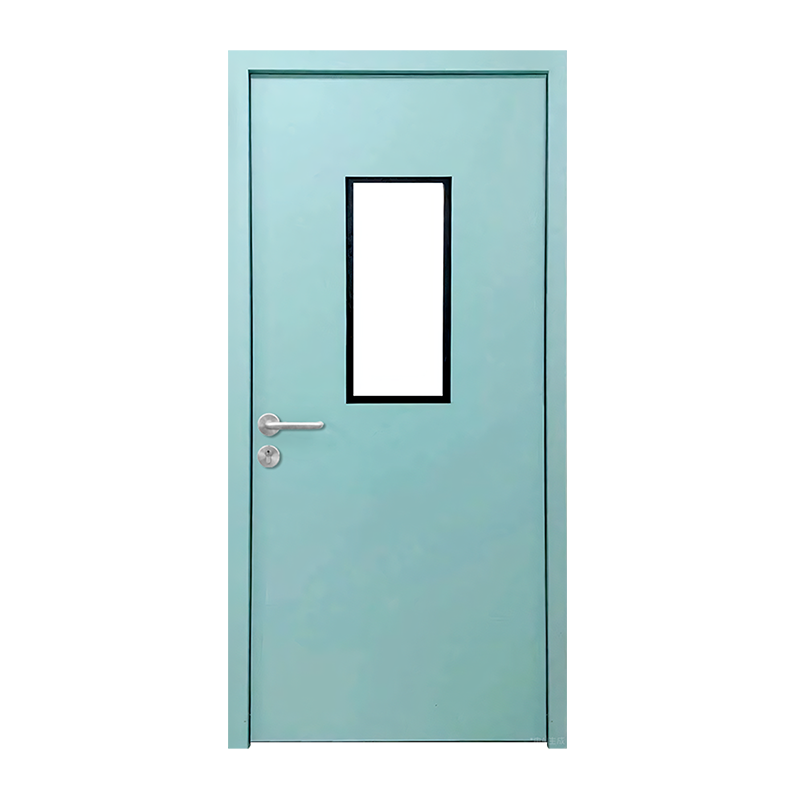
Swing doors are the most common configuration in cleanrooms and are well suited to pedestrian-only access points with moderate traffic. They can be single or double leaf, and are available in manual or auto-closing variants. The key limitation is that they require clearance space on one side, and every opening cycle introduces an uncontrolled air exchange period.
Automatic Sliding Doors
For high-frequency personnel access or hands-free operation, automatic sliding doors significantly reduce contamination risk. Because they open and close rapidly and require no physical contact, they minimize both particulate generation from door handling and the duration of the open gap. They are particularly suitable for hospital corridors, pharmaceutical logistics routes, and electronics cleanrooms where gowning integrity must be maintained.
Anti-Collision Free Doors
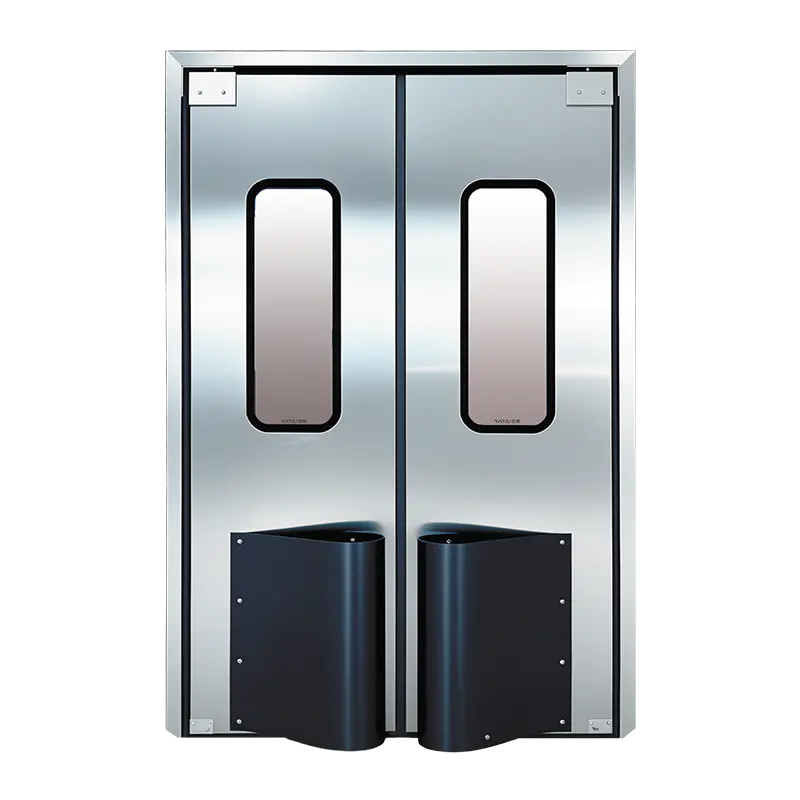
In areas where trolleys, beds, or material handling equipment move through regularly — such as hospital wards, food production lines, or logistics corridors — anti-collision free doors are the appropriate choice. These swing in both directions without requiring handles, meaning operators can push through with their hands occupied. They are built with reinforced panels, typically stainless steel or galvanized steel, specifically designed to absorb repeated impact without deforming or losing their seal profile.
High-Speed Roll-Up Doors
Where large openings are required — such as warehouse entrances, loading areas adjacent to cleanrooms, or vehicle access zones — high-speed roll-up doors offer the best balance of throughput and contamination control. Opening speeds of 1.0–2.5 m/s dramatically reduce the time the opening is exposed, which is the primary variable governing particulate ingress at large access points. PVC, aluminum alloy, and composite material variants are each suited to different environmental and load requirements.
Selecting the Right Panel Material
The door panel material directly affects cleanability, durability, chemical resistance, and particle shedding. This is not simply an aesthetic decision — in regulated industries, surface material selection is often audited as part of GMP compliance.
Steel (Electrostatic Spray Coated)
Steel cleanroom doors with an electrostatic powder-coated finish are the most widely specified option across industries. A high-quality electrostatic coating creates a seamless, non-porous surface with no gaps, weld points, or corners that can trap contaminants. They are compatible with standard cleaning agents including alcohol-based disinfectants and mild alkaline solutions. For general pharmaceutical, food, and electronics applications, steel remains the standard workhorse.
Stainless Steel
Stainless steel cleanroom doors — typically using SUS304 — are specified where chemical resistance, corrosion resistance, and frequent wet cleaning are required. They are the standard choice for pharmaceutical sterile manufacturing zones, biological laboratories, and hospital operating rooms where disinfection with aggressive agents such as hydrogen peroxide vapor or chlorine-based solutions is routine. The surface resists pitting and corrosion under these conditions where painted steel would degrade within 12–18 months.
Aluminum Alloy Frame with Color Steel or Melamine Resin Panel
Aluminum alloy frames combined with color steel or melamine resin panels offer a cost-effective option for ISO Class 7–8 environments where the highest chemical resistance is not required. Aluminum alloy melamine resin cleanroom doors in particular provide a hard, scratch-resistant surface that handles routine cleaning well and maintains appearance over time. They are lighter than full-steel construction, which reduces wear on hinges and door closers.
Material Selection Summary
| Material | Chemical Resistance | Durability | Cost | Best For |
|---|---|---|---|---|
| Powder-coated steel | Moderate | High | Low–Medium | Electronics, food processing, general pharma |
| Stainless steel (SUS304) | Very High | Very High | High | Sterile pharma, biotech, OR, wet processing |
| Aluminum + melamine resin | Moderate | Medium–High | Low–Medium | ISO 7–8 facilities, light-duty cleanrooms |
| Aluminum + color steel | Moderate | Medium | Low | Cost-sensitive projects, offices, warehouses |
Industry-Specific Requirements You Cannot Ignore
Beyond the general criteria above, specific industries impose additional requirements that must be factored into door selection. Missing these can result in failed regulatory inspections or significant rework costs.
Pharmaceutical and Biotech
GMP guidelines — including EU GMP Annex 1 for sterile manufacturing — require that all surfaces in cleanroom environments are smooth, non-porous, and free of crevices that could harbor microorganisms. This rules out exposed screw heads, unsealed frame joints, and recessed handles. Airtight door designs with flush-mounted hardware and continuous perimeter seals are the standard approach for Grades A through C. For Grade D and EU GMP Grade C equivalents, automatic closing mechanisms with interlocking capability between adjacent zones are often required to prevent simultaneous opening. For facilities also requiring radiation shielding (such as PET cyclotron rooms or radiopharmacy labs), radiation shielding doors are a necessary specialized solution.
Hospital Operating Rooms and ICU
Hospital environments add the complexity of frequent gurney and equipment passage alongside strict infection control requirements. The door must withstand repeated impact without deforming, and hardware must be operable without hand contact. Kick plates, elbow-operated latches, and hands-free swing designs are standard. For operating rooms where positive or negative pressure relative to adjacent corridors must be maintained, airtight cleanroom doors with motorized bottom seals are specified. Additionally, any door installed in a fire-rated wall assembly must carry the appropriate fire resistance certification — typically 60 or 90 minutes — and must be specified accordingly from the outset, as retrofitting fire-rated frames is costly and disruptive.
Electronics and Semiconductor
Semiconductor and flat-panel display fabs typically operate at ISO Class 4–6 and require extremely low particle counts. Beyond sealing performance, a key concern is electrostatic discharge (ESD) — surfaces that generate static can attract and hold particles, directly compromising yield. Door panels in these environments are often specified with anti-static coatings or conductive materials to mitigate this risk. The use of automatic sliding doors that eliminate physical contact during transit is strongly preferred to reduce both particle generation and the risk of gown contamination.
Food and Beverage Processing
Food facility cleanrooms must comply with food safety standards (HACCP, FDA 21 CFR, or regional equivalents) that require surfaces to be non-toxic, non-absorbent, and resistant to the cleaning chemicals used in the facility. Drainage around door frames must be considered to prevent pooling. In areas subject to daily high-pressure washdown, stainless steel doors with sealed frames and no exposed fasteners are the safest specification. Anti-collision free doors are common in production zones given the constant movement of trolleys and processing equipment.
Fire Safety and Emergency Egress — Non-Negotiable Compliance Requirements
In the focus on contamination control, fire and life safety requirements are sometimes overlooked during cleanroom door specification — an oversight that can have serious regulatory and safety consequences.
Any door located in a fire-rated wall assembly must carry a certified fire resistance rating matching the wall's required integrity period. Standard cleanroom doors are not fire rated by default, and substituting them in fire-rated wall locations is a code violation regardless of their contamination control performance. Fire-rated heat-resistant cleanroom doors are specifically engineered to satisfy both fire compartmentation and cleanroom surface requirements simultaneously.
Emergency egress routes must have doors that are openable from the inside without a key or special knowledge under all conditions. In controlled cleanroom environments where access is often restricted electronically, emergency exit doors designed specifically for cleanroom applications provide the required panic hardware and one-direction egress functionality while still maintaining the surface and sealing standards appropriate for the environment.
Failing to specify the correct fire-rated or emergency egress doors at the design stage can result in building code violations, failed occupancy inspections, and costly remedial work — often requiring wall reconstruction to accommodate properly rated assemblies.
Hardware and Accessories: The Details That Determine Long-Term Performance
Door hardware is frequently the first component to fail in a cleanroom environment. Hinges, closers, latches, and seals are subject to far higher usage cycles than in standard construction — a cleanroom door opened 200 times per day accumulates over 70,000 cycles per year. Specifying commercial-grade hardware rather than industrial-grade components is a false economy that typically results in seal compression failure and increased maintenance within 18–24 months.
Key hardware considerations include:
- Door closers: Should be concealed or flush-mounted to avoid particle trap surfaces. Hydraulic closers rated for 500,000+ cycles are appropriate for high-traffic cleanroom doors.
- Perimeter seals: Compression seals must maintain consistent contact pressure across the full door perimeter. Brush seals are generally not appropriate in ISO 6 and above environments as they can shed fibers.
- Bottom seals: Automatic drop-down bottom seals — which deploy when the door closes and retract when it opens — prevent air leakage under the door without a fixed threshold that could create a tripping hazard or impede gurney movement.
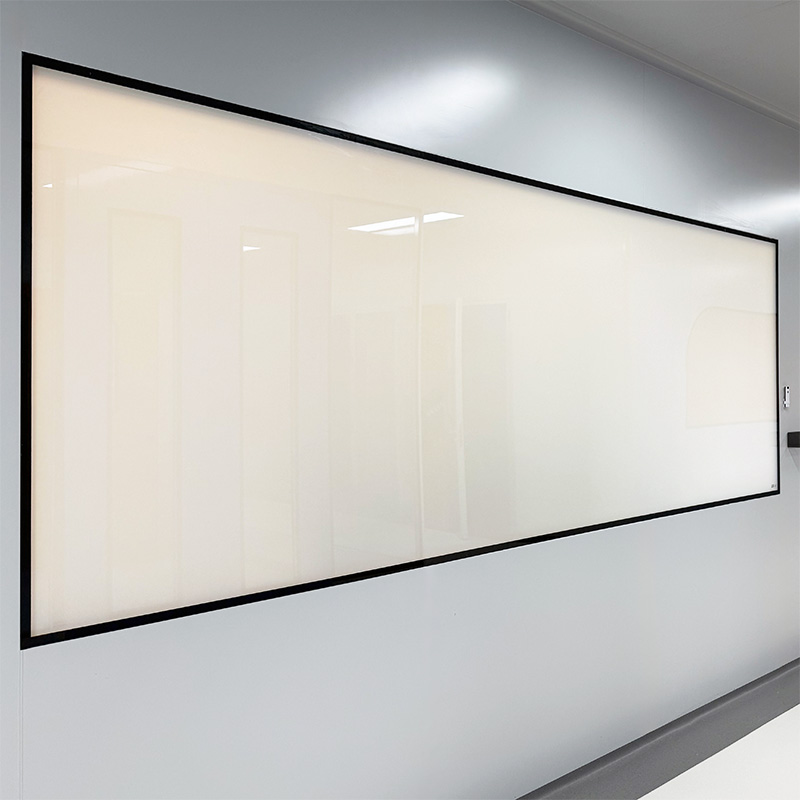
- Vision panels: Glass inserts should be double-glazed in environments where temperature or pressure differentials are significant, to prevent condensation on inner surfaces. Hermetically sealed glazing eliminates the interior gap that would otherwise collect dust.
- Access control integration: Electronic access control hardware must be flush-mounted and sealed against the door panel surface to maintain both contamination control and the door's overall sealing performance.
We supply a full range of cleanroom door hardware and accessories designed to cleanroom standards, which can be matched to door specifications at the time of procurement to ensure system-level compatibility.
A Practical Checklist Before You Specify
To bring together the criteria above, here is a practical checklist to work through before finalizing your cleanroom door specification:
- What is the ISO classification of the zone this door serves? This determines the minimum sealing and air leakage requirements.
- What is the expected daily opening frequency? This drives hardware cycle-life requirements and whether automatic closing is needed.
- What passes through the door — personnel only, or also equipment and transport trolleys? This determines swing configuration and whether anti-collision construction is required.
- What cleaning and disinfection agents will be used in this zone? This determines the minimum chemical resistance requirement for the panel material and surface treatment.
- Is this door located in a fire-rated wall assembly? If yes, a certified fire-rated cleanroom door is mandatory — not optional.
- Is this door on an emergency egress route? If yes, emergency exit hardware is required regardless of access control configuration.
- Are there any specialized requirements — radiation shielding, ESD control, pressure differential interlocking — that apply to this zone?
- What is the structural substrate — color steel panel wall, civil concrete block, or light steel keel construction? Frame design must be compatible with the wall system.
Working through these eight questions systematically will eliminate the most common specification errors before they become construction or compliance problems.
We offer a full range of cleanroom doors covering all the configurations and materials discussed in this guide — from standard swing doors to airtight, fire-rated, radiation shielding, and automatic sliding variants — and we are available to provide technical specification support based on your facility's specific requirements.
Previous Post
Cleanroom Fire Doors: Standards, Features & Selection Guide
Next Post
HPL Cleanroom Doors: Types, Standards, and Selection Guide

Jiangyin Yatai Purification Equipment Technology Co., Ltd. is a modern and specialized manufacturer of clean doors and windows. Cleanroom Project Factory, offer Custom Clean Doors and Windows.
QUICK LINKS
PRODUCTS
GET IN TOUCHs
-
 +86 13616113658
-
 +86(0)510-86661588 / 86668687
-
 [email protected]
-
 +86(0)510-86661588
-
 No.2, Huagang West Road, Shizhuang, Jiangyin, Jiangsu province
© Jiangyin Yatai Purification Equipment Technology Co., Ltd.
All Rights Reserved.
 Cleanroom Door Manufacturers