-
 +86 13616113658
-
 [email protected]
 English
 Español
 русский
 عربى
عربى
Cleanroom Automatic Sliding Doors Guide | YATAI
Content
- 1 What Are Cleanroom Automatic Sliding Doors?
- 2 Why Automatic Sliding Doors Matter in Controlled Environments
- 3 Main Types of Cleanroom Automatic Sliding Doors
- 4 Key Specifications to Evaluate
- 5 How They Integrate with Cleanroom Wall Systems
- 6 Installation, Maintenance, and Compliance Tips
- 7 How to Choose the Right Supplier
What Are Cleanroom Automatic Sliding Doors?
Cleanroom automatic sliding doors are horizontal-movement barrier systems engineered specifically for controlled environments where particle counting, air pressure cascades, and personnel workflow must coexist without compromise. Unlike a standard commercial sliding door, every component—track geometry, drive unit, seal profile, sensor logic—contributes to containment performance. The sideways motion of the leaf avoids the air turbulence generated by a swing-door arc, which immediately translates into more stable cleanroom pressure differentials and measurably lower particle suspension during entry and exit cycles.
In an ISO 5 unidirectional-flow zone, a single poor door opening can introduce enough particles to jeopardize an entire production shift. Engineers specify these doors not just for convenience but because they form a critical part of the facility's pressure cascade, often tied into interlock schedules that prevent two doors opening simultaneously. The standard configuration includes a door leaf mounted on a low-profile overhead track, a microprocessor-controlled motor, activation sensors (radar, infrared, or touchless push plates), and a dedicated controller that can receive signals from fire alarm, access control, and building management systems. The real value lies in the door's ability to hold a pressure differential while cycling hundreds of times a day without degrading the seal interface.
Why Automatic Sliding Doors Matter in Controlled Environments
The primary reason cleanroom facilities invest in automatic sliding doors is containment reliability, not speed. Every manual operation introduces variability: how fast the door is opened, how wide, and whether it latches properly. Automation removes that uncertainty. A well-specified sliding door with a continuous EPDM or silicone gasket can maintain negative- or positive-pressure room conditions even during transient entry, which is essential for aseptic processing suites, potent-compound dispensing rooms, and BSL-3 or BSL-4 laboratories.
Cleanroom teams also see direct operational benefits. Touchless activation—via foot sensor, radar, or elbow switch—reduces surface contamination and supports strict gowning protocols. Integrated interlocks stop opposing doors from opening together, preserving the pressure ladder without operator intervention. In facilities following cGMP or ISO 14644 guidelines, this predictability simplifies environmental monitoring and deviation investigations. For deeper context on how these doors contribute to overall facility control, our article on enhancing sterile environment control details the interaction between door dynamics and cleanroom performance. When a door's seal, speed, and interlock logic are correctly matched to the room's pressure budget, the facility gains a measurable margin of safety that no amount of operator training can replicate.
Main Types of Cleanroom Automatic Sliding Doors
Purchasing decisions typically begin with two questions: what material must the leaf withstand, and what level of gas-tightness does the space demand? The answers split the market into several practical categories, each with clear material-performance boundaries. The table below gives a high-level comparison before we examine each type in detail.
| Door Type | Typical Leaf Material | Best Suited For | Notable Feature |
|---|---|---|---|
| Steel | Painted or galvanized steel | High-frequency logistics corridors, cost-conscious projects | High durability at moderate cost |
| Stainless Steel | 304 or 316L stainless | Pharmaceutical, hospital, wet/clean-down areas | Corrosion resistance and cleanability |
| Color Steel / Melamine Resin | PE-coated or HPL-faced panels | Electronics, food, cosmetic facilities | Aesthetic finish, chemical resistance (HPL) |
| Airtight | Steel or stainless with reinforced sealing | Negative-pressure isolation, potent compound rooms, laboratories | Exceptionally low leakage rate under pressure |
| Radiation-Proof | Lead-lined steel | Radiology departments, nuclear medicine | Attenuation equivalent to the wall assembly |
Steel Automatic Sliding Doors
When the primary selection driver is cost per cycle in a high-throughput area, a well-built painted-steel door usually wins. These doors are constructed from high-grade cold-rolled steel with a powder-coated or liquid-painted finish that resists frequent cleaning agents. They are particularly common in warehouse-to-cleanroom transitions, material airlocks, and packaging rooms where corrosion exposure is minimal but daily operation exceeds 500 cycles. The core advantage is a straightforward frame-and-leaf design that keeps lifecycle costs low without sacrificing the interlock, drive, and sensor reliability needed for ISO 7 or ISO 8 zones. For projects that demand dependable daily performance on a budget, our steel automatic sliding door range offers a balance of robustness and value.
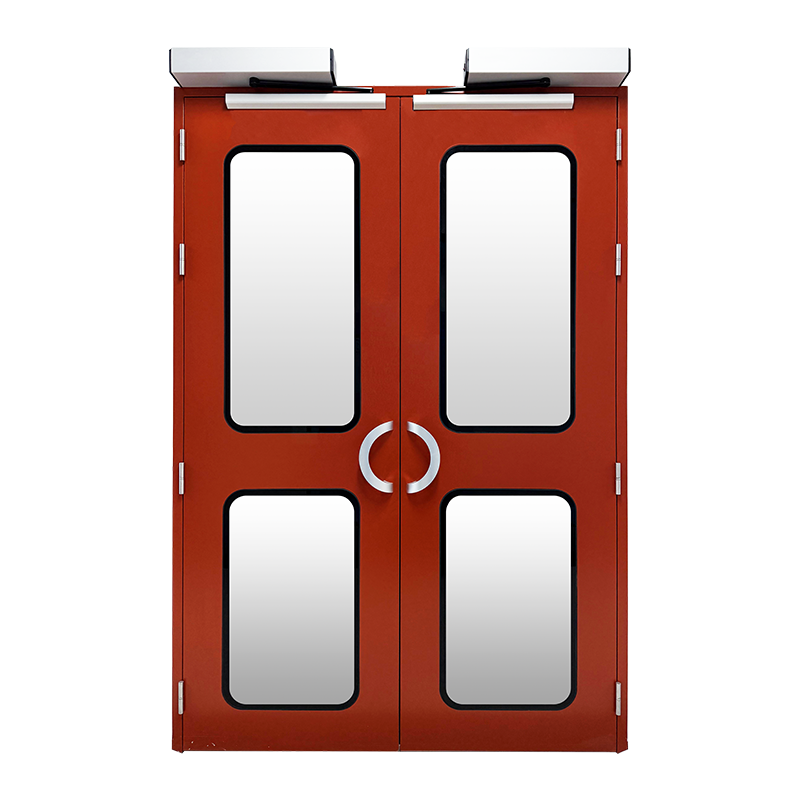 Steel Automatic Swing Door Suppliers, Custom Factory - Jiangyin Yatai PurificatiAs China Custom Steel Automatic Swing Door Suppliers and Steel Automatic Swing Door Factory, Yatai Custom Steel Automatic Swing Door, Ele...View Product →
Stainless Steel Automatic Sliding Doors
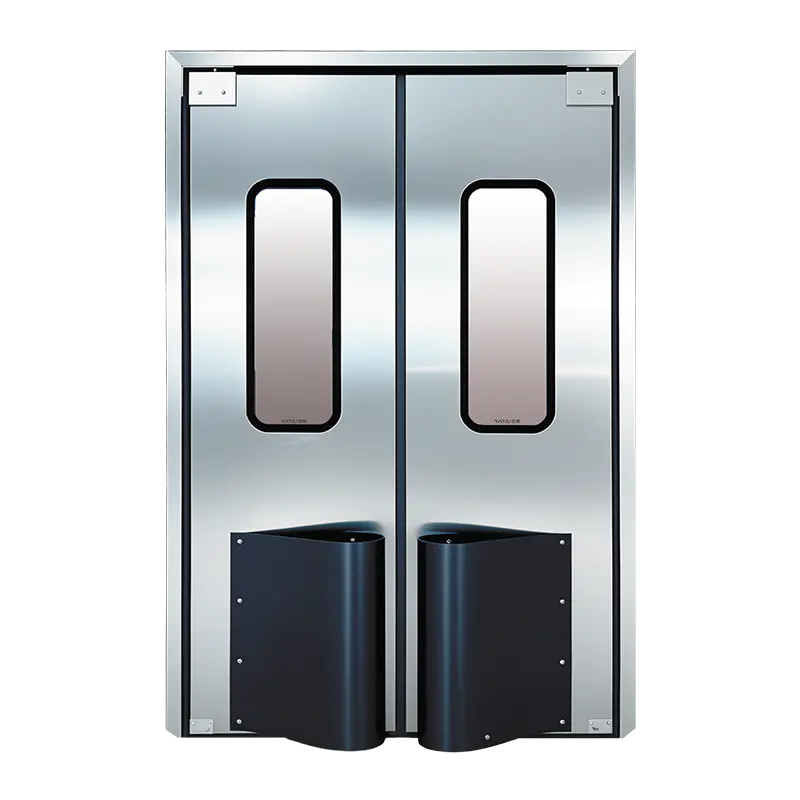
Any facility that runs aggressive wipe-downs, hydrogen peroxide vapor decontamination, or simply needs a fully non-porous leaf surface should move straight to stainless steel. The material choice—commonly 304 for general pharma, 316L for areas with chloride exposure—determines how the door stands up to years of chemical contact. In cell therapy suites, hospital operating theatres, and sterile compounding rooms, the smooth, grain-polished surface eliminates crevices that could harbor microorganisms. Buyers should verify that the door's seal channels, track covers, and sensor housings are also made from stainless or sealed polymer, not exposed carbon steel, to avoid hidden corrosion points. Our stainless steel automatic sliding door models include options for fully welded seam finishing and integrated flush-glazed vision panels that simplify sanitization.
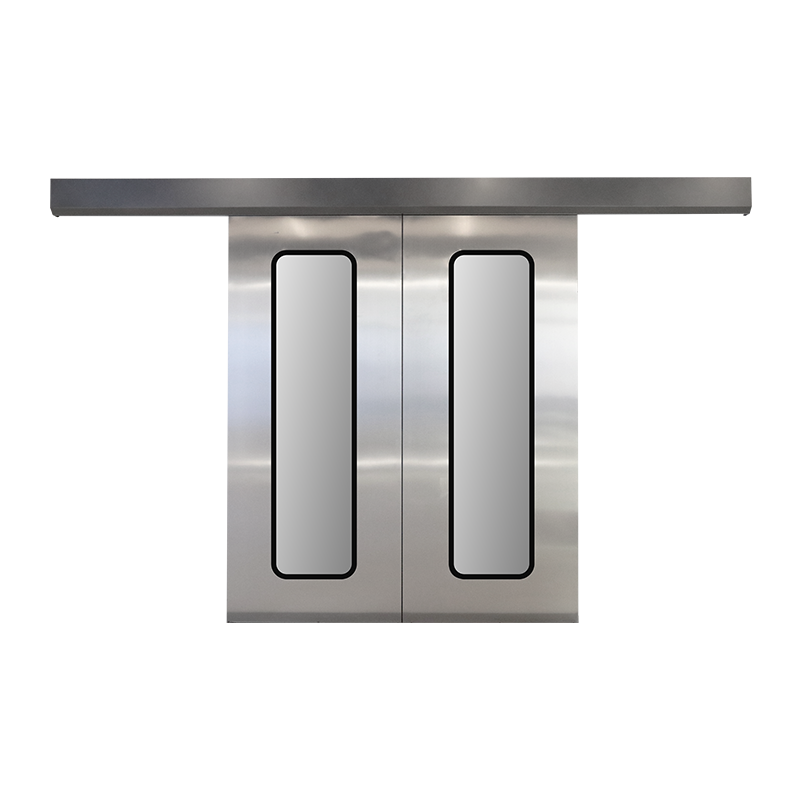 Stainless Steel Automatic Sliding Door Suppliers, Custom Factory - Jiangyin YataAs China Custom Stainless Steel Automatic Sliding Door Suppliers and Stainless Steel Automatic Sliding Door Factory, Yatai Custom Stainle...View Product →
Color Steel and Melamine-Resin Models
In electronics assembly and some food processing applications, the door leaf must look clean and resist mild acids, but does not need the full corrosion budget of stainless. Color steel doors use a baked-on polyester or PVDF coating that matches architectural preferences, while melamine resin (HPL) doors provide a hard, easily cleaned surface that handles constant contact without peeling. Both types keep weight moderate, which reduces drive system strain, and can be supplied with standard or enhanced gasket systems depending on the pressure differential required. These doors often connect to aluminum alloy or steel frame systems that match the surrounding cleanroom wall panel finish.
Airtight and Radiation-Proof Versions
When the specification calls for tight control of air migration—negative-pressure TB isolation rooms, positive-pressure aseptic filling suites, or containment labs—an airtight sliding door is the only pragmatic choice. These doors add compression-locking mechanisms, inflatable seals, or multi-lip gasket profiles that achieve extremely low leakage when closed. They frequently pair with ramp-threshold designs or recessed track assemblies to maintain a near-continuous floor seal. The engineering tolerance matters: even a small leak around a door perimeter can consume a significant portion of the room's supply air offset, forcing the HVAC system to work harder.
Radiation-proof versions serve a narrower but critical need: stopping scattered ionizing radiation while preserving touchless sliding operation. These doors embed lead sheets within the leaf and frame, with the thickness determined by the required lead equivalency. They must be integrated with the wall's lead-lined sandwich panel system for complete shielding continuity. For spaces demanding verified low-leakage performance, our airtight automatic sliding door is designed around the sealing demands of high-stakes controlled environments.
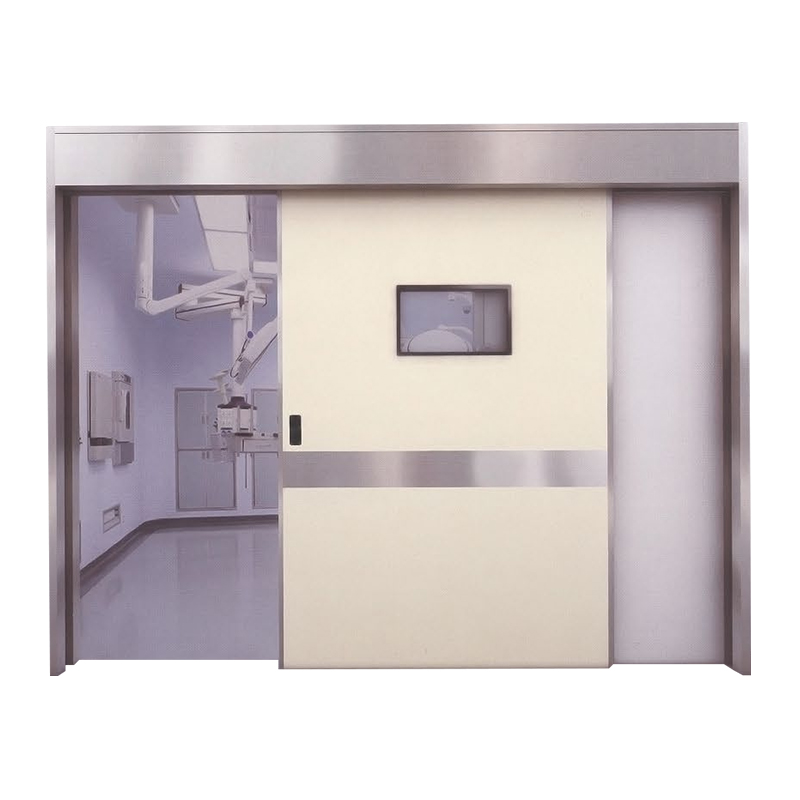 Airtight Automatic Sliding Door Suppliers, Custom Factory - Jiangyin Yatai PurifAs China Custom Airtight Automatic Sliding Door Suppliers and Airtight Automatic Sliding Door Factory, Yatai Custom Airtight Automatic Sl...View Product →
Key Specifications to Evaluate
Moving from category selection to a firm specification requires going beyond material choice and verifying the engineering parameters that determine daily performance. Use the following checklist as a starting point for supplier discussions; final numbers should always be confirmed with the factory for your specific room pressure and traffic profile.
- Opening and closing speed: Typically adjustable in a range of 20–50 cm/s. Faster speeds reduce air exchange but require careful sensor placement and safety edges to avoid personnel impact.
- Airtightness performance: Check the leakage rate at a stated test pressure (often expressed in m³/h per linear meter of sealing gap). This directly affects the room's ability to hold its pressure classification.
- Leaf thickness and surface finish: Ranges from 40 mm to 60 mm, with smooth, non-shedding surfaces. Verify the panel edge profile seals fully against the frame gasket even under negative pressure.
- Gasket material and profile: EPDM, silicone, or specialized closed-cell foam. The gasket compression set over time can be the single biggest factor in long-term seal reliability.
- Activation and safety sensors: Choose between radar, active infrared, touchless switches, or elbow-contact plates based on cleanroom gowning and traffic patterns. Overlapping detection zones reduce the chance of a door closing on a person.
- Emergency egress and fire integration: Doors must break away or swing open under pressure in the direction of egress, and the controller must accept hardwired fire alarm override signals.
- Interlock logic: Confirm whether the controller supports simple two-door interlock, multi-door sequences, or time-delay hold-open functions for material pass-throughs.
- Maintainability: Upward-lifting track covers, accessible drive belts, and modular control boards reduce downtime during annual servicing.
For a deeper look into the standards and test methods that validate these parameters, refer to our guide on airtight automatic sliding door specs and standards. Always request maintenance log recommendations from the manufacturer and validate that spare sensors and seals can be delivered within your facility's acceptable lead-time window.
How They Integrate with Cleanroom Wall Systems
A sliding door assembly is only as clean as its connection to the surrounding wall. The door frame must create a continuous barrier with the sandwich panel without leaving cavities that accumulate particles or bypass leakage paths. When both the door and the wall panel are engineered within the same supply chain, installation risk drops significantly because the frame profile, seal receiver grooves, and cutout dimensions are coordinated from the factory floor rather than improvised on site.
Typical integration involves a double-rebated frame that captures the sandwich panel edge, with a compressed gasket on both the room and interstice sides. For airtight doors, the frame may include an additional compression track or expandable seal strip that fills the joint after the panel is mounted. Window openings within door leaves follow the same principle: the glazing bead and seal must be flush and non-particulating. YATAI's ability to supply the door, frame, and cleanroom sandwich panel wall systems from a single manufacturing source means the interface details—seal compression, screw cover profiles, and floor rail transients—are resolved during engineering review, not as site-instruction variations. Ensuring the wall-door interface is airtight from day one eliminates the most common source of post-certification leakage complaints.
Installation, Maintenance, and Compliance Tips
Even a perfectly manufactured sliding door will underperform if it is installed without attention to track alignment, sensor commissioning, and seal compression. Below are field-verified practices that preserve the performance you specified.
- Track and carriage alignment: Verify that the overhead track is mounted perfectly level and parallel to the floor rail. A misalignment of just 2–3 mm can cause uneven seal wear, increased motor current, and premature roller failure.
- Sensor calibration: All activation and safety sensors must be tested with a representative obstruction and with the specific reflective clothing or cleanroom garments that personnel will wear. False triggering or failure to detect can both become contamination events.
- Seal inspection and replacement: Establish a quarterly inspection of the perimeter gasket for compression set, cuts, or chemical swelling. Replace on a scheduled basis rather than waiting for an out-of-spec room pressure reading.
- Airtightness verification: Perform annual door-leakage tests using a calibrated blower door or tracer gas method, aligned with ISO 14644-3 test requirements. Correlate any degradation with gasket condition and door closure timing.
- Cleanable surfaces: The track cover and lower guide channel are dust traps if not regularly wiped down. Design these components for tool-free removal so that cleaning crews can access them during routine wipe-down cycles.
- Controller logs: Modern drives can log cycle counts, average power draw, and fault codes. Use these logs to schedule preventive maintenance before a failure disrupts production.
When a facility follows a structured maintenance schedule tied to actual cycle data, the door's operational life can extend well beyond 10 years, with pressure stability remaining within the original commissioning envelope.
How to Choose the Right Supplier
A supplier who simply resells a generic drive-and-leaf kit cannot adequately support a cleanroom project where door performance is safety-critical. Start by evaluating whether the manufacturer controls the full assembly process: in-house frame welding, surface treatment, seal profile design, and final electrical integration. Such a factory can modify a frame dimension, adjust a seal durometer, or change a sensor logic parameter without relying on multiple subcontractors.
Look for evidence of large-scale project delivery—full rollout schedules, coordinated shipment of doors with matching wall panels, and consistent documentation packages that include material certificates, leakage-test reports, and installation checklists. Language capability also matters in international projects where commissioning engineers must interpret controller menus and fault codes quickly. A supplier that treats the door not as a standalone product but as a component within a complete cleanroom envelope system can dramatically reduce interface coordination errors. YATAI operates as a cleanroom project factory, producing the doors, sandwich panels, and windows that define the controlled environment, with a product range covering everyday steel doors, stainless steel for aggressive chemistries, and purpose-built airtight models. To see the full selection that can be configured for your next project, browse our automatic sliding door product range or contact our engineering team directly for a specification review that matches your room's pressure and material requirements.
Previous Post
Cleanroom Fire Rated Doors: Standards, Ratings, Materials & Selection Guide
Next Post
Single Glass Cleanroom Windows: Key Specs, Frames & Selection Guide
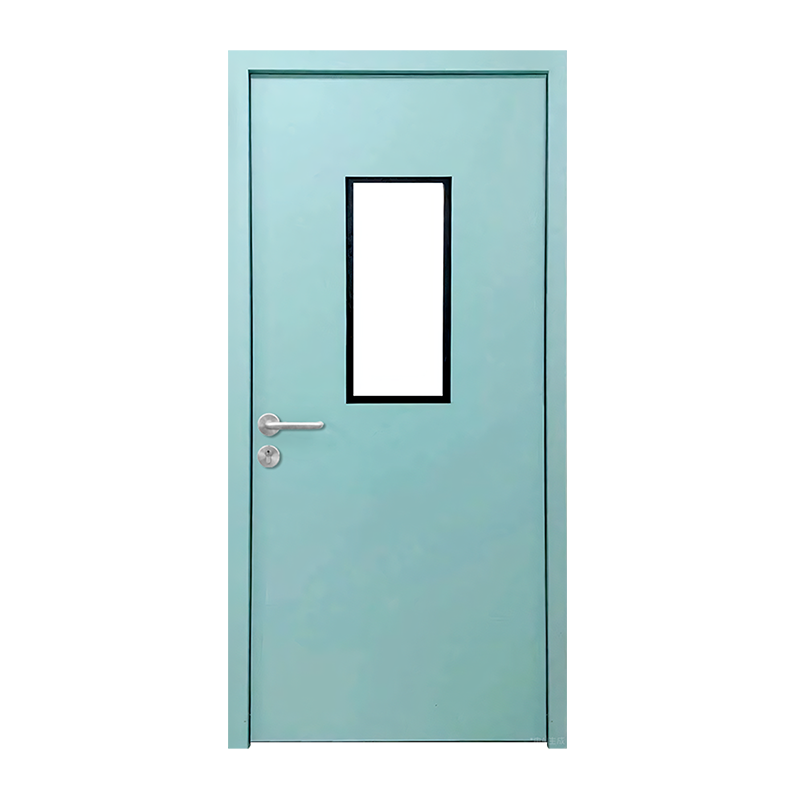

Jiangyin Yatai Purification Equipment Technology Co., Ltd. is a modern and specialized manufacturer of clean doors and windows. Cleanroom Project Factory, offer Custom Clean Doors and Windows.
QUICK LINKS
PRODUCTS
GET IN TOUCHs
-
 +86 13616113658
-
 +86(0)510-86661588 / 86668687
-
 [email protected]
-
 +86(0)510-86661588
-
 No.2, Huagang West Road, Shizhuang, Jiangyin, Jiangsu province
© Jiangyin Yatai Purification Equipment Technology Co., Ltd.
All Rights Reserved.
 Cleanroom Door Manufacturers