-
 +86 13616113658
-
 [email protected]
 English
 Español
 русский
 عربى
عربى
Home / Media / Industry News / Purification Door: What It Is, Types, and How to Choose for Cleanroom Use
Purification Door: What It Is, Types, and How to Choose for Cleanroom Use
Content
In a pharmaceutical filling line, even a brief pressure drop can pull contaminated air into an aseptic zone. The element that usually prevents this is the purification door—also called a cleanroom door—that separates the production area from the gowning corridor. A purification door is not a standard door with a better paint job. It is an engineered barrier designed to seal under differential pressure, tolerate aggressive disinfection, and maintain a smooth, particle-free surface over years of service. Choosing the wrong model can lead to avoidable contamination events, higher energy bills, and costly maintenance downtime.
This guide explains what a purification door does, which performance parameters matter most, and how to align material and hardware choices with your cleanroom class and workflow.
What Is a Purification Door?
A purification door is a specialized door used in controlled environments where airborne particles, microbes, or humidity must be kept under control. It serves as a physical closure between areas of different cleanliness levels: a gowning room and a clean corridor, a clean corridor and a filling suite, or an isolation ward and a public access hall. In that role, the door supports the room's pressurization scheme, blocks particle transfer, and helps maintain the specified air-change regime.
Compared to standard interior doors, purification doors are designed around three ideas:
- Controlled leakage: edge gaskets, level thresholds, and adjustable hinges keep the door leaf sealed even when the room pressure changes.
- Cleanability: the surface has no exposed screw heads, open seams, or textured patterns where dirt and disinfectant residue can collect.
- Durability: materials must resist bending, corrosion, and wear from frequent opening cycles and cleaning agents.
Some designs add a frame-integrated vision panel, an automatic sliding mechanism, or a fire rating. The choice depends on the room function, the safety path, and the operating routine of the facility.
Core Performance Requirements
When you evaluate a purification door, focus on the properties that directly affect contamination control and daily operation.
- Airtightness. The door leaf must compress a continuous gasket against the frame or rebate. If the leaf deflects under pressure, microbes and particles can bypass the seal. For a detailed review of sealing mechanisms, you can check this article on airtight cleanroom door sealing technology.
- Surface flatness. A warped panel makes sealing unreliable and causes the gasket to wear unevenly. Flat surfaces also make wipes and disinfectant application more effective.
- Chemical resistance. Cleaning regimes usually include hydrogen peroxide vapor, peracetic acid, and alcohol-based disinfectants. Powder coatings, stainless steel, and certain resin surfaces tolerate these agents better than standard painted wood or low-grade metal.
- Structural rigidity. Wide doors need thick face sheets, reinforcing cores, or a rigid frame to keep the leaf stable during repeated opening and closing.
- Hardware reliability. Hinges, closers, locks, and panic bars are the first parts to fail. Choose hardware rated for high-frequency use, especially in corridors where carts or pallet jacks pass.
- Optional automation. Sliding or swing operators can limit hand contact, which reduces contamination and improves workflow. Interlock systems prevent two doors in an airlock from opening at the same time.
These requirements are not optional extras. They determine whether the door can hold the room classification during normal operation and emergency condition.
Types and Material Choices
Purification doors are built around a metal frame with a sandwich panel or a flush steel leaf. The face material often defines the price, cleaning tolerance, and aesthetic level. The table below compares common options.
| Face material | Strength | Corrosion resistance | Typical use |
|---|---|---|---|
| Powder-coated steel | High | Good with quality coating; can chip on impact | General pharmaceutical, electronics |
| Stainless steel | Very high | Excellent | Biopharma, sterile filling, wet areas |
| Aluminum frame + color steel | Medium to high | Good | Clean equipment areas, low-traffic corridors |
| Aluminum frame + melamine resin | Medium | Good against chemicals; surface is more scratch-prone | Laboratories, cleanrooms with lower abrasion |
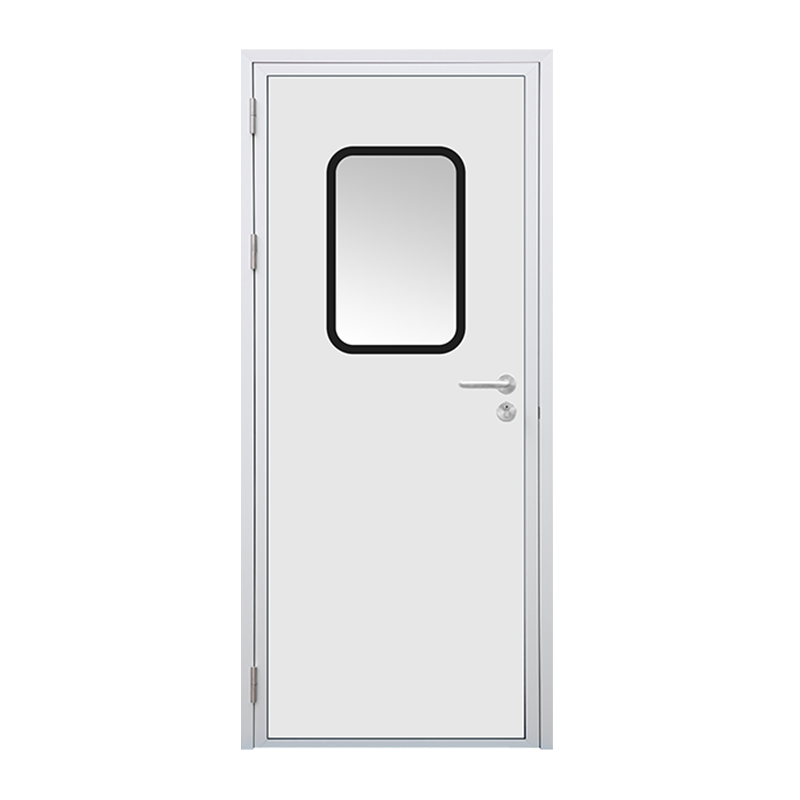
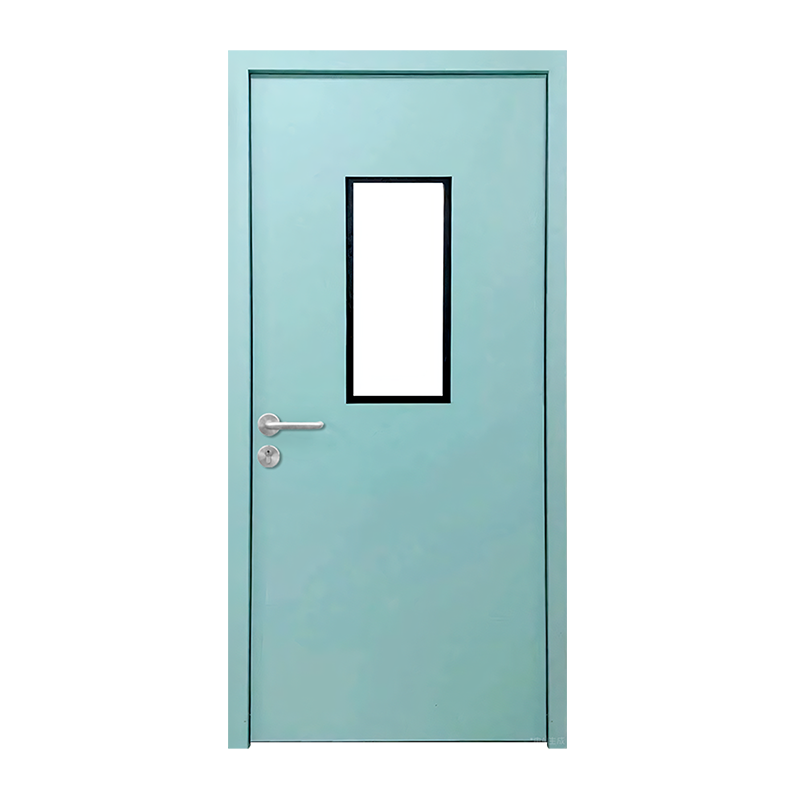
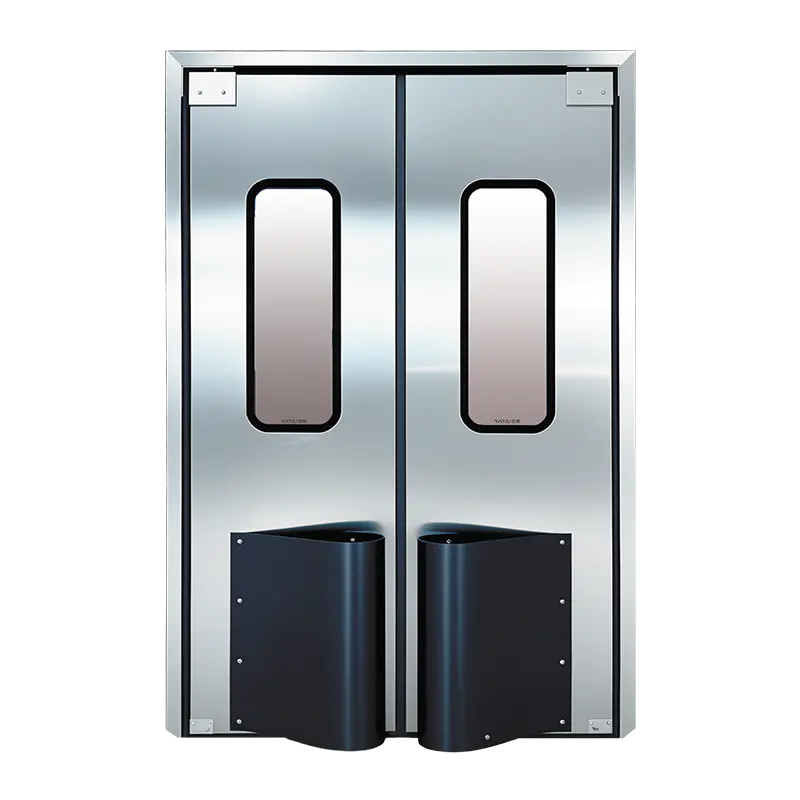
For most projects, a flat-frame painted steel clean door gives the best balance of cost and rigidity. It is a practical default for changing rooms, airlocks, and production corridors. If the process involves frequent washdowns or aggressive disinfectants, consider a flat-frame stainless steel clean door instead; the smooth stainless surface is easier to keep chemically clean and less likely to degrade.
 Stainless Steel Clean Door Suppliers, Custom Factory - Jiangyin Yatai PurificatiAs China Custom Stainless Steel Clean Door Suppliers and Stainless Steel Clean Door Factory, Yatai Custom Stainless Steel Clean Door, The...View Product →
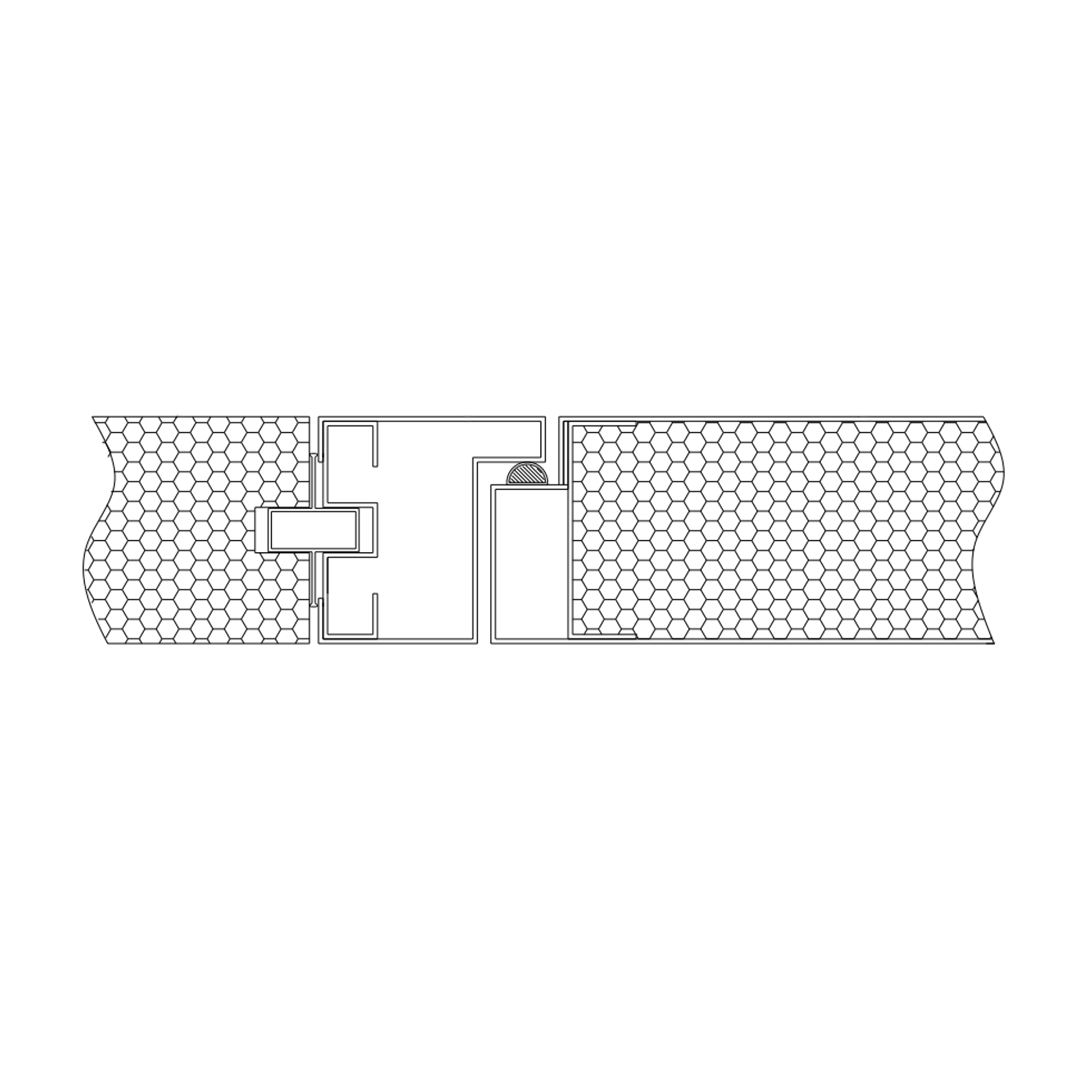 Flat Frame Type Steel Door Suppliers, Custom Factory - Jiangyin Yatai PurificatiAs China Custom Flat Frame Type Steel Door Suppliers and Flat Frame Type Steel Door Factory, Yatai Custom Flat Frame Type Steel Door, The...View Product →
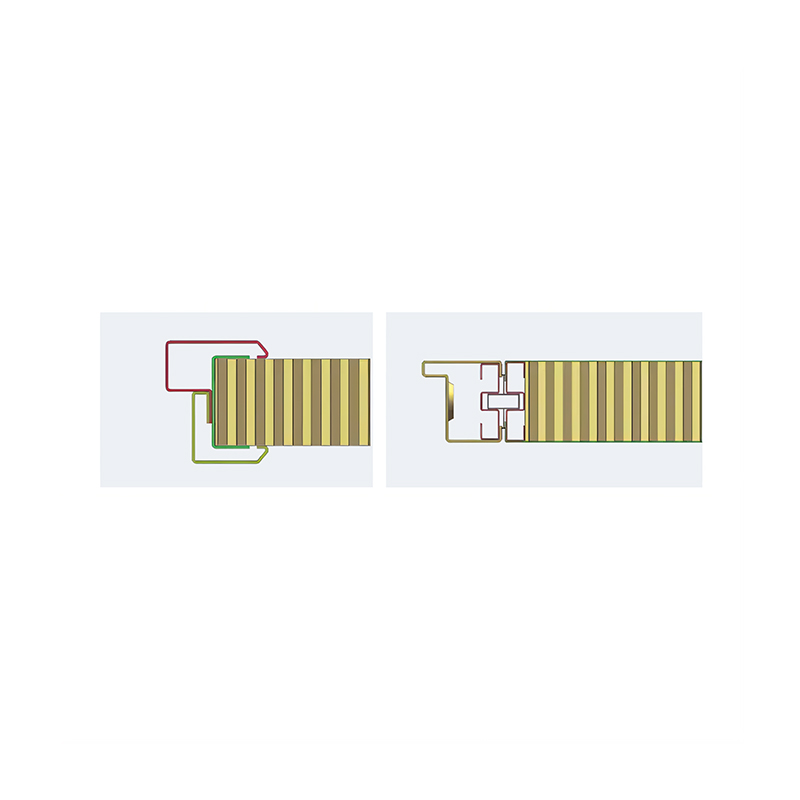
Where weight reduction and custom dimensions matter, an aluminum-alloy frame color-steel clean door is another well-established option. The frame gives the leaf enough stability, while the core reduces distortion and keeps the door light enough for normal hinges.
 Aluminum Alloy Encircled Frame Color Steel Plate Door Suppliers, Custom Factory As China Custom Aluminum Alloy Encircled Frame Color Steel Plate Door Suppliers and Aluminum Alloy Encircled Frame Color Steel Plate Door...View Product →
How the Application Changes the Choice
Different cleanroom users emphasize different door features:
- Pharmaceutical production: Aseptic areas require the most airtight doors, preferably with a flush leaf and a view panel that allows observation without opening. Doors in these zones often work with airlock interlocks.
- Electronics and precision assembly: Particle control is paramount, but chemical exposure may be less aggressive. Powder-coated steel or aluminum frame doors are usually sufficient.
- Hospitals and labs: Isolation rooms need reliable pressure control and easy cleaning. Stainless steel or medical-grade doors are common. The door closer must also allow smooth movement for beds and wheelchairs.
- Food processing: Hygiene and washdown resistance are primary. A door with a closed frame profile and corrosion-resistant hardware performs better in wet areas.
Your facility's material flow matters too. For personnel entry, a swing door is natural; for equipment or pallet movement, a sliding door or an automatic version reduces wear and speeds access. For frequent high-volume transfer, consider combining a purification door with a fast-rolling door or automatic sliding door from the same manufacturer to simplify integration.
Installation and Maintenance Considerations
A well-specified purification door will fail if the frame is not installed correctly. The frame must be plumb and square; otherwise the gasket cannot compress evenly. The gap between leaf and frame should be consistent around the full perimeter, and the threshold should be flat and free of gaps. When doors are installed in new cleanroom partitions, coordinate the manufacturer's frame dimensions with the wall panel thickness before ordering.
Maintenance routines should include a few simple steps:
- Inspect the gasket every month for tears, compression marks, or thinning. Replace it if you can see daylight between the leaf and frame.
- Clean the leaf and frame with the same disinfectants used in the room, and avoid abrasive pads that scratch the surface.
- Check hinges and closers quarterly. Re-tighten screws or adjust closing speed as needed.
- For sliding doors, keep the track and bottom guides free of debris. Lubricate only with approved cleanroom-grade grease.
Documenting these checks helps you spot wear before it affects room performance.
Final Selection Criteria
When you sit down with a supplier, bring the following information:
- Cleanroom classification and pressure differential between the two sides
- Door opening size, swing direction, and width of the wall panel
- Frequency of use and whether personnel, carts, or equipment pass through
- Cleaning chemicals that will be applied
- Fire-resistance rating, if required by your safety plan
The right purification door does not need to be the most expensive model; it needs to satisfy the actual pressure, cleaning, and traffic conditions of your facility. Use the technical guides on this site to review material and sealing details before you confirm the specification.
Previous Post
Steel Automatic Swing Door: Key Specs, Selection Tips and Cleanroom Applications
Next Post
Cleanroom Windows: Types, Selection Guide, and Installation Best Practices

Jiangyin Yatai Purification Equipment Technology Co., Ltd. is a modern and specialized manufacturer of clean doors and windows. Cleanroom Project Factory, offer Custom Clean Doors and Windows.
QUICK LINKS
PRODUCTS
GET IN TOUCHs
-
 +86 13616113658
-
 +86(0)510-86661588 / 86668687
-
 [email protected]
-
 +86(0)510-86661588
-
 No.2, Huagang West Road, Shizhuang, Jiangyin, Jiangsu province
© Jiangyin Yatai Purification Equipment Technology Co., Ltd.
All Rights Reserved.
 Cleanroom Door Manufacturers